













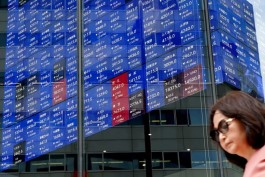

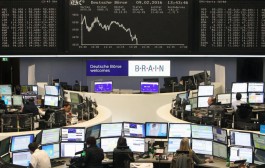











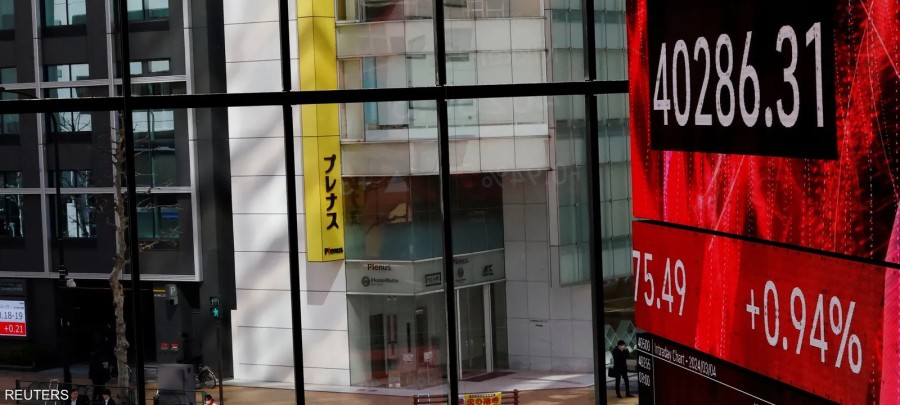


Asian stocks rose and precious metals fell after US President Donald Trump dropped his threat to impose tariffs on Europe, easing fears of a trade war.
The MSCI Asia Pacific index rose 0.9%, poised to break a three-day losing streak. South Korean stocks climbed to a record high.
Shares of chipmakers surged after Nvidia CEO Jensen Huang said that building a global AI infrastructure would require billions of dollars in investment. Shares of Nvidia supplier Disco jumped 17%, while Samsung Electronics shares climbed 3.7%.
S&P 500 futures rose 0.3% in Asian trading, suggesting the rally may have room to continue. This curbed demand for safe-haven assets, pushing spot gold down 0.8% and silver down 0.2%.
Cryptocurrencies also declined slightly amid expectations that a US bill to regulate the digital currency market would be postponed.
The return of the appetite for risk
Risk appetite returned to stocks after Trump ruled out the use of military force, said he would refrain from imposing tariffs on Europe, and indicated that a framework agreement had been reached on Greenland. Investors interpreted Trump's remarks at the World Economic Forum in Davos as a sign of easing geopolitical and trade tensions.
Joe Gilbert, portfolio manager at Integrity Asset Management, said: The Greenland agreement framework significantly reduces tensions, given what happened over the weekend. The reduction in tariffs is unequivocally positive for the markets.
Bond yields and currency movements
Elsewhere in the market, the yield on three-year Australian bonds rose to its highest level since November 2023, after the unemployment rate unexpectedly fell in December.
This prompted traders to increase their bets that the Reserve Bank of Australia might be forced to raise interest rates as early as next month.
Regarding Greenland, Trump did not elaborate on the so-called framework, and it remained unclear what the agreement entailed. Denmark had earlier on Wednesday ruled out entering into negotiations to cede the semi-autonomous island to the United States.
Trump's decision marked a sharp reversal for a president who had repeatedly tried to pressure Europe over Greenland. It came after a meeting with NATO Secretary General Mark Rutte in Davos.
Dylan Woo, a strategist at Pepperstone Group, wrote: “The ‘Tacco’ mentality (a phrase implying that Trump is always on the back foot) has been reinforced,” referring to the belief that significant market losses will force Trump to back down. He added that the president’s actions have led to a rapid rebuilding of risk exposure, which had been reduced amid the political turmoil. Dip buying has returned to the forefront.
Michael Ball, macro strategist at Bloomberg Markets Live, believes that developments related to Greenland have returned stocks to their default position: a market that tends to rise as optimism grows about a renewed acceleration in growth. The decline in volatility suggests that the fear premium that accumulated on Tuesday has quickly dissipated.
Global bonds are backed by Japan
Elsewhere, global bonds found better support after long-term Japanese debt recovered from its losses on Tuesday. Trump's comments also helped stabilize US Treasury bonds, with the yield on the benchmark 30-year bond falling by about six basis points.
Treasury bonds were steady in Asian trading on Thursday after a $13 billion auction of 20-year US notes saw good demand. The dollar also edged higher.
Jan Nevrozzi, interest rate strategist at TD Securities, said: There was certainly some concern that, given the recent geopolitical turmoil, we might see slightly weaker demand ahead of the auction.
He added that this concern was contained thanks to Davos' comments, higher yields, and the ability of the Treasury market, by virtue of its size, to withstand marginal reallocation.