




































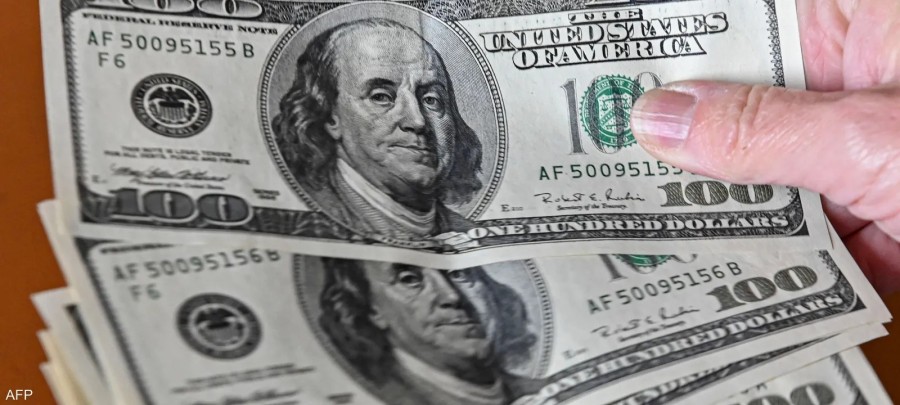


The US dollar fluctuated during trading on Monday after giving up its early gains, as investors focused on renewed military confrontations in the Gulf region, while the Japanese yen declined following a report that Japan had no immediate plans to adjust the allocation of assets in its government pension funds.
The dollar had risen at the start of the session in conjunction with rising oil prices, but later lost momentum, with the euro rising 0.15% to $1.1433, while the pound sterling remained stable at $1.339, and the Australian dollar fell 0.1% to $0.694.
Renewed tensions in the Gulf are supporting oil prices.
The weekend saw an intense exchange of missile and drone attacks between the United States and Iran, with Tehran targeting US facilities in several Gulf states on Sunday and again announcing the closure of the Strait of Hormuz, one of the world's most important maritime oil shipping lanes.
These developments pushed oil prices higher, with Brent crude rising by about 3% to $78.50 a barrel.
In the currency market, the dollar index, which measures the performance of the US currency against a basket of six major currencies, rose by as much as 0.3% during the session, before turning down by 0.2% to settle at 100.83 points.
Thomas Matthews, head of Asia Pacific markets at Capital Economics, said: “The dollar was the biggest beneficiary of the war last time, but this time it is starting from a much stronger position, and markets have already repriced their expectations regarding Federal Reserve policy.”
He added: Therefore, it is not clear that the dollar will achieve the same gains if the situation continues to deteriorate, which seems to be reflected already in trading activity.
Markets increase their bets on US interest rates
Federal Reserve futures contracts showed that markets are pricing in a roughly 50% probability of the U.S. central bank raising interest rates two or more times by its December meeting, a slight increase compared to Friday, according to CME Group's FedWatch tool.
This week, investors' attention is focused on:
US Consumer Price Index (CPI) data is scheduled for release on Tuesday.
Producer Price Index (PPI) data on Wednesday.
Federal Reserve Chairman Kevin Warsh's testimony before the House and Senate may provide new indications regarding the course of monetary policy.
The yen is falling again
The Japanese yen weakened against the dollar after a report that the Japanese government does not currently intend to adjust the allocation of assets within government pension funds.
The dollar rose 0.2% to 162.05 yen, reviving concerns about possible intervention by Japanese authorities in the currency market, as the Japanese currency continued to trade near its lowest levels in nearly 40 years.
The yen and Japanese bonds had posted gains on Friday after Finance Minister Satsuki Katayama announced that the government would explore ways to encourage pension funds, including the Government Pension Investment Fund (GPIF), to increase their investments in Japanese financial assets.
However, two government sources explained to Reuters that the government is only seeking to boost investment within the current limits of asset allocation, without making immediate adjustments to the fund's medium-term objectives.
Chris Turner, head of global markets at ING, said that the possibility of intervention by Japanese authorities in the currency market exists this week, but he pointed out that: intervention alone cannot reverse the current upward trend of the dollar.
He added that changing this trend requires lower energy prices, along with the Federal Reserve being convinced that there is no need to continue raising interest rates.