


































Oil prices jumped as the United States and Iran traded fresh blows, while the two sides made conflicting statements about whether the Strait of Hormuz was still open.
Brent crude rose above $79 a barrel after climbing 5.4% last week, while West Texas Intermediate crude traded near $74.
Iran said the strait would now be closed until further notice, a statement denied by the US Central Command, which said its forces had begun further attacks to ensure freedom of navigation through the waterway.
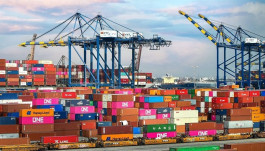
The strikes on Sunday afternoon were the fourth carried out by the United States in a week, with US Central Command stating they were in response to an Iranian attack on a Cypriot-flagged container ship. CNN reported that the Revolutionary Guard again fired on commercial vessels, and that US aircraft intercepted an Iranian cruise missile and an attack drone.
Uncertainty is reintroducing a war premium to crude prices, which had erased its gains after a temporary peace agreement between the two sides allowed for the possibility of more supplies arriving from the Arabian Gulf.
The International Energy Agency said on Friday that renewed escalation threatens to derail efforts to rebuild depleted global oil stockpiles later this year, in a reminder of what is at stake for the global economy if the conflict continues.
Saul Kavonic, senior energy analyst at MST Marquee, said the renewed tensions are still an escalation, but far from full-blown hostilities. He added: “We are likely to see oil prices rise gradually as long as the strikes continue and as long as transit through the strait remains more cautious.”
Escalating fighting brings back the war premium to energy markets
European natural gas also rose amid concerns that the escalation could disrupt shipments from Gulf producers. Futures contracts climbed as much as 2.7% after rising nearly 8% last week.
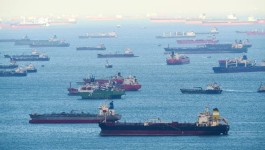
Traffic through the strait, a waterway that typically carries about a fifth of the world's crude oil and liquefied natural gas supplies, was virtually nonexistent on Monday, extending a slowdown that began after tensions flared last week. However, the Joint Maritime Information Centre said the southern shipping route coordinated by Oman remained open.
The latest escalation has weakened the prospects for diplomacy. Iranian parliament speaker and chief negotiator Mohammad Bagher Ghalibaf declared that the era of unilateral deals is over, while Tehran insisted that Washington must first fulfill its previous commitments regarding transit through the Strait of Hormuz and allow Iran to export oil before talks can resume.
Meanwhile, President Donald Trump announced that the ceasefire had ended, but said the United States was still ready to continue negotiations.
Over the weekend, Iranian media reported hearing explosions east of Bandar Abbas, near the Strait of Hormuz. Tehran launched retaliatory drone and missile attacks on countries across the Middle East, including Kuwait, Jordan, and Qatar.
The attack on a Kuwaiti oil drilling facility was the first direct strike targeting oil infrastructure in weeks, and if the conflict expands to target energy infrastructure more widely in the region, oil prices could head towards $100, according to Kavonic.
Over the past month, producers in the Arabian Gulf, including the UAE, have marketed additional volumes of crude oil after the interim agreement eased concerns about exports. The UAE, in particular, has been among the most successful in removing barrels using shuttle tankers sailing without signals or with their transponders switched off.
Price movements:
Brent crude for September delivery rose 4.1% to $79.15 a barrel at 11:19 a.m. Singapore time.
The price of West Texas Intermediate crude for August delivery rose by 4.2% to $74.40 a barrel.