







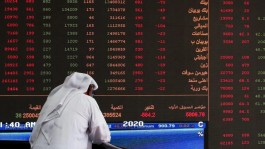


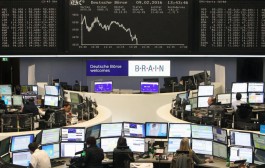











The oil market is experiencing its strongest start to the year since 2022, fueled by supply shocks and sanctions that have disrupted expectations of a surplus. Now, traders are rushing to hedge against the possibility of another US strike on Iran.
Increased activity in the futures and options markets has pushed crude prices higher, with Brent crude futures hitting a seven-month high above $72 a barrel on Friday, and some analysts see a risk premium that could reach $10.
A shift in the oil market
This surge – which has seen Brent crude rise by about 18% since the end of last year – represents a remarkable shift compared to just a few weeks ago, when traders were focused on expectations of a record surplus, particularly at this time of year.
Instead, an unexpected force has emerged: supply disruptions in the United States and Kazakhstan, coupled with a reluctance to buy sanctioned crude, exacerbated by escalating geopolitical risks—from Venezuela to Iran—where President Donald Trump may order new strikes in a region that accounts for roughly a quarter of the world’s seaborne oil trade.
Gary Ross, a veteran oil consultant turned hedge fund manager at Black Gold Investors, said: “You have a potential war, and that’s the overriding factor, but it’s coming in a much tighter market than traders anticipated. I’m going to take my precautions, and I wouldn’t want to hold short positions in this market.”
Trump told reporters on Friday that he was considering a limited strike against Iran after assembling the largest US force since 2003. Axios reported that a US attack on Iran could come sooner than expected and look closer to a full-blown war.
Jump in oil futures contracts
The number of open Brent crude futures contracts has risen to a record high this year, while last month saw record trading in options contracts to hedge against further price increases. Volatility has soared to its highest level since the last US airstrikes on Iran in June, and traders have been charging premiums for the longest period in years to protect themselves from a sharp rise.
Jorge León, head of geopolitical risk analysis at Rystad Energy, said: “The likelihood of limited strikes and limited retaliation from Iran seems lower this time. That worked last year, but now I have a feeling it’s either a nuclear deal or a wider escalation, nothing in between.”
The expansion of global production is curbing prices.
However, the fact that prices have not risen to higher levels reflects the scale of the expansion in global production.
U.S. Energy Secretary Chris Wright said this week that the United States' dominance in energy has made its foreign policy less vulnerable to supply shocks.
OPEC and its allies gradually increased production last year. Similarly, supplies from outside the group reached a record high, pushing global production to 108 million barrels per day by the end of 2025, according to estimates by the International Energy Agency. This exceeds consumption by approximately 3 million barrels per day during the same period, according to its data.
Supply disruptions
However, the first weeks of January showed how unexpected production constraints could quickly narrow the gap.
Exports of CPC Blend crude from Kazakhstan have fallen to their lowest level in nearly a decade, a consequence of a combination of drone attacks, maintenance work and damage to a production facility, and adverse weather conditions. Meanwhile, a severe cold snap in the United States contributed to two of the four largest declines in US oil inventories this century. Crude stocks alone fell by 9 million barrels last week.
Although production in both countries has since recovered, the disruptions helped erode Western stockpiles at a time when they were expected to rise rapidly.
All eyes are on Iran
On the other hand, physical oil traders are also closely monitoring the situation in Iran.
Some refineries in Asia, the largest consuming region, have begun inquiring about the availability of shipments from areas outside the Arabian Gulf to hedge against the risk of disruption.
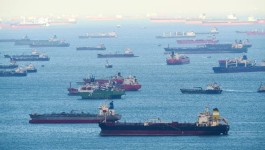
The charter rates for supertankers, whose supply was already constrained, also jumped, partly in anticipation of a US move. The largest vessels in the market are earning more than $150,000 a day, the highest level since the pandemic when many were used to store unwanted barrels.
Shipping rates have increased due to tensions in recent days, after Iran announced earlier this week that it had temporarily closed part of the narrow Strait of Hormuz, through which one-fifth of the world's oil supply passes.
Rob Thamel, portfolio manager at Tortoise Capital Advisors, said: Currently, the focus is overwhelmingly on Iran and what will happen in the Strait of Hormuz. This is the most important question of all.