
























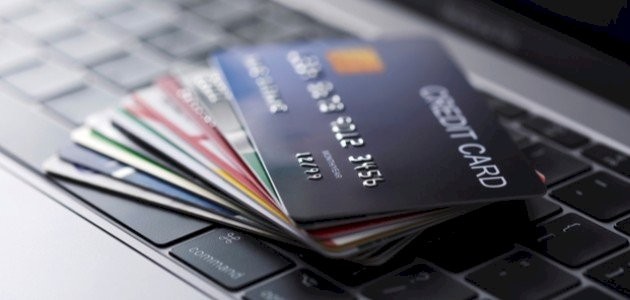


Shares of major U.S. credit card and payment companies fell after President Donald Trump called for a one-year cap on credit card interest rates, raising fresh concerns about the sector's regulatory risks.
Shares of Capital One fell by about 9% in pre-market trading on Monday by 12:47 p.m., while shares of Citi, JPMorgan Chase & Co. and Wells Fargo declined by about 4%, 3% and 2% respectively.
Barclays shares fell by 2.5%, American Express by 4.4%, while Visa and Mastercard shares each declined by about 2%.
These moves come after Trump said in a social media post on Saturday that he wants to impose a 10% cap on credit card annual percentage rates (APRs) starting January 20, arguing that Americans are being robbed at rates of 20-30%.
However, analysts at Raymond James said the president does not have the authority to unilaterally impose such a ceiling, noting that interest rate limits would require legislation from Congress.
Analysts led by Ed Mills described the legislative risks as relatively low, but warned that they are clearly higher now that Trump has pushed the issue publicly.
They also warned that capping interest rates could have unintended consequences, arguing that issuers would likely tighten credit standards because they would then be unable to price risk appropriately. This could reduce access to credit for high-risk borrowers and potentially put pressure on account growth and spending volumes.
While we believe the interest rate cap has a low probability of passing through Congress, we see the greatest potential risks to issuing processors and, to a lesser extent, to networks such as Mastercard and Visa, analysts said.
They said they expect a strong reaction from the industry if the proposal gains momentum, with banks likely to argue that the cap would cut off credit to the very borrowers the president is trying to help.
A key issue to watch in the coming days and weeks will be the response of the chairmen of the House Financial Services Committee and the Senate Banking Committee, analysts have noted.
Separately, Mizuho analyst Dan Doleff said Trump’s call for a 10% cap could have significant positive implications for buy-now-pay-later and personal loan providers if banks back off borrowers with low FICO scores, such as Affirm, Upstart, SoFi Technologies, Block, and PayPal.
Doleff noted that the average annual percentage rate (APR) for U.S. credit cards hovers around 20% and that more than half of U.S. consumers fall below the FICO score of 745, where borrowing costs are higher.
In this scenario, excluded borrowers may increasingly turn to alternative lenders, boosting the volume growth of buy-now-pay-later platforms and personal loans.