










Donald Trump’s war against Iran may be over, but its repercussions on global monetary policy will remain for years.
With the fragile truce largely holding after the US president's offensive in the Middle East, the trajectory of interest rates at central banks around the world is heading towards higher levels for years to come, according to Bloomberg Economics estimates.
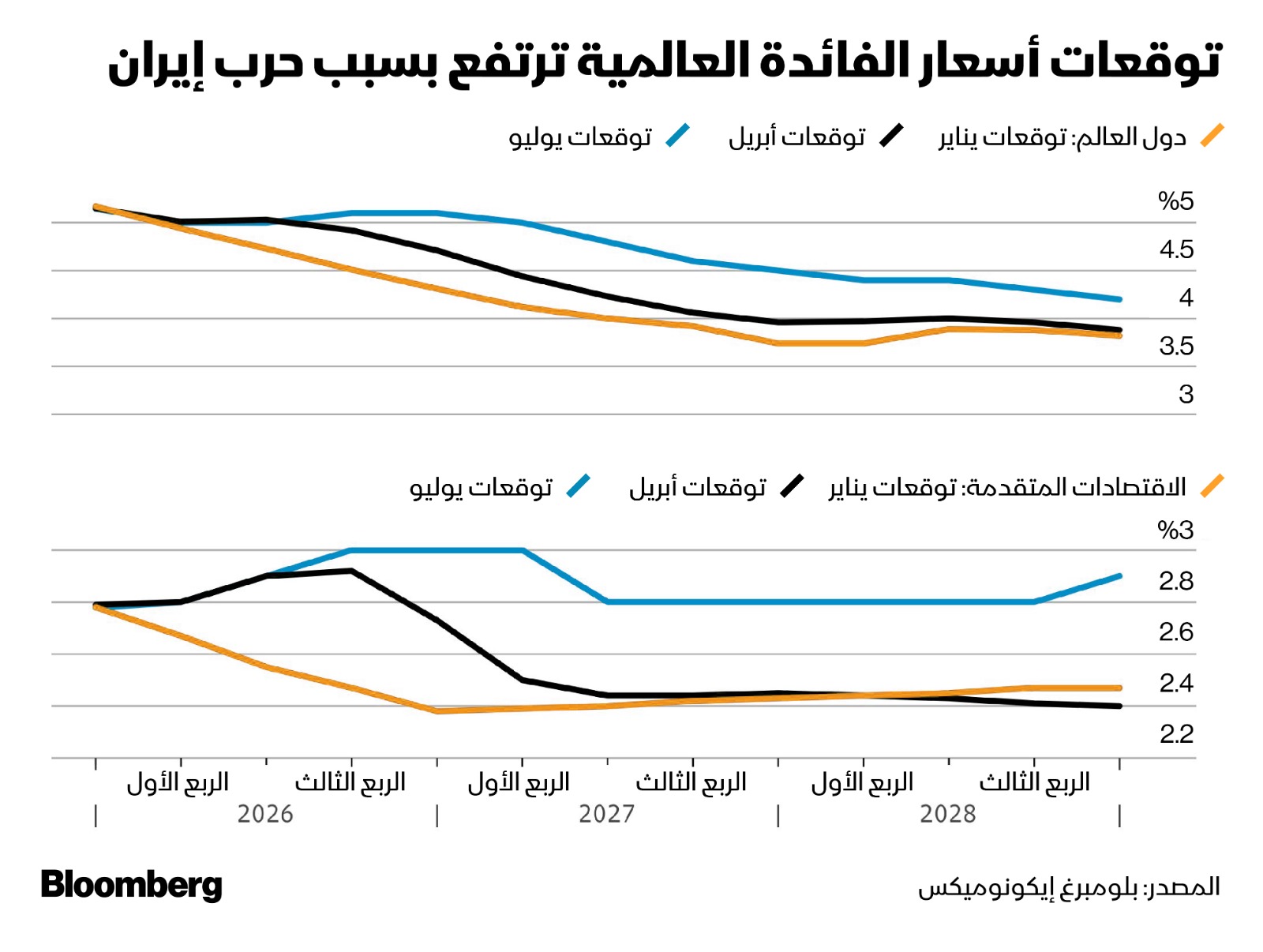
The firm’s borrowing cost projections, included in this report, show that interest rates will move up to half a percentage point or more higher through 2028 than pre-war forecasts. This applies to both Bloomberg Economics’ global interest rate index and its index for advanced economies.
Inflation risks
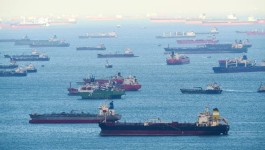
The forecasts reflect shifting inflation risks, including those arising from the race to adopt artificial intelligence technologies, which may subsequently subside. Nevertheless, the price momentum stemming from the energy shock caused by the closure of the Strait of Hormuz remains.
As the dust settles from the conflict, Bloomberg Economics forecasts show that the direct impact on living costs for consumers and businesses will be compounded by a period of higher-cost loans and mortgages compared to what would have been expected under normal circumstances.
Earlier this year, Bloomberg Economics predicted that the US Federal Reserve would cut interest rates by a full percentage point by mid-2027, instead of the single quarter-point reduction it currently anticipates. The European Central Bank is also expected to raise interest rates again by half a percentage point more than originally projected, before subsequently beginning a gradual monetary easing cycle.
Bloomberg Economics forecasts also indicate that the global economy is proving its ability to withstand higher levels of borrowing costs, reflecting its capacity to absorb repeated shocks.
But, given Trump’s penchant for creating disruption, with the war coming after his campaign last year to raise US tariffs, this flexibility is likely to face new tests in the not-too-distant future.