
































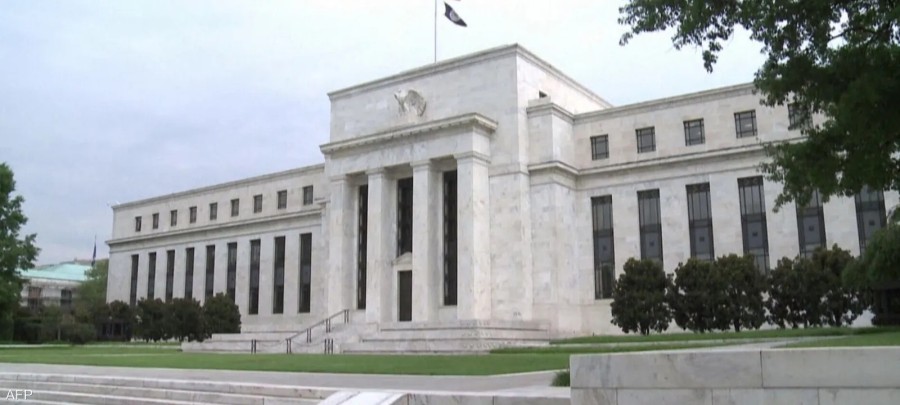


The US Federal Reserve and three other central banks that recently backed its embattled chairman are poised to keep interest rates unchanged, in a tense period for monetary policymakers globally.
Monetary policymakers in Washington are widely expected to defy US President Donald Trump's calls to lower borrowing costs on Wednesday, at the conclusion of a two-day meeting. Their counterparts in Brazil, Canada, and Sweden may also maintain current levels.
Paul's support
The last three countries were among more than ten central banks, including the Bank of England and the European Central Bank, whose leaders declared full solidarity with Federal Reserve Chairman Jerome Powell, in support of the bank's independence at a time when the administration in Washington is escalating pressure on him and his colleagues.
Aside from Trump's repeated complaints about the Federal Reserve's refusal to cut interest rates, the bank is currently facing grand jury subpoenas that threaten criminal charges, while the Supreme Court on Wednesday heard arguments on whether the president can fire Governor Lisa Cook.
Difficult conditions for central banks to operate
Beyond this debate, all central banks are operating under tense global conditions, as evidenced by the recent sell-off in Japan , continued investor anxiety over Trump’s Greenland efforts, and his ongoing threats of further trade disruptions.
Kristalina Georgieva, the head of the International Monetary Fund, said on Friday at the closing session of the World Economic Forum in Davos: We are in a world that is more vulnerable to shocks. We are no longer in Kansas.
Bloomberg Economics experts' opinion:
We believe that most members of the Federal Open Market Committee (FOMC) can rely on the data to support a decision to hold interest rates steady at the meeting. This degree of unity will be seen as a vote of support for Powell, who is under intense attack from the White House. The two most important figures to watch are conservatives Christopher Waller and Michele Bowman: if they vote with the majority to hold rates steady, they will be signaling to Trump that they stand with Powell, including on the independence of the Federal Reserve. We expect Waller to vote with the majority, while Bowman is expected to vote against.
Anna Wong, Stuart Ball, Eliza Winger, Chris J. Collins, Alex Tanzi and Troy Dory, economists
While monetary policymakers are focused on the potential growth risks posed by tariffs, they are also monitoring inflationary pressures that may arise in the current environment.
Up to 18 central banks around the world are scheduled to make interest rate decisions next week. In contrast to the Federal Reserve, counterpart banks in Africa—which are facing a different stage of the economic cycle—may unveil a wave of monetary easing.
On the other hand, inflation data from Australia to Brazil and Japan, industrial profits in China, and GDP in the Eurozone will be among the most anticipated reports.
The US Federal Reserve and three other central banks that recently backed its embattled chairman are poised to keep interest rates unchanged, in a tense period for monetary policymakers globally.
Monetary policymakers in Washington are widely expected to defy US President Donald Trump's calls to lower borrowing costs on Wednesday, at the conclusion of a two-day meeting. Their counterparts in Brazil, Canada, and Sweden may also maintain current levels.
Paul's support
The last three countries were among more than ten central banks, including the Bank of England and the European Central Bank, whose leaders declared full solidarity with Federal Reserve Chairman Jerome Powell , in support of the bank's independence at a time when the administration in Washington is escalating pressure on him and his colleagues.
Aside from Trump's repeated complaints about the Federal Reserve's refusal to cut interest rates, the bank is currently facing grand jury subpoenas that threaten criminal charges, while the Supreme Court on Wednesday heard arguments on whether the president can fire Governor Lisa Cook.
Difficult conditions for central banks to operate
Beyond this debate, all central banks are operating under tense global conditions, as evidenced by the recent sell-off in Japan, continued investor anxiety over Trump’s Greenland efforts, and his ongoing threats of further trade disruptions.
Kristalina Georgieva, the head of the International Monetary Fund, said on Friday at the closing session of the World Economic Forum in Davos: We are in a world that is more vulnerable to shocks. We are no longer in Kansas.
Bloomberg Economics experts' opinion:
We believe that most members of the Federal Open Market Committee (FOMC) can rely on the data to support a decision to hold interest rates steady at the meeting. This degree of unity will be seen as a vote of support for Powell, who is under intense attack from the White House. The two most important figures to watch are conservatives Christopher Waller and Michele Bowman: if they vote with the majority to hold rates steady, they will be signaling to Trump that they stand with Powell, including on the independence of the Federal Reserve. We expect Waller to vote with the majority, while Bowman is expected to vote against.
Anna Wong, Stuart Ball, Eliza Winger, Chris J. Collins, Alex Tanzi and Troy Dory, economists
While monetary policymakers are focused on the potential growth risks posed by tariffs, they are also monitoring inflationary pressures that may arise in the current environment.
Up to 18 central banks around the world are scheduled to make interest rate decisions next week. In contrast to the Federal Reserve, counterpart banks in Africa—which are facing a different stage of the economic cycle—may unveil a wave of monetary easing.
On the other hand, inflation data from Australia to Brazil and Japan, industrial profits in China, and GDP in the Eurozone will be among the most anticipated reports.