










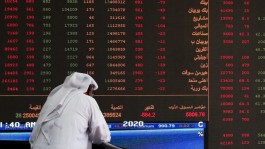






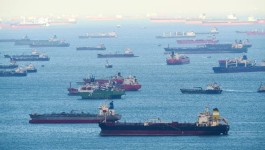
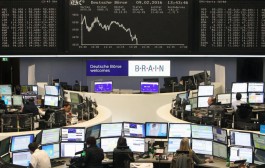
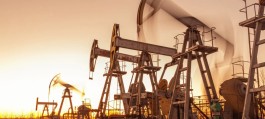











Oil prices fell sharply after US President Donald Trump renewed his suggestion that the war with Iran might be nearing its end, despite the Strait of Hormuz remaining largely closed and US forces continuing to pour into the region.
Brent crude fell below $100 a barrel, while West Texas Intermediate settled near $97, during trading on Wednesday, as Trump told reporters that the United States could withdraw from Iran within two to three weeks, indicating that reaching an agreement with Tehran was possible, but not a condition for ending the conflict.
The president is scheduled to address the nation at 9 p.m. Eastern Time on Wednesday to provide an update on the crisis, White House spokeswoman Carolyn Leavitt announced, as his stance continues to waver between optimism about an imminent agreement and warnings of a possible military escalation.
The situation remains unclear despite signs of de-escalation.
Even if the war ends within the timeframe Trump indicated, it will take time for energy flows to return to normal through the Strait of Hormuz, especially given that some energy facilities were damaged during the conflict.
The deployment of a third group of US aircraft carriers to the Middle East also reflects the possibility of continued escalation, adding further complexity to the situation.
Although Brent crude prices hit a record high last month, they have not reached the levels of 2022, as traders bet on an imminent end to hostilities.
Risks of market complacency
Dominic Schneider, head of commodities at UBS's wealth management unit, said in an interview with Bloomberg Television that this optimism carries real risks, noting that markets may be misjudging the size of the current supply shock.
He added that the closure of the Strait of Hormuz effectively choked off oil and gas supplies to global markets, driving up energy prices and raising fears of a widespread inflation crisis.
In the United States, the price of gasoline exceeded $4 a gallon for the first time since August 2022, which could increase political pressure on the Trump administration.
Iran's demands and the complexities of negotiation
The United States has not explicitly stated which parties it is communicating with inside Iran. Iranian Foreign Minister Abbas Araqchi told Al Jazeera that he had received messages from the US envoy to the Middle East, but stressed that there were no official negotiations yet.
Tehran has also put forward a set of conditions, including maintaining its sovereignty over the Strait of Hormuz, which complicates any potential settlement.
At the same time, Trump indicated that he might leave the Strait issue to other countries, stressing that the United States sees no reason to continue in this conflict.
International moves and ongoing concerns
The Wall Street Journal reported that the UAE has called on the United States and military powers in Europe and Asia to form a coalition to reopen the strait by force.
China and Pakistan have also called for an immediate ceasefire and for maritime security to be guaranteed, in an attempt to contain the fallout from the crisis.
Dennis Kessler, vice president of trading at BOK Financial Services, said that panic and exaggeration were beginning to subside in the oil futures markets, with markets sensing the possibility of a temporary lull and perhaps opening the door to further negotiations.
Current price levels
Brent crude for June delivery fell 3.9% to $99.89 a barrel by 8:31 a.m. London time.
West Texas Intermediate crude for May delivery also fell by 4% to $97.33 a barrel.