


































Oil prices rose for the third consecutive day, as renewed tit-for-tat attacks between the United States and Iran cast doubt on the possibility of reaching a peace agreement that would reopen the Strait of Hormuz.
Brent crude surpassed $98 a barrel in London, bringing its gains since the start of the week to around 7%. West Texas Intermediate crude traded near $96.
US forces intercepted Iranian ballistic missiles and drones targeting neighboring countries in the Middle East, and launched an attack on a command center in Iran in response.
This came after President Donald Trump expressed continued optimism that the United States could reach a temporary peace agreement with Tehran soon, denying reports by Iranian state media that talks with Washington had been suspended due to Israeli military escalation against the Iranian-backed Hezbollah in Lebanon.
Renewed attacks in the Middle East
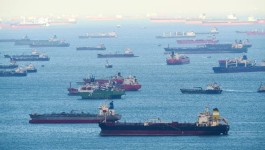
Uncertainty surrounding a potential extension of the current ceasefire and the future of oil flows through the Strait of Hormuz has led to volatility in oil prices, which fell last month on optimism that a deal could be reached. The delay in resolving the conflict raises concerns that the world will need to draw down its crude oil reserves while awaiting the full resumption of exports from the Arabian Gulf through the vital waterway.
Florence Schmitt, energy strategist at Rabobank, said that uncertainty is now the main factor, but the likelihood of a credible peace agreement remains low unless an agreement is reached on Iran’s stockpile of highly enriched uranium, the Strait of Hormuz itself, and Lebanon.
Iran launched ballistic missiles at Kuwait and Bahrain, which crashed en route or were shot down by air defenses, while U.S. forces also carried out strikes on Iran’s Qeshm Island, according to posts on the U.S. Central Command’s X platform.
Trump wants Iran to put specific nuclear concessions in writing as part of an initial agreement to end the war, according to an ABC News report citing people familiar with the matter. Tehran had previously given verbal assurances that it would agree to certain conditions regarding its nuclear program, the report said.
Pessimistic outlook for oil amid price volatility
In Russia, air defenses shot down 50 drones over the Leningrad region near St. Petersburg, according to the region's governor, Alexander Drozdeneks.
For his part, Ukrainian President Volodymyr Zelenskyy indicated in a post on the X platform that his country's forces attacked the St. Petersburg oil terminal and military targets at the Kronstadt naval base in Russia.
Schmidt noted that attacks on oil infrastructure in Russia exacerbate the pessimistic outlook for crude.
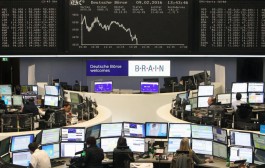
Price volatility has forced traders to reduce their exposure to risk, pushing the number of open contracts – the total number of futures contracts that have not been closed, settled, or delivered – in the benchmark Brent blend to its lowest level since August.
Dan Strovin, co-head of global commodities research at Goldman Sachs Group, told Bloomberg TV: “Clients are exhausted. It’s a challenging trading environment with headlines driving prices up and down. Positioning in the oil markets is extremely limited.”
Meanwhile, in the United States, an industry report showed that crude oil inventories fell by 6.8 million barrels last week. This would be the sixth consecutive weekly decline if confirmed by official data due later on Wednesday.
In the latest trading, Brent crude futures for August settlement rose 2.4% to $98.32 a barrel at 10:07 a.m. in London, while West Texas Intermediate crude futures for July delivery climbed 2.6% to trade at $96.21 a barrel.