





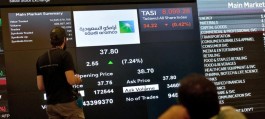



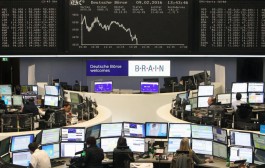














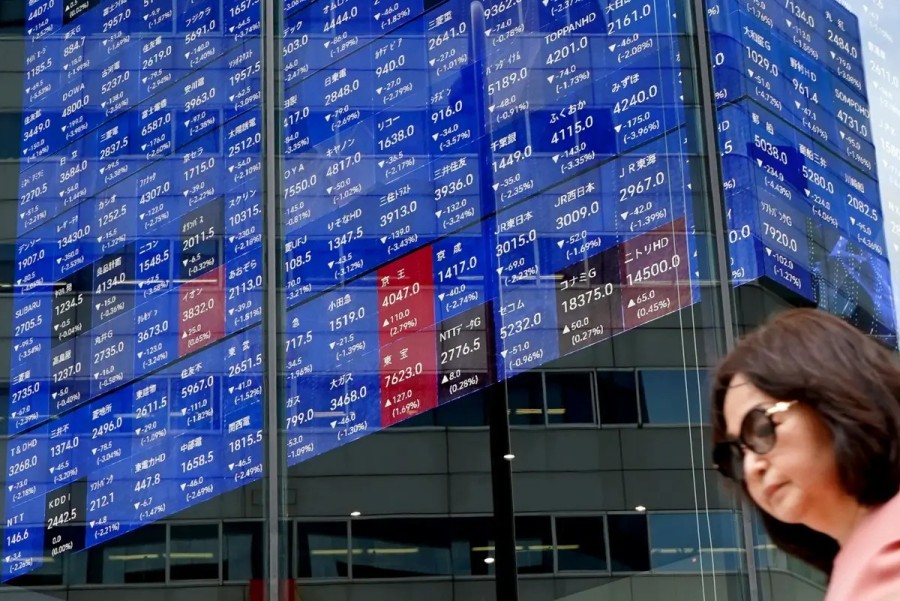


A sell-off in semiconductor stocks has spread to South Korea, reviving fears that the sharp rise in artificial intelligence stocks this year may have gone too far and too fast.
Brent crude fell to its lowest level since before the start of the Middle East war, while South Korea's Kospi index, which includes many companies working in the field of artificial intelligence infrastructure development, fell by about 7% before reducing its losses.
Shares of Samsung Electronics Co. and SK Hynix Inc. both fell by more than 5%, while Kioxia Holdings Corp. plunged 11% in Japan, after a sharp rise that had propelled its stock up by more than 650% this year. The MSCI Asia Pacific Index declined 0.6%.
Meta Platforms' announced plans to build a cloud infrastructure business that sells access to computing power and artificial intelligence models have raised concerns that the company may have overbuilt its capacity.
Separately, Apple is in talks to buy chips from two Chinese semiconductor makers, according to people familiar with the matter, a move that would hurt South Korean manufacturers.
V-Cern Ling, managing director at Union Bancaire Privee, said that Meta's consideration of selling its excess computing power suggests it may be struggling to find a good use for it, or perhaps it has overbuilt. He added: This will have negative repercussions for AI-related companies in the Korean and Japanese markets.
Chip pressures coincide with falling oil prices and rising gold.
Some stability emerged as U.S. stock futures erased earlier losses to turn positive. Futures for the tech-heavy Nasdaq 100 rose 0.3%.
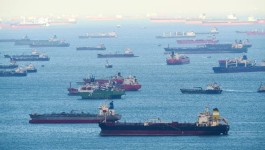
In other markets, Brent crude fell as much as 1.3% to $70.65 a barrel, its lowest level since February 27, as flows through the vital Strait of Hormuz increased. Treasury bonds held onto their losses, while gold rose for a second day after Federal Reserve Chairman Kevin Warsh said price risks had eased in recent weeks.
Warsh reiterated his determination to bring inflation back to the US Federal Reserve's 2% target. Speaking at the European Central Bank's annual forum in Sintra, Portugal, Warsh said inflation expectations had moderated over the past month.
He also reiterated the Federal Reserve's commitment to restoring price stability, reinforcing expectations that policymakers are in no hurry to raise interest rates.
While the sell-off in semiconductor stocks continued to drive sentiment in the stock market, investors drew some relief from comments by Warsh and other central bankers who said that inflation risks were becoming more balanced.
Attention now turns to Thursday's US jobs report for fresh clues on the policy outlook after Warsh's comments dampened expectations of an interest rate hike in July.
Krishna Guha of Evercore said: “At the very least, his comments provided no fuel for speculation about an imminent interest rate hike in July, and we see them as indicating that the new Fed chair, while keeping all options open from meeting to meeting, currently sees no reason for an immediate increase.”
Manufacturing data reinforces the narrative of the resilience of the American economy.
Meanwhile, U.S. manufacturing expanded for the sixth consecutive month in June as the surge in input costs driven by the war eased, adding to signs that the U.S. economy remains resilient. The printing, electrical equipment, and textile sectors led the gains, while paper, furniture, and wood products contracted.
Eugenio Alleman, senior economist at Raymond James, said: “Overall, the report points to continued resilience in the manufacturing sector and supports our view that the U.S. economy is accelerating again, with growth on track to reach around 2.4% this year.”
Returning to stocks, Thursday's losses followed a volatile journey for technology stocks from Seoul to New York in late June. South Korean stocks oscillated between optimism and anxiety in a painful trading session that highlighted the fragility of the artificial intelligence boom.
Hugh Lam, investment strategist at Betashares, said: Asian stock movements continue to be sensitive to the sustainability of AI capital spending build-up and concerns about oversupply in computing following Meta's news.