








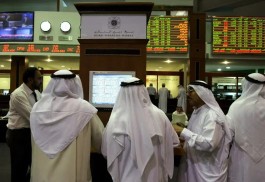
















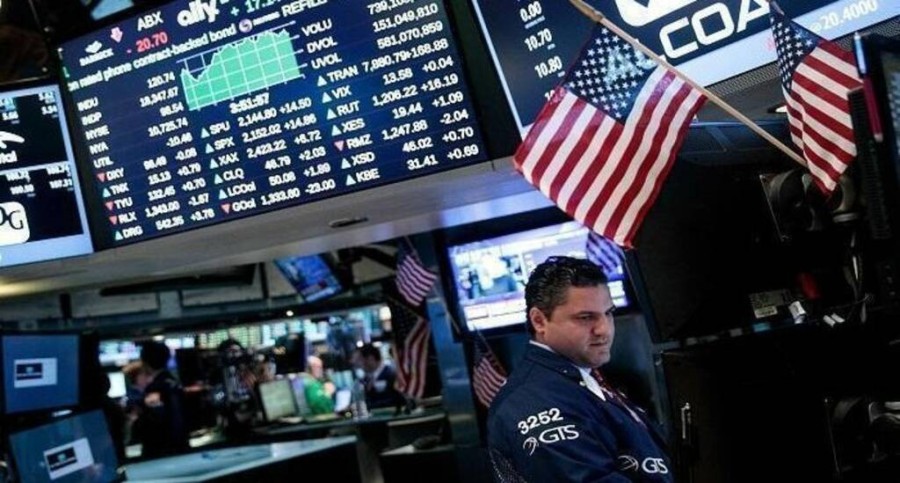


The largest US companies suffered market losses exceeding $3.3 trillion during nine consecutive sessions of decline, in a violent sell-off exacerbated by data showing US inflation rising to its highest level in three years.
The annual inflation rate in the United States was 4.2% in May, compared to 3.8% in April, reaching its highest level since April 2023.
Data from the US Bureau of Labor Statistics showed that prices continued to rise at a strong pace amid the economic fallout from the US-Israeli war against Iran, which broke out in late February.
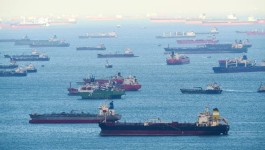
The war contributed to a sharp jump in energy prices after Tehran effectively responded by closing the Strait of Hormuz, one of the world's most important maritime passages, through which about a fifth of the world's oil and gas trade passes.
High inflation brings the scenario of raising interest rates back to the forefront.
These figures are worrying the markets because they reinforce the likelihood that the US Federal Reserve will raise interest rates later this year, especially after the strong employment data released last week.
This means more pressure on the American consumer who already faces high living costs and heavier burdens on mortgages and consumer finance.
High interest rates also pose a direct threat to giant AI companies seeking to raise trillions of dollars to fund their massive expansions and technology infrastructure projects.
Despite the release of high inflation data, markets initially tried to ignore the news, but this resilience did not last long as geopolitical concerns escalated and selling pressures increased.
Sharp losses on Wall Street
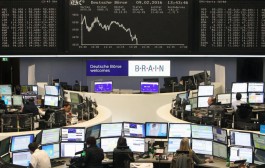
Major U.S. indexes ended trading on Wednesday with sharp declines, with the S&P 500 falling 1.62% and the Dow Jones Industrial Average dropping about 2%.
The Standard & Poor's 500 index has thus lost more than $3.3 trillion in market value since reaching its all-time high on June 2.
Investors appear to be increasingly concerned about the rapid developments in the Middle East, especially with growing expectations of a possible expansion of military operations.
According to media reports, US President Donald Trump held a meeting in the White House Situation Room to discuss additional military options against Iran. US sources indicated that the Trump administration is considering a large-scale but short-term military operation aimed at increasing pressure on Iran during negotiations.
Despite the sharp declines in the markets, some analysts believe that a significant part of what happened is due to normal profit-taking after a strong upward trend in technology stocks over the past two months.
Angelo Korkavas of Edward Jones said the recent declines largely reflect profit-taking in the technology sector following its recent exceptional gains.
He added that the fundamentals related to artificial intelligence and the huge amount of spending on this sector have not changed substantially, but the markets are currently experiencing a natural correction phase after the rapid rise.
Trump: I love inflation
When the US president was asked about the new inflation data, he downplayed the figures, saying that the economic indicators were excellent, adding: I like inflation.
He also reiterated his prediction that inflation rates would decline very rapidly once the war ended.
However, many economists are skeptical of this view, arguing that oil prices may need several months to return to pre-war levels, even if a political settlement is reached soon.
Analyst Stephen Innes believes the picture is not as entirely negative as it first appears, because a large part of the rise in inflation came as a result of the jump in energy prices.
Despite overall inflation rising to 4.2%, core inflation, which excludes more volatile energy and food prices, remained steady at 2.9%.
Innes noted that inflation is still relatively under control, explaining that the fire has already started but has not yet spread to all components of the economy.
Meanwhile, markets continue to monitor the escalating military confrontation between the United States and Iran, which is casting a shadow over the global economic outlook. Hopes for a peace agreement that would fully reopen the Strait of Hormuz to oil tanker traffic have also faded, adding further pressure on energy prices.
The Federal Reserve faces a tough test.
Inflation data and military escalation together have increased concerns that the Federal Reserve may be forced to keep interest rates high for longer or even raise them again.
New Federal Reserve Chairman Kevin Warsh will preside over his first meeting next week to determine monetary policy.
Although investors do not expect an interest rate hike at the next meeting, the probability of a hike by September has risen to about a third, according to market estimates.
Before the war, markets expected the Federal Reserve to begin a rate-cutting cycle in the second half of the year as inflationary pressures from tariffs eased. However, the war upended these expectations, bringing inflation back to the forefront and prompting a growing number of monetary policymakers to warn of the risks of rising prices.
Kathleen Brooks, director of research at XTB Group, said that oil markets are still betting on the possibility of reaching a political solution that would allow for an increase in oil supplies.
She added that the decline in oil inventories in the Middle East region indicates that large quantities of oil are still leaving the Gulf, although exports are still far below pre-war levels due to continued restrictions on shipping through the Strait of Hormuz.
She explained that this relative improvement in supply flows explains why oil prices have not risen further despite the recent military escalation.
Inflation and the US elections
High living costs are one of the most pressing issues for American voters ahead of the midterm elections scheduled for next November.
Trump’s Republican Party hopes to maintain control of both houses of Congress, but continued high inflation could increase political pressure on the current administration.
If the Democrats manage to regain control of one or both houses of Congress, it will limit Trump's ability to pass his political and legislative agenda during the remainder of his term.
Data showed that energy prices rose 23.5% year-on-year in May, while fuel prices jumped 40.5%. Food prices also rose for the second consecutive month, increasing by 2.7% compared to the same period last year.
Other sectors also saw notable increases, including healthcare, personal care, air travel tickets, and recreational activities.
Americans have been facing price pressures for years, after the economy was hit by a series of shocks starting with the coronavirus pandemic, then the Russian-Ukrainian war, tariffs, and finally the war with Iran.
Has inflation peaked?
Some analysts believe that the stability of fuel prices in recent weeks may be a positive sign that inflation is nearing its current peak.
Kathy Bostijancic, senior economist at Nationwide, said inflation may have peaked and will begin to gradually decline during the second half of the year.
She added that this scenario depends primarily on reaching an agreement soon with Iran that leads to the reopening of the Strait of Hormuz and the return of energy flows to normal.
In contrast, core inflation rose to 2.9% in May compared to 2.8% in April.
Gregory Daco, chief economist at EY Parthenon, noted that the spillover effect of higher energy prices to the rest of the economy has so far been limited, with the exception of the aviation sector.
The Federal Reserve is not in a position to cut interest rates.
The Federal Reserve aims in the long term to keep inflation at 2%, a level that current prices are still clearly far from.
With inflationary pressures persisting and the personal consumption expenditures index, the Fed's preferred measure, rising to its highest level in three years, talk of an imminent interest rate cut is becoming increasingly difficult.
Chris Zaccarelli, chief investment officer at Northlight Asset Management, said the Federal Reserve would not be in a position to cut interest rates if current trends in inflation and prices continued.