










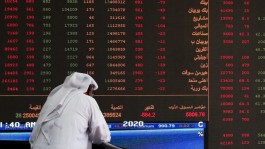






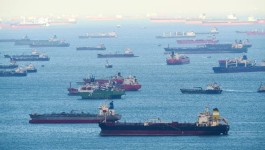

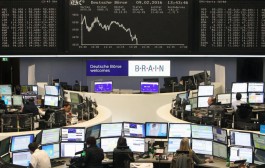











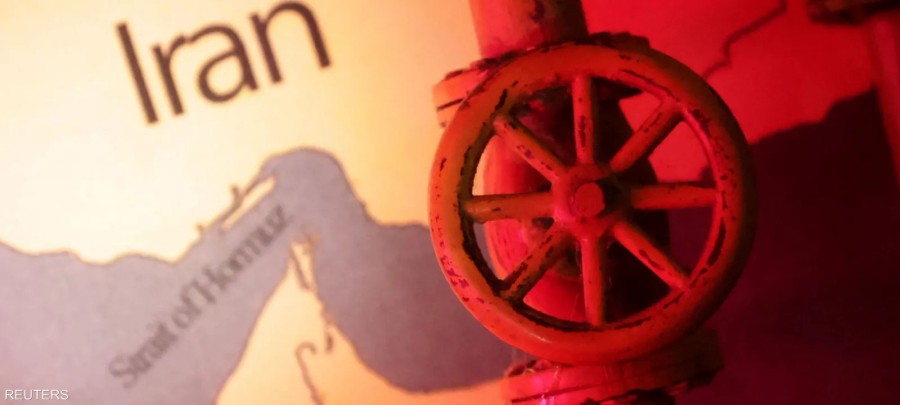


Oil prices rose on Monday as investors refocused on threats to energy facilities in the Middle East, despite US President Donald Trump's call for other countries to help protect the Strait of Hormuz, a vital artery for global oil and gas shipments.
Brent crude futures rose 1.17% to $104.35 a barrel.
US West Texas Intermediate crude also rose 0.1% to $98.89 a barrel, after climbing about three dollars in the previous session.
Both crude oil benchmarks have risen by more than 40% this month to their highest levels since 2022, after Tehran halted shipping through the Strait of Hormuz due to US and Israeli attacks on Iran, disrupting about a fifth of global oil supplies in the largest disruption of its kind.
Trump threatened further attacks on Iran's Kharg Island, a key oil export hub, after the United States targeted military sites over the weekend. Tehran responded defiantly to Trump's statements, vowing further retaliation. Approximately 90% of Iran's oil exports pass through Kharg Island.
In a related development, an Iranian drone struck a major oil terminal in Fujairah, UAE, shortly after the attacks on Kharg. Four sources said that oil loading operations in Fujairah later resumed, but it was unclear whether operations had returned to normal.
Fujairah, located outside the Strait of Hormuz, is an outlet for about one million barrels per day of the UAE's main Murban crude, an amount equivalent to about 1% of global demand.
SEB analyst Eric Myerson said in a note that the United States is considering high-risk options on the ground, including launching raids on nuclear sites to obtain Iran’s enriched uranium, seizing Kharg Island, an oil export hub, and even occupying southern Iran to protect the Strait of Hormuz.
He added that all of these options involve a major escalation and require taking much higher risks, according to Reuters.
On Sunday, Trump called on other countries to help protect this vital energy corridor, adding that Washington is in talks with several countries about monitoring it.
He also said that the United States is in contact with Iran, but expressed doubts about Tehran's willingness to conduct serious negotiations to end the conflict.
The International Energy Agency said on Sunday that more than 400 million barrels of oil reserves will soon begin flowing into the market, in a record drawdown aimed at curbing price spikes caused by the war in the Middle East.
Myerson noted that the conflict entering its third week without a clear end is increasing global markets' concern about a spiral of escalation that could get out of control.
In contrast, US Energy Secretary Chris Wright said on Sunday that he expects the trade war between the United States and Iran to end within the next few weeks, with oil supplies recovering and energy costs declining thereafter.