







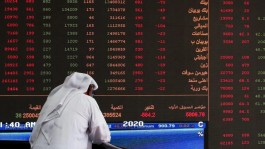

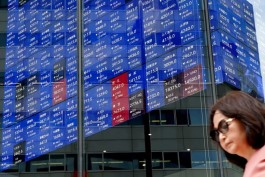

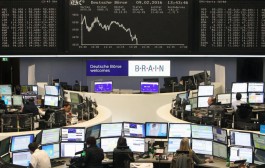














Asian stocks fell and oil prices rose as optimism about a ceasefire between the United States and Iran faded after Tehran said several clauses of the agreement had been violated, highlighting continued uncertainty in the markets.
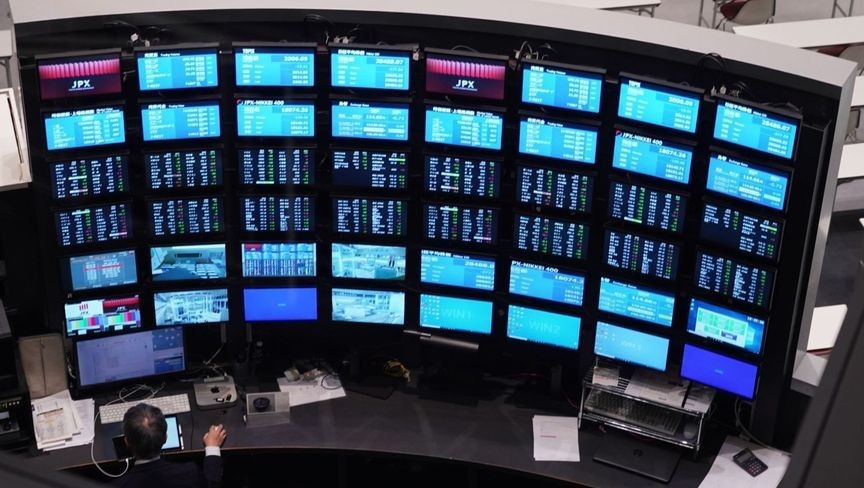
The MSCI Asia Pacific index fell 0.9% after Iranian parliament speaker Mohammad Baqer Qalibaf said that three points of the ceasefire proposal had already been violated.
Two stocks declined for every one that rose within the index. Futures contracts for US and European stock indices also fell by 0.2% in Asian trading, suggesting that the four-day global rally may be nearing its end.
Stocks rose globally on Wednesday, with the Asian index posting its biggest jump in a year, buoyed by optimism that the ceasefire agreement would ease oil flows through the Strait of Hormuz and support economic growth.
However, a 2% rise in Brent crude to around $97 a barrel, after recovering from its biggest drop in more than six years, weighed on sentiment, amid continued weak shipping traffic through the strait.
Sharp fluctuations reflect the fragility of the truce
Treasury bonds stabilized after erasing earlier gains during the US trading session. Government bonds in Japan and Australia also declined amid concerns that high oil prices could exacerbate inflationary pressures.
These volatile movements reflect the fragility of sentiment following the wave of relief that swept through various assets after Washington pledged to halt strikes on Iran for two weeks and seek talks.
However, Israeli strikes in Lebanon and the continued de facto closure of the Strait of Hormuz, a key passage for oil flows from the Middle East, threaten to undermine the ceasefire and halt stock market gains.
Peter Dragicevich, Asia-Pacific currency strategist at Corbay Solutions in Sydney, wrote in a note that the fragility of the ceasefire is already being tested with reports that Iran has closed the Strait of Hormuz in response to Israeli attacks on Lebanon.
He added that the situation in the Middle East has improved relatively, but it remains volatile, and given the volatile parties involved, it could deteriorate at any time.
Mixed movements in global markets
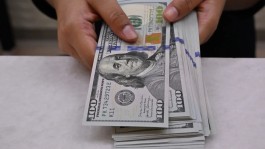
Elsewhere in the market, the Bloomberg Dollar Spot Index rose 0.1%, while Bitcoin fell 0.5% to around $71,000. Gold also fluctuated, trading near $4,700 an ounce.
Asian technology stocks followed their US counterparts lower after Meta Platforms unveiled a new artificial intelligence model and Anthropic launched cloud tools to build AI agents.
Meanwhile, US President Donald Trump said that all ships, aircraft, and military personnel would remain in and around Iran until the actual agreement reached is fully complied with.
Israel escalates its actions in Lebanon
Sporadic clashes continued across the Middle East, including in Lebanon, where Israel pressed on with its campaign against the Iranian-backed Hezbollah group. Iranian officials considered this a violation of the ceasefire that had been in place for less than a day.
Yiping Liao, portfolio manager at Templeton Global Investments, said: “Much will depend on adherence to the ceasefire and progress in negotiations, and a return to the pre-conflict status quo will be difficult. While this could create fertile ground for further escalation, the risks remain high.”
Garfield Reynolds, head of Bloomberg Markets Live's Asia team, said that with Israel intensifying its strikes in Lebanon and Iran threatening a strong response, investors face the prospect that the proposed talks starting on Friday will achieve limited results.
Traders remain focused on the Strait of Hormuz and whether energy flows will resume through this waterway.
Watch out for the Strait of Hormuz
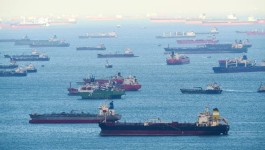
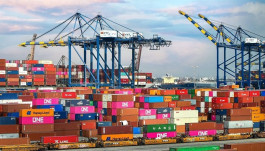
The strait remained largely closed on Wednesday, as ship owners tried to determine whether they could safely pass through the vital waterway following the fragile ceasefire between the United States and Iran announced overnight.
Only three ships were observed leaving the area on Wednesday, according to ship-tracking data compiled by Bloomberg.
Molly Schwartz, multi-asset macro strategist at Rabobank, said: The problem with ceasefire agreements is that they often require both parties to agree to a set of conditions, and then the actual implementation of the ceasefire.
He added: But if these conditions are not defined comprehensively and it is not possible to compel either party to cease hostilities, then the ceasefire loses its entire meaning.