








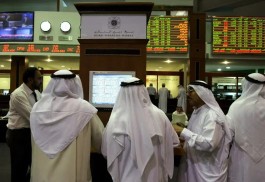

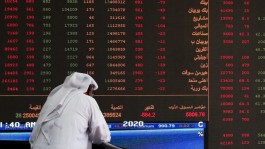


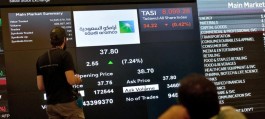

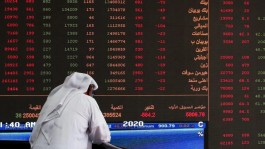
















Asian stocks fell, mirroring declines on Wall Street on Monday, as traders grew increasingly concerned about the pace of interest rate cuts by the Federal Reserve over the next year, following this week's almost certain reduction.
The MSCI regional equity index fell 0.3%. US stock futures were relatively steady in Asian trading, after the S&P 500 declined 0.3% on Monday, while US Treasury bonds joined a global sell-off. Australian bond yields rose ahead of the monetary policy decision, as traders and economists awaited any shift toward a more hawkish tone.
Market tensions arose ahead of the Federal Reserve's decision on Wednesday, where a 25-basis-point rate cut is widely expected. Some traders cautioned that the US central bank might signal a slower pace of easing, given that inflation remains high and the lack of new data during the lockdown period has caused divisions among Fed officials.
Following this week's likely cut, financial markets are now inclined to expect two more interest rate cuts by the end of 2026, down from three cuts expected a week ago.
Investor caution extends to Asia
Frederic Neumann, chief Asia economist at HSBC, said investors are unwinding their bets ahead of the Fed's decision. With uncertainty persisting about the Fed's path through 2026, investors will be paying close attention to the Federal Reserve's statement and projections. Therefore, the cautious tone in US markets is now spilling over into Asia.
Nvidia shares rose in after-hours trading after President Donald Trump granted the company permission to export its H200 artificial intelligence chip to China, with the government receiving 25% of the sales. Shares of other chipmakers in Asia showed mixed performance.
Meanwhile, Goldman Sachs clients reduced their bullish bets on artificial intelligence and US stocks after last month's decline, with new survey data showing that the S&P 500's outlook has become more conservative towards 2026.
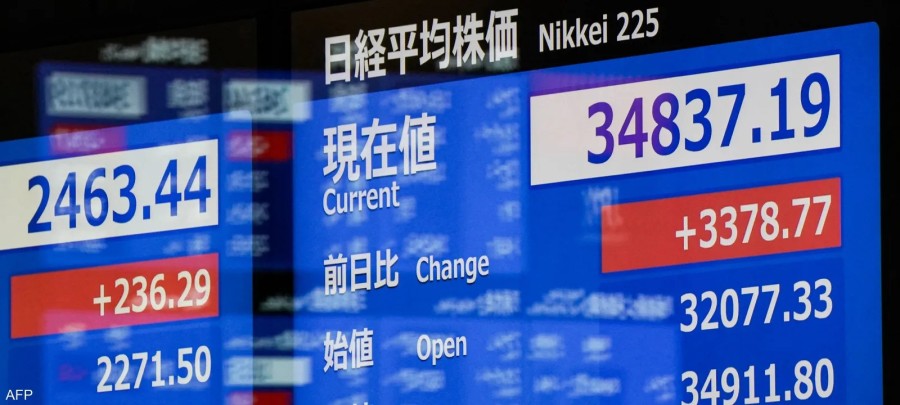
Japan's movements and other markets
The yen stabilized after falling on Monday when a 7.6-magnitude earthquake struck off Japan's northeastern coast. Shares in construction and insurance companies rose on Tuesday.
Japanese Finance Minister Satsuki Katayama said she is closely monitoring market trends, with the yield on 10-year government bonds remaining near 2%, a level not seen since 2006.
Bitcoin fell by about 1%. Gold, silver, copper and oil prices remained within narrow ranges after Monday's declines, when crude prices plunged by about 2% in the previous session, with attention focused on Russian exports to India.
US bond losses widen
The yield on 10-year US Treasury bonds hit its highest level since September during Monday's session, continuing the sell-off in Europe and Japan and supporting the strength of the dollar.
The sale of $58 billion in three-year bonds yielded lower than expected on Monday, indicating stronger-than-anticipated demand. A $39 billion auction of 10-year bonds is scheduled for Tuesday, followed by a $22 billion auction of 30-year bonds on Thursday.
Kevin Hassett, the frontrunner to head the Federal Reserve, said it would be irresponsible to set a plan for the interest rate path over the next six months. The director of the National Economic Council emphasized the importance of adhering to economic data in an interview with CNBC.
John Canavan, senior analyst at Oxford Economics, said: “This week’s interest rate cut is expected to be accompanied by a hawkish tone and a prolonged pause next year.”