

































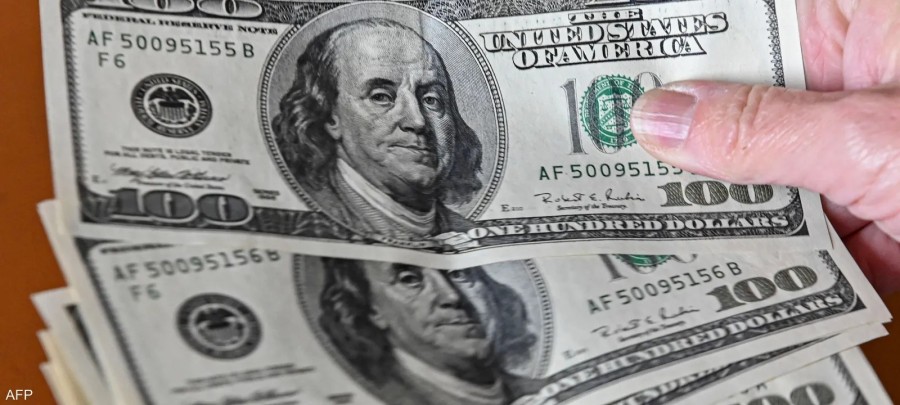


The dollar recovered on Tuesday following new US military operations against Iran, which raised questions about recent progress toward a peace agreement between the two countries.
The rising dollar contributed to pressure on broader currency markets, with Asian currencies retreating after a strong start to the week.
The Japanese yen weakened slightly, while the Chinese yuan and the Australian dollar saw similar declines.
The dollar rose following US attacks on targets in southern Iran.
The dollar index and its futures contracts rose 0.10% each in Asian trading, recovering some of their recent losses.
The dollar's support came mostly from renewed doubts about a peace agreement between Washington and Tehran, following reports that the United States had launched strikes on targets in southern Iran on Monday.
These strikes came as US officials were reporting progress in peace negotiations with Iran. Weekend reports indicated the two sides were close to reaching a framework agreement to reopen the Strait of Hormuz and extend the ceasefire.
Iranian officials warned on Tuesday that any attacks targeting the country's military forces would be met with a response.
Oil prices rose sharply in the wake of Monday's attacks, recovering some of their recent losses, keeping markets on edge about the inflationary repercussions of the war, which in turn supported the dollar.
Prior to Monday's strikes, US President Donald Trump had indicated that talks with Iran were progressing well and that the country would surrender its stockpile of enriched uranium. However, the course of negotiations now appears uncertain following those strikes.
The Japanese yen stabilizes and the Australian dollar weakens amid rising uncertainty over Iran.
The USD/JPY pair was stable on Tuesday. Bank of Japan Deputy Governor Ryozo Himino announced that the central bank would consider adjusting its monetary policy in light of developments in the Middle East, amid growing confidence that the Bank of Japan will raise interest rates next month.
Other Asian currencies also came under broad pressure due to the rebound in oil prices. The AUD/USD pair for the Australian dollar—widely considered a gauge of risk appetite—fell by 0.10%.
The USD/CNY pair for the Chinese yuan rose slightly, as did the USD/SGD pair for the Singapore dollar. The USD/INR pair for the Indian rupee also climbed 0.30% after a sharp decline from record highs in the previous two sessions.
The USD/KRW pair for the South Korean won was an exception to this trend, as it was supported by rising local stock markets.