
































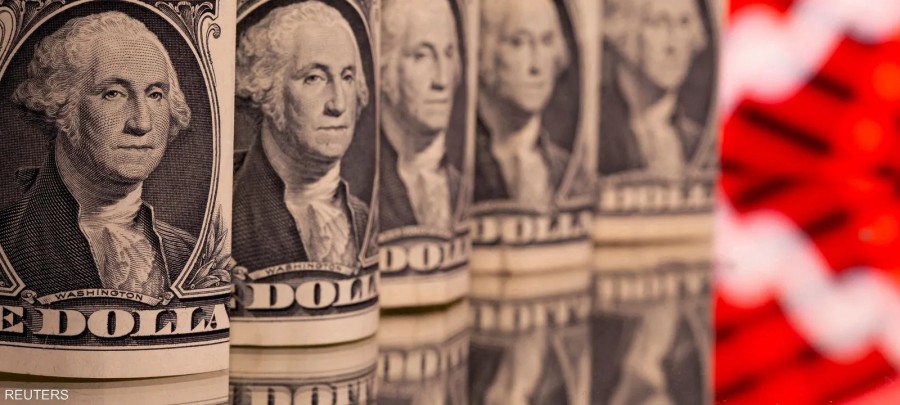


The US dollar saw a notable decline against most major currencies during trading on Monday, amid escalating speculation about a possible coordinated intervention between the United States and Japan in the foreign exchange market, aimed at curbing the weakness of the Japanese yen, which cast a negative shadow on investor sentiment towards the US currency.
This pressure came after traders interpreted a review of interest rates by the Federal Reserve Bank of New York as an indirect signal that the US central bank was open to supporting potential moves by Japanese authorities in the currency market.
This interpretation has reinforced the belief that Washington may not oppose, but perhaps even support, any move aimed at boosting the value of the yen in the coming period.
These expectations increased following statements by Atsushi Mimura, Japan’s top currency official, who confirmed that authorities in Tokyo are closely monitoring foreign exchange market movements and are prepared to intervene when necessary in close coordination with the US side, according to international media sources.
These statements reinforced bets on a possible intervention, prompting investors to reduce their dollar positions.
As for the indicators, the dollar index, which measures the performance of the US currency against a basket of six major currencies, fell by about 0.43% to a level of 97.18 points.
In the major currency markets, the dollar fell against the Japanese yen by about 0.9% to trade near the 154.3 yen level, affected by growing expectations that the United States may support Japan’s efforts to curb the decline of its local currency.
This move reflects a shift in the balance of power within the currency market, particularly with the increasing sensitivity to any signs of official intervention.
In contrast, European currencies benefited from the weakness of the dollar, with the euro rising slightly to approach the level of $1.185.
The British pound also recorded modest gains, rising above $1.36, supported by a relative improvement in investor appetite for non-US currencies.
The positive performance extended to Asian currencies, with the Malaysian ringgit recording a strong rise of more than 1% against the dollar, reaching its highest level since 2018, indicating the widening scope of pressure on the US currency and the increasing demand for emerging market currencies amid receding short-term concerns.
These moves suggest that the currency market may experience further volatility in the coming period, as investors await any concrete steps from the US or Japanese authorities, while monetary policy and potential interventions remain key factors in determining the direction of global currencies.