





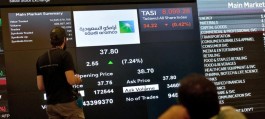









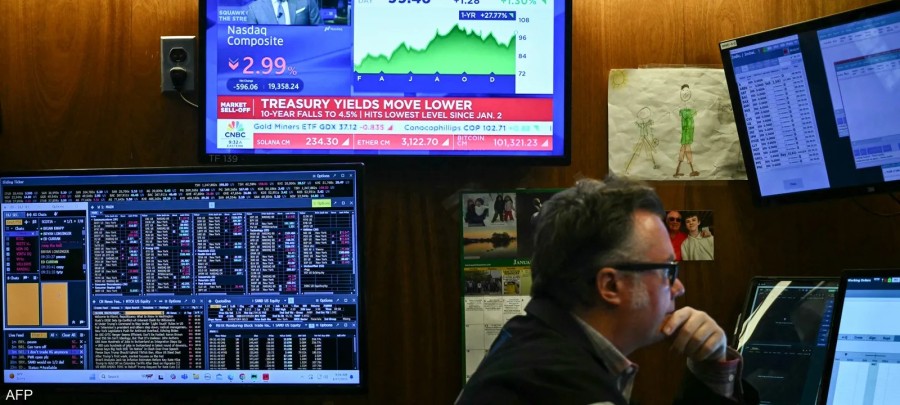


U.S. stock futures dipped slightly on Tuesday, after a surge in stocks on Wall Street during the previous session, as rising oil prices kept sentiment on edge.
By 3:24 PM (Saudi Arabia time), the Dow futures contract was down 25 points, or 0.1%, the S&P 500 futures contract was down 5 points, or 0.1%, and the Nasdaq 100 futures contract was down 43 points, or 0.2%.
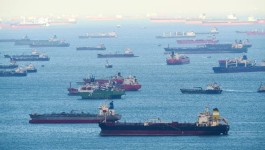
Major Wall Street indexes rose on Monday, buoyed by hopes that an international coalition would aid U.S. efforts to reopen the Strait of Hormuz, a vital waterway in southern Iran through which a fifth of the world's oil passes.
While the United Kingdom and France have indicated they are open to discussing options with Washington, several US allies, including Germany and Japan, have rejected President Donald Trump’s call for help in unlocking this bottleneck.
Trump had previously indicated that the United States would not need any help in restarting tanker traffic through the strait, although he said that several countries had told him they were on their way to provide assistance.
Brent crude hovers above $100 a barrel
Brent crude futures rose 2.9% to $103.13 a barrel by 3:22 PM (Saudi time), while West Texas Intermediate crude futures climbed 3.6% to $95.84 a barrel. Oil prices have surged more than 40% since the start of the joint US-Israeli airstrikes on Iran in late February.
Early Tuesday, a missile struck a tanker docked near a port in the United Arab Emirates, The New York Times reported. The newspaper quoted the United Kingdom Maritime Trade Operations as saying the vessel, which was near the port of Fujairah at the southern end of the strait, sustained only minor damage.
Officials in the UAE also said that a drone was the cause of a fire at a major oil industry hub, exacerbating concerns about already tight global supplies.
The prospect of a protracted conflict in Iran has raised concerns about an energy shock that could fuel inflationary pressures worldwide, forcing some central banks to reconsider raising interest rates. On Tuesday, the Reserve Bank of Australia raised interest rates to their highest level in 10 years, citing significant inflationary risks from a conflict with Iran.
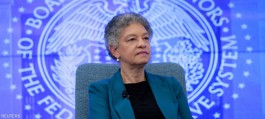
A number of other major central banks, including the Federal Reserve, the European Central Bank and the Bank of Japan, are also scheduled to meet this week.
Lukman Otunuga, senior market analyst at FXTM, told Investing.com: “Central banks face a complex balancing act. Conflict-driven inflation risks may force policymakers to reassess their 2026 projections, especially as markets are rapidly falling back on expectations of interest rate cuts. With key central bank decisions approaching this week, traders should prepare for increased volatility across stocks, commodities, and currencies.”
Trump requests postponement of Xi meeting
Elsewhere, Trump has asked for a postponement of a planned meeting with his Chinese counterpart Xi Jinping next month, just days after threatening such a delay if Beijing does not use its influence with Iran to help reopen the Strait of Hormuz.
Over the weekend, Trump called on China to send its navy to secure the Strait of Hormuz, a key waterway south of Iran through which about one-fifth of the world's oil supply flows.
However, China, which buys oil from Iran, appears to have little incentive to comply with Trump's demands. Tehran has allowed Chinese tankers to pass through the strait, even while warning against attacks on any vessel carrying goods that might benefit the United States or its allies.
Meanwhile, Israel said that Iranian security official Ali Larijani is believed to have been killed in airstrikes on Monday, according to the Wall Street Journal, citing people familiar with the matter.
The WSJ added that Iranian state media will soon publish a statement from Larijani.
Other media reports also stated that Gholamreza Soleimani, commander of Iran's Basij paramilitary force, which played a role in suppressing anti-government protests earlier this year, was also killed. There has been no confirmation yet from Iranian officials or state-backed media.
DocuSign and Lululemon Athletica announce the results
Aside from Iran, investors will be watching earnings reports from digital contract signing platform DocuSign and sportswear retailer Lululemon Athletica after the bell closes on Wall Street.
The meeting between semiconductor giant Nvidia and analysts during its ongoing developer conference will also be a focus. On Monday, CEO Jensen Huang predicted that Nvidia would achieve $1 trillion in sales of AI chips by the end of 2027, compared to the $500 billion target for this year.
Huang also offered optimistic predictions for so-called AI inference, saying that this computing, which allows these models to respond quickly and efficiently to users' questions, is the future of artificial intelligence.
Delta Air Lines shares also jumped in pre-market trading in the US after the airline said it expected earnings per share to be within its previous guidance range, citing strong revenues offsetting higher fuel prices.