














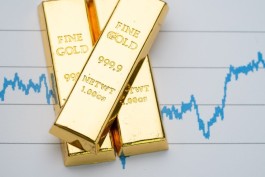





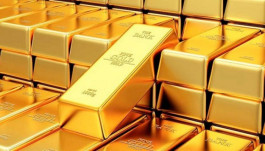



Gold extended its gains for a second day, after comments from the Federal Reserve eased bets on an interest rate hike, along with a report that US President Donald Trump is prepared to end the Iran war without reopening the Strait of Hormuz.
The precious metal jumped as much as 2.4% on Tuesday before paring some of its gains to trade near $4,560 an ounce.
This rise came after a Wall Street Journal report that Trump had told his aides he was prepared to end the U.S. military campaign against Iran even if the Strait of Hormuz remained largely closed, boosting hopes for an end to the month-long conflict.
US inflation under control despite rising oil prices
Meanwhile, Federal Reserve Chairman Jerome Powell said that the long-term inflation outlook in the United States appears to be under control, despite the oil price surge driven by the war, which has fueled inflationary pressures and bolstered bets on interest rate hikes. He added that the central bank's policy is well-positioned to allow for a wait-and-see approach.
The decline in US Treasury yields following Powell's remarks supported gold prices, as it reduced the opportunity cost of holding the non-yielding asset. However, money markets are still pricing in fewer than one interest rate cut by the end of the year, and yield curves remain steep.
This means the market has not yet moved into pricing in an economic slowdown, according to Liu Xiao, an analyst at Zijin Tianfeng Futures Co., adding that gold is likely to remain under pressure with limited scope for a rapid recovery at the moment.
The risks of continued conflict are weighing on expectations.
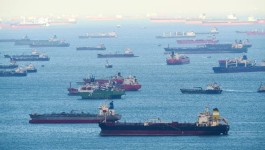
Traders are also assessing mixed signals from the United States, where the White House has threatened to escalate strikes against Iran, including targeting critical civilian infrastructure. In response, Tehran has passed legislation to impose fees on ships transiting the Strait of Hormuz and is pressuring the Houthi armed group in Yemen to prepare for a new campaign against shipping in the Red Sea. Iran also attacked a Kuwaiti oil tanker in Dubai, according to an announcement by the Kuwait Petroleum Corporation on Tuesday.
David Wilson, head of commodity strategy at BNP Paribas SA, said: “Markets are trading very much based on news, when in reality not much has changed. What this suggests is that if a peace agreement is reached, gold will rise sharply. Conversely, if there is some kind of ground invasion by US forces, gold can be expected to move in the opposite direction and fall.”
These developments have raised concerns about the possibility of the conflict continuing for a long time, which could lead to a further rise in energy prices and prompt central banks to raise interest rates to curb inflation, a negative factor for non-yielding precious metals.
This, along with a shortage of liquidity in the wider financial markets, has put gold on track to record a monthly decline of about 13%.
Spot gold rose 1% to $4,558 an ounce by 12:15 pm Singapore time.
Silver also rose 2.8% to $72.04, while platinum and palladium both gained. The Bloomberg Dollar Spot Index fell 0.1%, after closing the previous session up 0.3%.