





























Gold prices rose during trading on Thursday, supported by falling oil prices and a weaker US dollar, as investors continued to assess recent political developments and the prospects for a settlement to the ongoing conflict between the United States and Israel on one side and Iran on the other.
The dollar's decline gives gold a new boost.
The precious metal's gains coincided with a decline in the US dollar, which made gold priced in US dollars more attractive and less expensive for investors holding other currencies.
Tim Waterer, senior market analyst at KCM Trading, said that gold's movements remain highly correlated with oil and dollar trends.
He explained that gold only makes sustainable gains when oil prices decline or the dollar weakens, noting that continued gains require a flow of positive news regarding US-Iranian relations.
He added that any long-term upward momentum for gold still depends largely on political developments related to the possibility of reaching a settlement to the ongoing conflict in the region.
Hopes for political de-escalation are boosting market sentiment.
Markets received a morale boost after the US administration announced that Israel and Lebanon had reached an agreement to cease fire and end hostilities between the two sides.
This announcement sparked a wave of optimism about the possibility of reaching a broader agreement that could help end the confrontation with Iran and reduce escalating tensions in the Middle East.
In another political development, the Republican-controlled US House of Representatives approved a draft resolution aimed at preventing US President Donald Trump from continuing military operations against Iran.
This move reflects growing concern within the Republican Party itself about the repercussions of the war, which has been ongoing for about 3 months, and the additional economic and political burdens it may cause.
Oil prices decline and inflation fears subside
Hopes for political de-escalation also contributed to the pressure on oil prices, with prices falling during Thursday's trading as bets increased on the possibility of a political agreement between Washington and Tehran.
This development is of great importance to financial markets, because a continued rise in oil prices usually leads to increased inflationary pressures and forces central banks to keep interest rates high for a longer period.
Although gold is traditionally seen as a hedge against inflation, rising interest rates are diminishing its appeal as an asset that does not generate periodic returns for investors.
From this perspective, a decline in oil prices and a relaxation of inflationary concerns may give gold a better chance to maintain its current gains.
The Federal Reserve sees no need to change monetary policy.
Meanwhile, John Williams, president of the Federal Reserve Bank of New York, asserted that he does not expect the inflationary pressures resulting from the war in the Middle East to be long-lasting.
He also reiterated that current circumstances do not warrant any changes to US monetary policy at this time.
These statements indicate that Federal Reserve officials still prefer to wait and monitor economic and geopolitical developments before taking any new steps regarding interest rates.
The markets are closely monitoring these statements due to their direct impact on the direction of the dollar and bond yields, and consequently on gold prices.
Has the upward trend ended or is it still ongoing?
Matt Simpson, senior analyst at StoneX Financial Services, said he does not believe the current gold rally is over.
However, he also clarified that the market may need a period of correction and rebalancing after the significant gains it has made in the recent period.
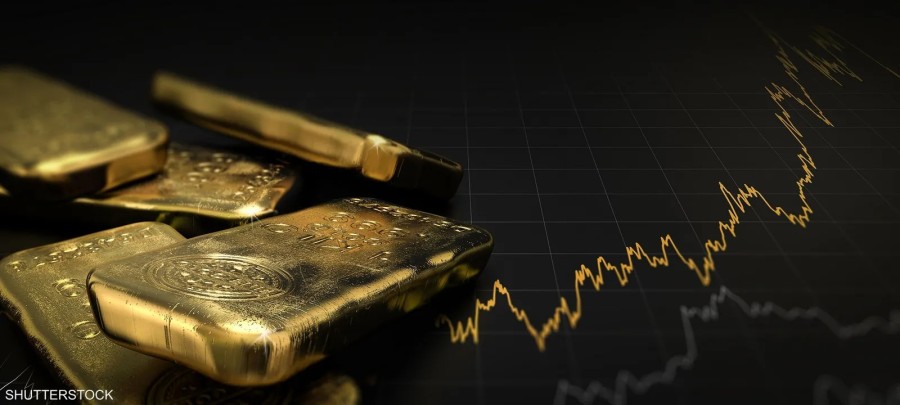
He added that trading may see wide fluctuations and volatile movements until the end of the year, but he still expects a gradual upward trend that could push prices towards the $5,000 per ounce level.
He believes that investors will continue to monitor geopolitical developments and US monetary policy as the two most influential factors in the direction of gold in the coming period.
Gold now
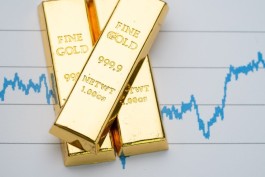
The price of gold in spot trading rose by 0.8% to $4,468.84 per ounce.
US gold futures for August delivery also rose by 0.7% to $4,495.70 an ounce.
Performance of other precious metals
The gains were not limited to gold alone, but extended to most other precious metals during Thursday's trading.
Spot silver prices rose 0.6% to $73.13 an ounce.
Platinum also rose by 0.9% to reach $1,875.70 per ounce.
In contrast, palladium recorded limited gains of 0.3% to trade at $1,306 an ounce, benefiting from improved investor appetite for precious metals in general.