









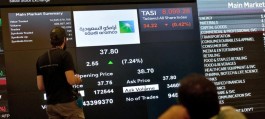




















The situation remains unchanged. Markets opened with movements that complemented their closing levels, with gold falling below $5,000, as many analysts predicted, declining by 0.48% for spot contracts and 1.24% for futures contracts. Meanwhile, the dollar index continues to maintain the 100-point level against a basket of foreign currencies, benefiting from its oil value as the petrodollar, with Brent crude rising by 2.6% to $105.6 per barrel and Texas crude by 2% to $98.89 per barrel.
The conflict has reignited... fires that never subside and oil under threat
The week began with a drone attack on Dubai International Airport, which completely disrupted air traffic from Dubai for several hours before operations gradually resumed. The weekend saw a significant escalation, with US forces targeting all military sites on Kharg Island, a vital hub for Iranian oil exports. This prompted Iran to threaten retaliation and attacks on any US-linked oil facilities in the region.
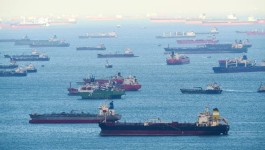
US President Donald Trump also threatened NATO countries against failing to help restore the Strait of Hormuz to operation and send military aid to limit Iran’s ability to close and target oil tankers and ships passing through the strait.
Analyses and statements from influential officials in the US government do not indicate that the war with Iran will end before the end of March, when US President Donald Trump visits China.
The US president urged his Chinese counterpart to intervene and help reopen the Strait of Hormuz, warning that he would cancel his visit if China did not actively assist in restoring the waterway. The Trump administration announced it expected the conflict with Iran to end within weeks, or perhaps sooner, while the Israeli military indicated its military plans were likely to continue for at least another three weeks.
The corridor affects approximately 25% of global oil production traffic, and its closure causes an immediate rise in oil prices and concerns about the state of global supply.
Why doesn't gold rise during wartime? And the impact of central banks.
While wars typically support gold prices, the current escalating tensions have led to a surge in oil costs, which in turn has fueled inflation fears. This scenario has prompted markets to believe that the Federal Reserve ($Fed$) will postpone interest rate cuts, a negative development for non-yielding assets like gold.
In addition to the Federal Reserve, the Reserve Bank of Australia, the Bank of Japan, the European Central Bank, and the Bank of England are all scheduled to announce their monetary policy decisions this week. All of these central banks are expected to leave interest rates unchanged at their current levels, with the exception of the Reserve Bank of Australia, which is expected to raise them again.
In addition to the strength of the dollar and its rise along with US Treasury bond yields since the start of the conflict, which is putting pressure on gold prices and the need for countries and banks to have large amounts of liquidity at the moment to take precautionary measures, the tightening signals from central banks and inflation fears are making gold's task more difficult at the moment.
Negative momentum prevails
General trend: The downward trend is still clearly dominant, with the price below the moving averages (20, 50, 200 period) and below the Supertrend indicator ($5,028.38), reinforcing the strength of the selling pressures.
Vital resistances: The area between $5,025 and $5,036 represents a technical bottleneck, due to the convergence of a descending channel resistance, a supertrend, and the 38.2% Fibonacci level ($5,026.71).
Positive signs: There are short-term bounce attempts after a bullish engulfing candlestick pattern appeared at $4,989.25, with the negative momentum on the MACD indicator declining, but this is not yet enough to change the overall trend.
Risk Summary
The overall trend is downward and the technical situation is in favor of the sellers, but the bull trap remains a possibility with any false breakout of resistance.
Best selling range: $5,025–$5,036 with a tight stop loss.
Buy only on a confirmed break above $5,036 while monitoring trading volume.