


















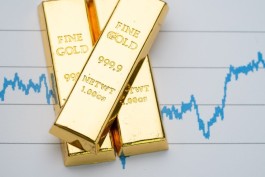











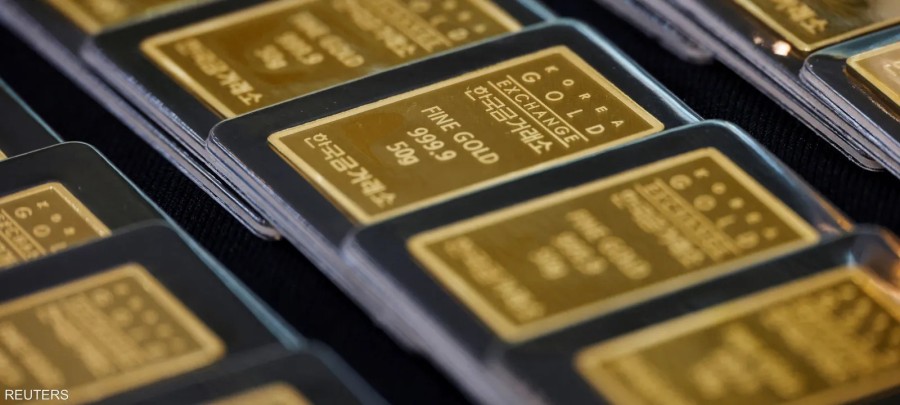


Gold prices fell sharply on Thursday after US President Donald Trump announced that Washington would continue its military campaign in Iran in the coming weeks, which led to a rise in oil prices and a decline in hopes of an interest rate cut.
This decline came after gold had climbed to its highest level since March 19, before sentiment changed sharply following Trump's remarks.
Trump's statements put pressure on markets
During a televised address, Trump confirmed that the United States would carry out intensive military strikes against Iran, indicating that his country was close to achieving its main strategic objectives in this conflict, which disappointed investors who had been anticipating clear signs toward ending the war.
In this context, Kyle Rodda, senior financial markets analyst at Capital.com, explained that the decline in gold was a direct reaction to Trump’s speech, with the increasing likelihood of escalation over the weekend, which pushed up oil prices, the US dollar and bond yields, thus putting strong pressure on gold prices.
Both the yield on 10-year US Treasury bonds and the dollar index rose, increasing pressure on dollar-denominated gold and making it less attractive to investors.
Oil and inflation are reshaping the landscape
Brent crude prices jumped more than 6% after Trump's comments suggesting targeting Iran's energy infrastructure raised concerns about global supplies and pushed energy prices even higher.
Gold had fallen 11% during March, its worst monthly performance since 2008, following the outbreak of war on February 28, as a surge in oil prices fueled inflationary fears and complicated the Federal Reserve's monetary policy outlook.
In light of these developments, expectations of interest rate cuts in the United States have declined significantly, with the likelihood of a rate cut now limited until 2026, and bets on a cut in December falling to only about 12%, compared to about 25% before Trump’s recent statements.
The gold equation between interest and risk
Although gold is traditionally considered a safe haven during periods of geopolitical tension and high inflation, rising interest rates reduce its appeal, due to the increased opportunity cost of holding a non-yielding asset.
In this context, markets showed a rapid reaction to the change in monetary policy expectations, as the effects of rising interest rates and yields overshadowed gold’s role as a safe haven, leading to a significant decline in its prices.
These movements reflect how sensitive gold is to a complex equation that combines inflation, interest rates, and geopolitical tensions.
On the other hand, India saw gold trade at a price premium this week for the first time in two months, supported by lower prices that boosted domestic demand for the precious metal, while premiums in China eased slightly as buyers awaited further price drops.
Gold at settlement yesterday
Gold prices rose for the fourth consecutive session at the close of trading on Wednesday, benefiting from a weaker dollar and easing inflation concerns amid cautious hopes for a de-escalation in the Middle East.
Gold futures for June delivery rose 2.87%, or $134.50, to $4,813.10 an ounce.
Gold now
Gold fell more than 2.8% in spot trading to $4,622.59 an ounce by 10:19 Riyadh time, after having fallen more than 4% earlier in the session, thus ending a four-session winning streak.
US gold futures also fell by 3.4% to $4,649.
Other metal movements
As for other metals, silver fell 5.4% to $71.07 an ounce, after earlier dropping more than 7%, while platinum fell 3.1% to $1,902.65.
Meanwhile, palladium fell 1.8% to $1,446.53, amid a broad sell-off that affected most precious metals as pressure mounted in global markets.