



















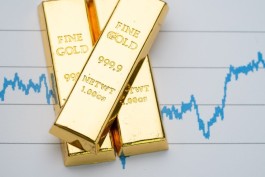












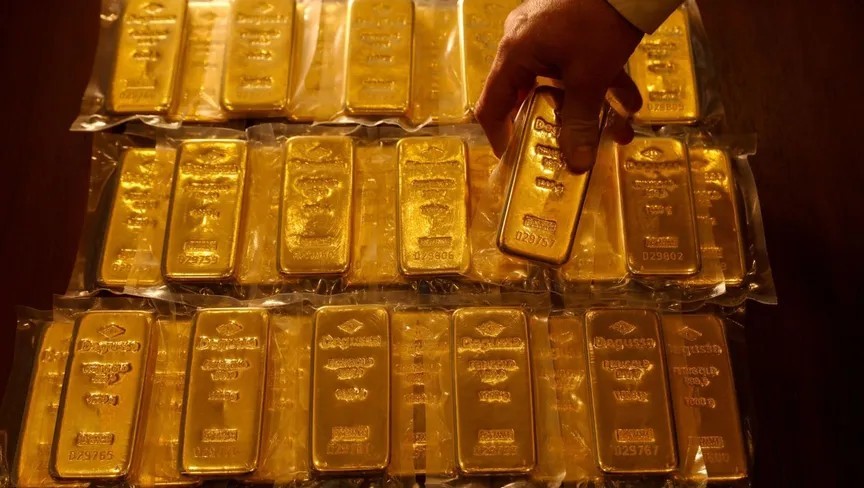


Gold prices continued their decline during trading on Thursday, after breaking the $4,000 per ounce level for the first time in seven months during the previous session, as the US dollar remained strong and expectations of an interest rate hike by the Federal Reserve this year continued to rise.
The precious metal had fallen below $4,000 for the first time since November 2025 during Wednesday's trading, moving away by about 29% from its record high of $5,594.82 an ounce on January 29, amid rising bets on a tightening of US monetary policy to counter high inflation resulting from the war with Iran.
Markets are betting on further interest rate hikes.
Traders expect three US interest rate hikes this year, with markets pricing in a probability of around 67% for a rate increase at the September meeting, according to the US interest rate tracking tool available on Investing Saudi Arabia.
Analysts believe that gold-backed exchange-traded funds (ETFs) could face a new wave of withdrawals if expectations of rising interest rates continue to climb.
Although gold is traditionally seen as a hedge against inflation, it loses much of its appeal when interest rates rise, since it does not provide a return to its holders.
This tight monetary environment is increasing the pressure on the yellow metal, at a time when investors prefer assets that generate higher returns.
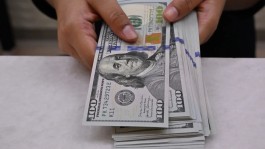
A strong dollar increases pressure on the precious metal.
Matt Simpson, senior analyst at StoneX, said that gold is currently experiencing a clear downward trend amid a supportive environment for the strength of the US dollar.
He added that negative momentum still dominates trading in the precious metal, with the US dollar continuing to trade near its highest levels in 13 months.
A stronger dollar makes gold more expensive for holders of other currencies, which weakens global demand for the precious metal and increases price pressures.
Markets are awaiting the final reading of the US GDP for the first quarter later today, along with weekly unemployment claims data, as investors look forward to the release of personal consumption expenditures data, the Federal Reserve's preferred measure of inflation, for new indicators that may help predict the course of US monetary policy in the coming months.
Alongside economic data, investors continued to monitor geopolitical developments in the Middle East, particularly as Lebanon and Israel held discussions on a US-backed proposal to transfer some Lebanese territory seized by Israeli forces during the war with Hezbollah to the control of the Lebanese army.
Gold now
Spot gold fell 0.7% to $3,971.08 an ounce.
US gold futures for August delivery also fell by 0.5% to $3,987 an ounce.
Other minerals
In precious metals markets, spot silver fell 1.4% to $56.61 an ounce, nearing its lowest level since November 2025.
Platinum also fell 1.1% to $1,560.60 an ounce, settling near its lowest level in about 7 months.
In contrast, palladium slipped slightly by 0.1% to $1,165.63 an ounce, continuing to trade near its lowest level in nine months, amid ongoing pressure across the entire precious metals sector.