



















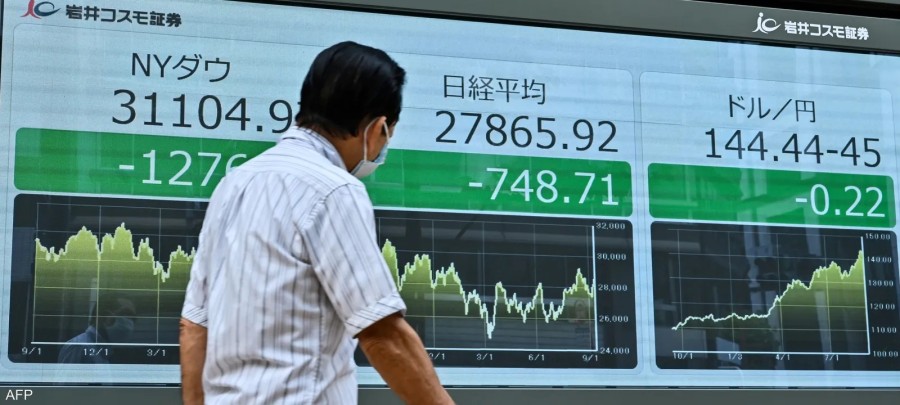


Asian chipmakers continued their recent gains, fueled by ongoing investor interest in artificial intelligence. Escalating hostilities in the Middle East pushed Brent crude toward $100 a barrel.
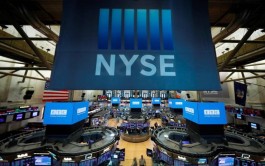
South Korea's Kospi index rose 1.6%, boosted by gains in the country's chip giants, SK Hynix and Samsung Electronics. The rise followed a 1.3% gain in the Philadelphia Semiconductor Index, known as the SOCX, in US trading on Tuesday.
The broader MSCI Asia Pacific index rose 0.6%, with the information technology sector being the biggest contributor to the gains.
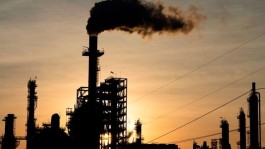
Brent crude jumped as much as 1.8% to $99.67 a barrel after the United States struck Iranian tankers near the vital oil export hub of Kharg Island, raising fears of deeper disruptions in the Strait of Hormuz. The global benchmark crude has risen more than 60% this year and is approaching $100 a barrel for the first time since July.
Darrell Fletcher, managing director of commodities at Bannockburn Capital Markets, said of oil prices: “The path of least resistance is a strong and sustained uptrend.” He added: “The fundamental picture for commodities remains bullish, with global inventories and reserves declining. In typical fashion, the US and Iran continue their tit-for-tat exchanges and warnings.”
Escalating war complicates inflation and interest rate forecasts
Renewed attacks on energy infrastructure stemming from a war between Iran and the United States threaten to keep oil prices high and complicate inflation and interest rate forecasts.
Investors will be watching to see if the latest escalation leads to further supply disruptions, while Friday's U.S. consumer price report is set to provide the next major test of expectations regarding the Federal Reserve's interest rate hike at its meeting on September 15-16.
Tehran responded to the US strikes by launching missiles at Jordan and issuing warnings to ships in the Arabian Gulf. According to Iranian state television, the Revolutionary Guard threatened tanker crews near docks in Kuwait and Bahrain, urging them to leave as they would be targeted.
Elsewhere, the yen rose for a third day after U.S. Treasury Secretary Scott Bisent challenged traders to bet against his efforts to boost the Japanese currency, saying that when he makes market predictions these days, he is actually doing so based on inside information.
The yen rose 0.2% to 153.66 against the dollar, while the Bloomberg Dollar Index fell 0.1%.
Treasury bonds edged lower in Asian trading, with the yield on the benchmark 10-year US Treasury note rising one basis point to 4.80%.
In trade news, the United States moved to ban certain alcoholic beverages, dairy products, and Canadian motorcycles, according to officials. Meanwhile, the European Union and Canada are seeking a broader partnership encompassing trade and security, as they attempt to counterbalance the global influence of the United States and China.
Inflation data tests the Federal Reserve's bets
Following last week's stronger-than-expected US jobs report, attention turns to Friday's inflation data for clues about the Federal Reserve's future policy.
Economists expect the consumer price index to have risen 0.4% in August, accelerating from the previous month, partly due to higher gasoline costs.
Excluding volatile food and energy components, the core consumer price index is expected to have risen by a more moderate 0.2%, according to the median estimate in the Bloomberg survey.
This would reduce the annual measure of core inflation to 2.4%, the smallest year-on-year increase since 2021.
Krishna Guha, strategist at Evercore ISI, wrote in a note on Tuesday: “Prepare for a turbulent week, as inflation data is set to swing market expectations over whether the Federal Reserve will hold interest rates steady or raise them next week, with implications for broader asset markets.”