



































Most Asian currencies moved little on Monday, while the dollar gradually declined as markets focused on a series of major central bank meetings scheduled for this week, most notably the Federal Reserve meeting.
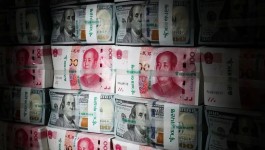
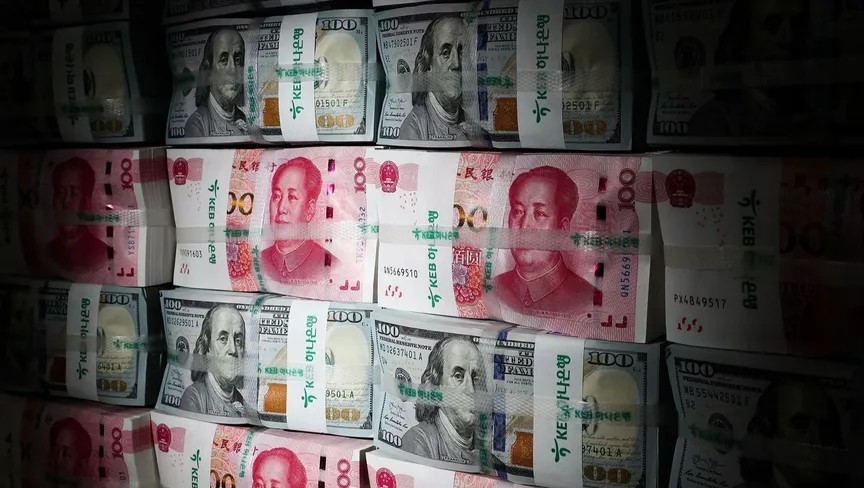
The Japanese yen moved little ahead of the Bank of Japan's upcoming meeting later in the week, while the Chinese yuan rose to its highest level in four years amid continued support from the People's Bank of China.
Regional markets benefited from the decline in oil prices, which fell from their highest levels in six months, following reports indicating that senior officials from the countries of the Mecca Agreement were about to hold meetings with Iranian officials in Tehran.
However, most Asian currencies remained under increasing pressure amid growing concerns about persistently high US inflation and rising interest rates in developed countries.
The dollar is weakening amid expectations that interest rates will remain unchanged this week.
The dollar index and its futures contracts fell 0.17% each in Asian trading, extending their losses after hitting 18-month highs earlier in October.
The Federal Reserve is scheduled to begin a two-day meeting on Tuesday, and is widely expected to leave interest rates unchanged at 4.0% on Wednesday.
This follows the central bank's raising of interest rates by 25 basis points in September, the first such move in more than three years, as part of its efforts to control persistently high US inflation.
Despite expectations of a hold in October, investors are watching for any hawkish signals from the central bank, especially since recent data showed US inflation remaining comfortably above the Federal Reserve’s annual target of 2%.
Aside from the interest rate decision, attention will be focused primarily on Federal Reserve Chairman Kevin Warsh's remarks in search of further clues about the direction of monetary policy.
Investors are also awaiting US GDP data for the third quarter this week, along with the Personal Consumption Expenditures (PCE) Price Index, the Federal Reserve's preferred measure of inflation, for September.
The yen is moving quietly ahead of the Bank of Japan meeting, with the yuan at a four-year high.
In Asian currencies, the USD/JPY pair moved little on Monday, as traders preferred to wait on the sidelines ahead of the Bank of Japan's upcoming meeting later in the week.
While the central bank is widely expected to keep interest rates unchanged at 1.25% after raising them twice by 25 basis points each time this year, the Bank of Japan is also expected to send tough signals in the face of persistently high inflation.
Markets expect the central bank to raise interest rates again in December, especially given the anticipated rise in inflation due to the end of Japanese government subsidies on fuel.
The USD/CNY pair for the Chinese yuan fell slightly, hitting its lowest level since June 2022, following a series of strong reference rate fixes by the People's Bank of China.
China is seeking to support the yuan in part to ease trade tensions with the West, as well as to give the People's Bank of China more room to relax monetary policy and support economic growth.
The five-party plenary meeting of China's ruling Communist Party kicked off on Monday, and Beijing is widely expected to announce further financial support and economic growth plans.
This meeting is being held behind closed doors with the participation of senior Chinese officials, and is scheduled to last until Thursday.
More broadly, most Asian currencies moved little on Monday. The USD/SGD pair for the Singapore dollar was flat, while the USD/KRW pair for the South Korean won fell 0.2%.
The AUD/USD pair for the Australian dollar fell by 0.07%, while the USD/INR pair for the Indian rupee rose by 0.3% to remain close to its record levels, despite repeated attempts by the Reserve Bank of India to support the currency.