




























Silver prices rose on Monday but remained below the record high hit on Friday, driven by a weaker US dollar and lower US Treasury yields, ahead of important US jobs data.
The US dollar index held near its lowest level in two months, which it reached last week, making precious metals more attractive to investors from outside the United States, while yields on 10-year US Treasury bonds declined slightly.
Markets continued to focus on the Federal Reserve's monetary policy direction after the US central bank cut interest rates by 25 basis points last week, in a rare decision that saw a split in opinions, with indications that further cuts might be halted given continued inflationary pressures and uncertain labor market prospects.
Interest rate expectations and their impact on metals
Two Federal Reserve officials opposed the interest rate cut, arguing that inflation levels remain high and do not justify easing monetary policy. Currently, investors are pricing in the possibility of two rate cuts next year, with this week's US jobs report considered a crucial test of these expectations.
Non-yielding assets, such as silver, typically benefit in an environment characterized by low interest rates, which enhances their investment appeal at the present time.
ANZ Bank said India's move to allow pension funds to invest in gold and silver-backed exchange-traded funds (ETFs) could boost institutional participation in the market, thereby increasing demand for the two metals.
Silver prices and risk warnings
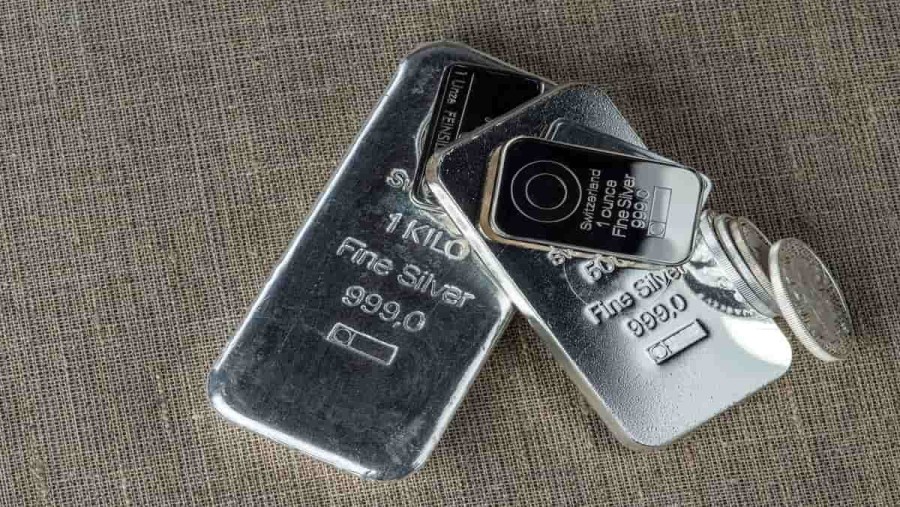
Silver prices rose 2% in spot trading to $63.23 an ounce, after hitting a record high of $64.65 on Friday before closing sharply lower.
Despite silver's more than 115% rise since the start of the year, ANZ Bank warned of potential downside risks, pointing to the possibility of US tariff relief that could ease supply pressures, as well as high valuations compared to gold that could prompt investment funds to reallocate their investments.
In contrast, platinum prices fell by 0.4% to $1,738.23 an ounce, while palladium prices rose by 2.9% to $1,531.28 an ounce.
Chinese restrictions and global supply pressures
The already tight global silver market could come under further pressure from January 2026, after China announced restrictions on exports of the precious metal.
The new policy, which will also extend through 2027, requires Chinese companies to obtain official licenses to export silver, which means a significant tightening of global supply chains.
In another development reflecting the rising actual demand for silver, India imported more than 2,600 tons of the precious metal during September and October, of which 1,715 tons entered during October alone.
Protecting China's national resources
Trade experts explained that Chinese policy will only allow large, state-approved companies that produce at least 80 tons of silver annually to obtain export licenses, which will prevent smaller companies from exporting the precious metal.
According to the Silver Academy, China is the world's second-largest producer of silver, supplying between 60% and 70% of the white silver traded on the global market.
The academy indicated that Beijing’s goal with this policy may be to preserve silver for use in domestic industries such as solar panels and electronics, as well as to raise global silver prices and have leverage over countries that depend on Chinese supplies.
China may also resort to using silver as a geopolitical tool, similar to restrictions on rare earth exports, with the aim of exerting economic pressure on other countries.
The academy warned that these restrictions would lead to further tightening of the global silver market, which has been suffering from a persistent deficit for several years.
The annual supply deficit is expected to exceed 2,500 tons, reflecting a persistent structural imbalance between supply and demand.