





































Oil prices continued their rise during trading on Monday, with Brent crude heading for record monthly gains, amid escalating geopolitical tensions and the widening scope of the war in the Middle East.
Brent crude futures rose by about 2.4% to $115.35 a barrel, after ending Friday's session up 4.2%.
US West Texas Intermediate crude also rose 1.7% to $101.39 a barrel, after gains of 5.5% in the previous session.
Vandana Hari, founder of Vanda Insights, an oil market analysis firm, said that markets have largely ruled out a near-term settlement through negotiations, despite US President Donald Trump's statements about holding direct and indirect talks with Iran and his readiness for further military escalation, which is supporting crude prices amid uncertainty about the course of the conflict, according to Reuters.
In the same context, Trump indicated that the United States and Iran are conducting contacts at various levels, describing the new leaders in Tehran as “very rational,” at a time when Washington continues to strengthen its military presence in the region, while the Israeli army announced targeting government infrastructure in Tehran.
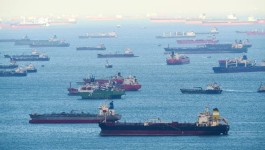
Brent crude has risen by about 59% since the beginning of March, recording its biggest monthly gain ever, surpassing the highs seen in the markets during the Gulf War in 1990, amid a virtual disruption to shipping through the Strait of Hormuz, through which about one-fifth of the world’s oil and gas supplies pass.
The conflict, which began on February 28, has expanded to include new areas in the Middle East, after the Houthis in Yemen launched their first attacks on Israel since the outbreak of the war, raising growing concerns about the security of vital shipping lanes in the Red Sea and Bab al-Mandab.
Analysts at JPMorgan, led by Natasha Caneva, said the conflict is no longer confined to the Gulf region and the Strait of Hormuz, but has extended to the Red Sea and Bab al-Mandab, one of the world's most important waterways for crude oil and refined product flows.
In this context, data from the data analysis company Kpler showed that Saudi crude oil exports diverted from the Strait of Hormuz to the port of Yanbu on the Red Sea amounted to 4.658 million barrels per day during the past week.