


































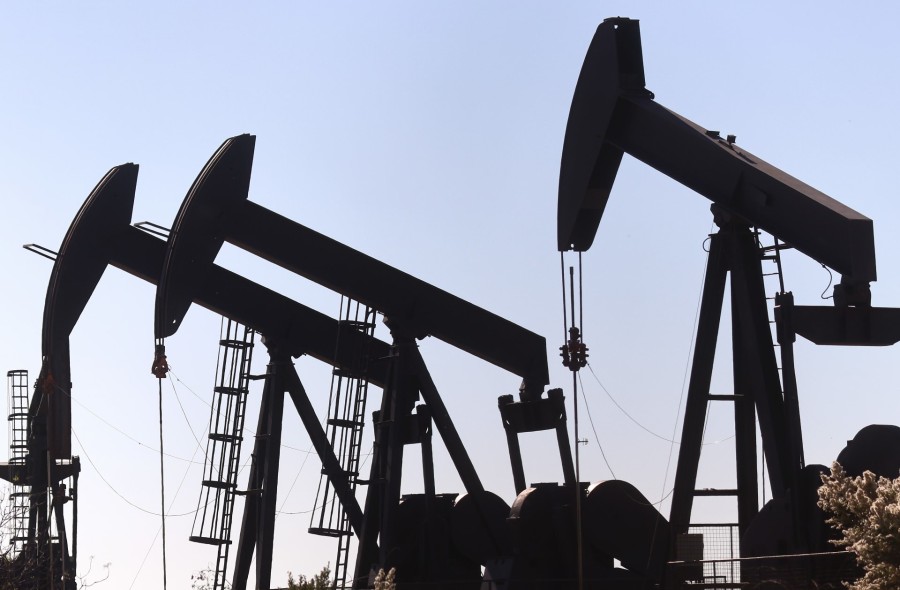


Oil prices rose from their lowest levels in nearly two months thanks to improved Chinese demand, while concerns about oversupply loomed over the market.
Brent crude climbed toward $62 a barrel, while West Texas Intermediate was near $58 in thin trading ahead of the Christmas and New Year holidays. Actual oil demand and refining activity in China rose in November compared to the same period a year earlier, but other monthly figures pointed to a generally weak economy.
Oil is on track to record an annual loss, with the surplus expected to widen as production from the OPEC+ alliance and other producers increases, despite forecasts of slowing demand growth. Concerns about oversupply have begun to surface in the Middle East's main crude oil market, although geopolitical uncertainty has led to a slight increase in the risk premium.
Geopolitical tensions are supporting prices
Ukraine continues to target Russian energy facilities, hitting a major refinery and an oil depot over the weekend. The United States has also sent envoys for a new round of talks aimed at ending the war.
In other news, Iran said it seized a foreign tanker in the Gulf of Oman suspected of carrying smuggled fuel, while the United States intercepted a vessel off the coast of Venezuela last week, as US President Donald Trump escalated pressure on Nicolás Maduro's regime. Trump has vowed to launch US strikes against drug cartels on the ground.
Sharu Chanana, chief investment strategist at Saxo Markets in Singapore, said the geopolitical premium has not disappeared, but has been temporarily overshadowed by expectations of oversupply. She added that geopolitical tensions are acting more as a floor support for prices than as a catalyst for a sustained price rise.
In the latest trading, Brent crude futures for February delivery rose 0.5% to $61.44 a barrel by 11:14 a.m. Singapore time. West Texas Intermediate crude futures for January delivery also rose 0.5% to $57.73 a barrel.