





























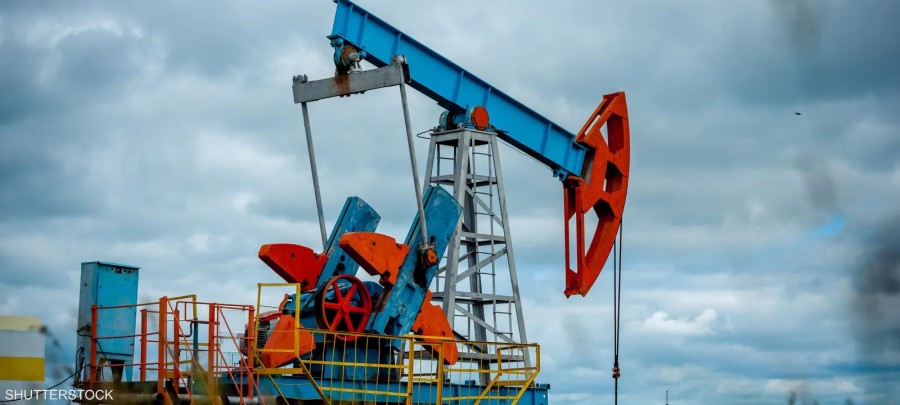


Oil prices rose after their first decline in nearly a week, as Iran escalated its attacks on energy infrastructure in the Arabian Gulf region.
Brent crude rose towards $105 a barrel, after losing 2.8% on Monday, while West Texas Intermediate crude traded near $98.
The UAE announced a temporary halt to operations at the Shah natural gas field, at a time when Iran targeted the Majnoon oil field in Iraq with drones and missiles.
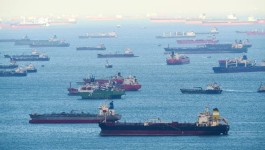
The Iranian strikes have further worsened the outlook for global energy supplies as the war enters its third week, with the near-total halt to shipping through the Strait of Hormuz beginning to affect consumers, particularly in Asia.
Oil prices have risen by more than 40% since the start of the war, but fell for the first time in four sessions on Monday, as the United States prepared to release the first tranche of its emergency crude oil reserves in an effort to calm rising prices.
Tensions have been heightened by US President Donald Trump's threat to expand strikes on Kharg Island to include oil infrastructure, especially after he spared energy assets at Iran's main export hub from the strike he launched last weekend.
He also said that Washington is destroying Tehran’s ability to threaten commercial shipping through the Strait of Hormuz, a vital waterway that has been virtually closed since the war broke out late last month, despite his call for the world to help protect the strait, a call that has been met with lukewarm responses.
In a related context, CNBC reported, citing US Treasury Secretary Scott Bisent, that Washington is allowing Iran to continue shipping crude oil through this passage, while indications that some ships were able to cross the strait contributed to the decline in prices on Monday.
Supply prospects also improved as the U.S. Department of Energy prepared to release the first batch of emergency oil reserves, and the International Energy Agency indicated the possibility of further drawdowns from stockpiles.
A complex market and ongoing tensions
Rebecca Babin, senior energy trader at CIBC Private Wealth Group, said: This is not a market driven by a single story.
She added in a television interview: “This is a market with about 100 stories happening at the same time, and it is trying very hard to determine how much supply is leaving the market, and how long it will be gone.”
In the Middle East, Abu Dhabi and Kuwait have cut oil production, while Saudi Arabia and the UAE, which were forced to close their airspace on Tuesday, are seeking to accelerate exports via alternative routes that bypass the Strait of Hormuz.
JPMorgan Chase analysts, including Natasha Caneva, wrote in a note that passage through the strait is likely to become increasingly conditional, with Iran potentially allowing some ships to pass depending on their political affiliation.
The fallout from the most volatile week ever for the global benchmark Brent crude continues to reverberate through the markets. Daily trading ranges were much wider than usual, with the turmoil in the Middle East causing what the International Energy Agency described as the biggest supply disruption in the history of the global oil market.
Bloomberg quoted Chris Weston, head of research at Pepperstone Group in Melbourne, as saying that the biggest risk in the market is that restrictions on the Strait of Hormuz will continue for a longer period, with the market feeling that the United States and its allies have limited ability to change this reality.
Meanwhile, Axios, citing undisclosed sources, reported that a direct communication channel between the United States and Iran had been reactivated in recent days.
On Monday, Trump said he had asked China, among the countries he had called on to help in Hormuz, to postpone a summit with his counterpart Xi Jinping for about a month, noting that it was important for him to remain in Washington to oversee the war with Iran.
In the latest trading, Brent crude futures for May settlement rose 4.7% to $104.89 a barrel at 6:02 a.m. in London, while West Texas Intermediate crude futures for April delivery climbed 5.2% to trade at $98.35 a barrel.