





































Oil prices rose for the fourth consecutive day on Tuesday, with Brent crude on track for its biggest monthly gain ever, while U.S. crude futures are headed for their strongest monthly performance since 2020, driven by supply constraints resulting from the widening war in the Middle East.
Brent crude futures for May delivery rose 0.3% to $113.17 a barrel, after hitting their highest level since March 19 in the previous session.
As the May contract neared its expiry, the price of the most traded June contract reached approximately $108.96.
U.S. West Texas Intermediate crude futures for May delivery also rose by 0.3% to $103.24 a barrel, their highest level since March 9.
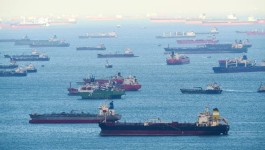
These gains came amid the de facto closure of the Strait of Hormuz by Iran, through which about a fifth of the world’s oil supply passes, in addition to large quantities of liquefied natural gas shipments, which pushed Brent crude up by about 59% since the beginning of March, the biggest monthly increase ever, while West Texas Intermediate crude rose by 58% during the same month, recording the highest rate of increase since May 2020.
In a sign of the escalating risks to offshore energy supplies, the Kuwait News Agency, quoting the Kuwait Petroleum Corporation, reported that the oil tanker “Al-Salmi,” with a capacity of two million barrels, was attacked by Iran in the port of Dubai, amid warnings of possible oil spills in the region.
The Iranian-backed Houthi group in Yemen also targeted Israel with missiles on Saturday, raising fresh concerns about potential disruptions in the Bab al-Mandab Strait, which connects the Red Sea to the Gulf of Aden and is a key passage for global trade between Asia and Europe via the Suez Canal.
Tim Waterer, senior market analyst at KCM Trade, said that the return of threats to close the Bab al-Mandab Strait could mean that the world's two most important energy corridors would come under simultaneous pressure, describing it as a nightmare for global supply chains, according to Reuters.
In this context, Saudi Arabia has redirected its oil exports through this route, as Kpler data showed that shipments from the Gulf to the port of Yanbu on the Red Sea rose to 4.658 million barrels per day last week, compared to an average of 770,000 barrels per day during January and February.
On the political front, US President Donald Trump warned that the United States might resort to destroying Iranian energy facilities and oil wells if Tehran does not reopen the Strait of Hormuz, after it rejected US proposals and launched missile strikes on Israel.
Nevertheless, the White House confirmed that talks with Iran are still ongoing and progressing well, noting a discrepancy between Tehran’s public statements and what is being discussed in unannounced talks with US officials.