



































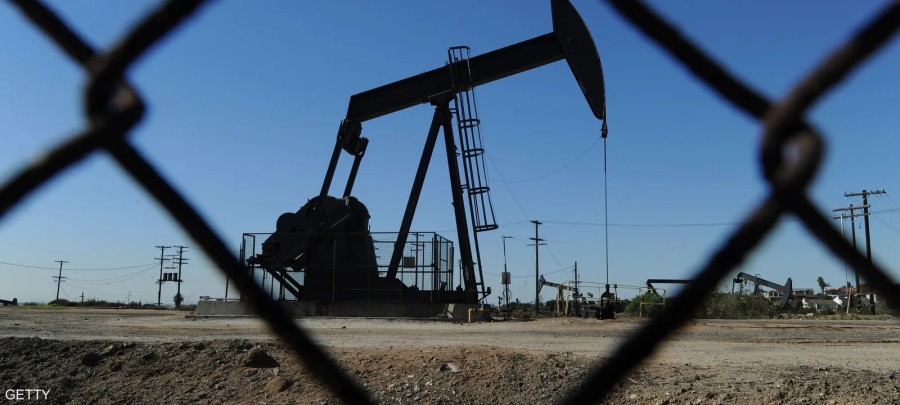


Oil prices continued their decline during trading on Thursday, approaching levels seen before the outbreak of war with Iran, after expectations of increased supplies from the Middle East outweighed concerns about global demand.
Brent crude futures for August delivery, the nearest contract, fell by $1.22, or 1.65%, to $72.52 a barrel.
U.S. West Texas Intermediate crude futures also fell by $1.02, or 1.45%, to $69.32 a barrel.
Both crude oil benchmarks hit their lowest levels since February 27, signaling the fading of the geopolitical risk premium that had boosted prices in recent months.
Signs of ample supply are putting downward pressure on prices.
Markets also showed signs of improved near-term supply, with August Brent crude futures trading at lower levels than September futures, which reached $73.59 a barrel, indicating an abundance of immediate supply.
Tony Sycamore, an analyst at IG, said the speed at which oil prices fell surprised many traders, after markets began pricing in a much faster return of Middle East supplies than had been expected just two weeks earlier.
Brent crude lost more than $3 in Wednesday's session as supply concerns eased, while West Texas Intermediate crude also ended the session down by about $3.
These moves reflect a rapid shift in investor sentiment as the likelihood of major disruptions to global oil flows diminishes.
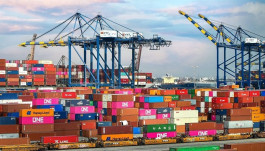
The Strait of Hormuz is gradually returning to normal.
U.S. Energy Secretary Chris Wright said during a forum held on Wednesday that oil tanker traffic through the Strait of Hormuz is approaching pre-war levels with Iran.
He explained that at least 20 million barrels of oil had crossed the strait in the past 24 hours, but noted that a full return to normal would take several weeks due to the need to clear mines from the sea passage.
Meanwhile, expectations of increased Iranian oil exports, following a temporary reprieve from US sanctions, have contributed to downward pressure on actual crude oil shipment prices worldwide.
The preliminary agreement reached last week to end the war between the United States, Israel and Iran, which began on February 28, also allowed for the resumption of shipping traffic through the Strait of Hormuz.
New negotiations and a more stable future for supplies
The agreement stipulates a 60-day negotiation period to discuss the most complex issues, foremost among them the Iranian nuclear program.
The US Energy Secretary confirmed that oil flows through the Strait of Hormuz will continue even if the agreement falters, stressing that Iran will not be able to close the strait again.
As part of efforts to facilitate maritime traffic, the Sultanate of Oman opened temporary sea lanes on Wednesday to facilitate the departure of oil tankers from the Strait of Hormuz, in coordination with the International Maritime Organization and Omani authorities.
The Qatari Prime Minister also visited the Sultanate of Oman to discuss launching negotiations on a future management mechanism for the Strait, with the participation of Iran, Iraq and the Gulf states.
Prices expected to fall to pre-war levels
Macquarie analysts expect oil prices to quickly return to pre-war levels, as supply chains adjust and the Strait of Hormuz is fully reopened.
The bank predicted that the average price of Brent crude would reach about $67 per barrel during the third quarter, while West Texas Intermediate crude is expected to average $62 per barrel.
This represents a significant decrease compared to the second quarter averages of $94 for Brent crude and $87 for West Texas Intermediate crude.
In contrast, data from the U.S. Energy Information Administration showed that U.S. crude oil inventories fell last week to their lowest level since 1984, driven by strong demand from refineries and the release of quantities from the Strategic Petroleum Reserve. However, markets largely ignored this data, with investors focusing on developments in the Strait of Hormuz and their impact on global supplies.