
























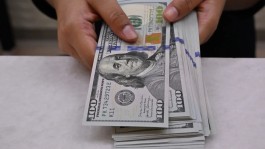











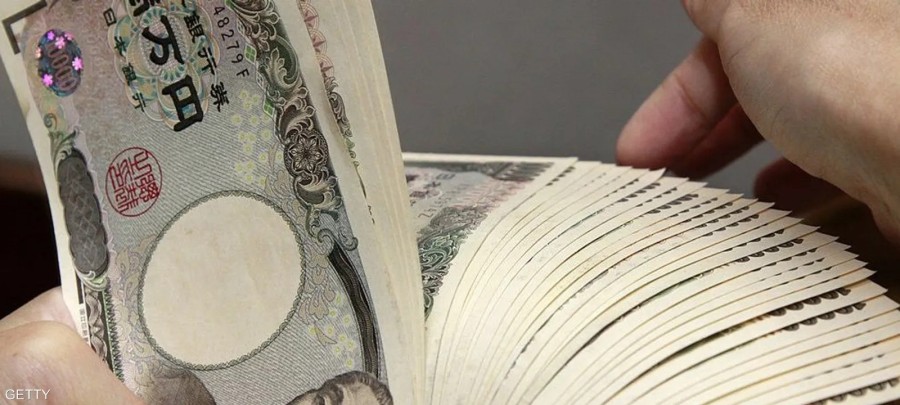


The Japanese yen rose broadly in Asian markets on Monday at the start of the week against a basket of major and minor currencies, beginning to recover from a near two-week low against the US dollar, amid safe-haven buying activity due to concerns related to Trump's tariff moves following the historic US Supreme Court decision.
With inflationary pressures easing on monetary policymakers at the Bank of Japan, the likelihood of a Japanese interest rate hike until next September has declined. In order to reprice those prospects, investors are awaiting the release of more crucial economic data in Japan.
Price overview
Today's Japanese Yen exchange rate: The dollar fell against the yen by about 0.7% to (153.99¥), from Friday's closing price of (155.03¥), and recorded a high level during today's trading at (154.95¥).
The yen ended Friday's trading down less than 0.1% against the dollar, its third consecutive daily loss, hitting a near two-week low of 155.64 yen, due to easing inflationary pressures in Japan.
The Japanese yen lost 1.6% against the US dollar last week, its second weekly loss in the last three weeks and its biggest weekly loss since July 2025, due to declining prospects of a Japanese interest rate hike, in addition to concerns related to the stimulus economic policies of Japanese Prime Minister Sanae Takaichi.
Trump's customs moves
The U.S. Supreme Court issued a landmark ruling on Friday, February 20, 2026, invalidating the sweeping tariffs previously imposed by the Trump administration, deeming that the use of the International Emergency Economic Powers Act (IEEPA) to impose these tariffs exceeded the legal powers granted to the president.
In a swift response, Trump announced on Saturday, February 21, 2026, an increase in global tariffs from 10% to 15%, to take effect starting Tuesday, February 24, 2026.
This time, Trump resorted to Section 122 of the Trade Act of 1974, a law that allows the president to impose temporary tariffs for up to 150 days to address a balance of payments deficit without the need for immediate congressional approval.
It is worth noting that the Supreme Court ruling has raised huge legal questions about whether companies that paid billions of dollars under the old, illegal system will receive compensation, something that could take years in the courts.
Japanese interest rate
Data released on Friday in Tokyo showed that Japan's core inflation rate fell in January to its lowest level in two years, easing inflationary pressures on the Bank of Japan.
Following that data, the pricing of the probability of the Bank of Japan raising interest rates by a quarter of a percentage point at its next March meeting fell from 10% to 3%.
The pricing in the probability of the Bank of Japan raising interest rates by a quarter of a percentage point at its April meeting has fallen from 50% to 30%.
According to the latest Reuters poll: The Bank of Japan may raise interest rates to 1% in September.
In order to reprice those probabilities, investors are awaiting further data on inflation, unemployment and wage levels in Japan.