




































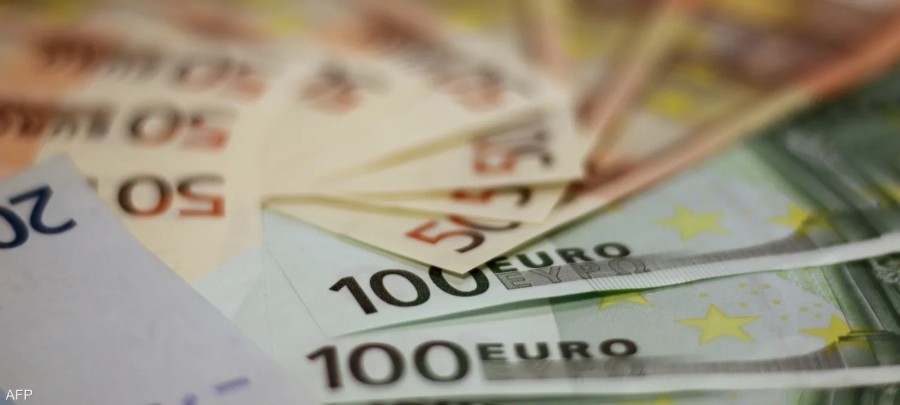


The euro fell in the European market on Thursday against a basket of global currencies, continuing its losses for the second day in a row against the US dollar, moving away from its highest level in three weeks, as corrections and profit-taking continued, and under negative pressure as concerns about Greenland eased, especially after Donald Trump backed away from his hardline stance on controlling the island.
With inflationary pressures easing on monetary policymakers at the European Central Bank, the prospect of at least one European interest rate cut this year has revived, and in order to reprice those prospects, markets are waiting for more economic data from the Eurozone.
Price overview
Euro exchange rate today: The euro fell against the dollar by about 0.1% to $1.1670, compared to today's opening price of $1.1681, and recorded a high of $1.1694.
The euro ended Wednesday's trading down 0.35% against the dollar, its first loss in the last three days, after hitting a three-week high of $1.1768 the previous day.
Apart from profit-taking, the euro fell after comments by US President Donald Trump regarding Greenland.
US dollar
The dollar index rose less than 0.1% on Thursday, continuing its recovery for the second consecutive session from a two-week low, reflecting the continued rebound of the US currency against a basket of major and minor currencies.
US President Donald Trump withdrew his threat to impose tariffs on several European NATO member states, announcing that a framework agreement had been reached with NATO regarding Greenland.
Trump said via Truth Social: “We have established a framework for a future agreement regarding Greenland, and we will not impose the tariffs that were scheduled to take effect on February 1st.”
Several important economic data points will be released later today in the United States, regarding economic growth during the third quarter of last year, and regarding personal consumption expenditures for the months of October and November.
This data will provide additional and strong evidence about the future path of the Federal Reserve's monetary policy and the direction of US interest rates this year.
European interest rate
Recent data from Europe showed that key inflation levels slowed during December, indicating a decrease in inflationary pressures on the European Central Bank.
Following that data, the money market's pricing of the likelihood of the European Central Bank cutting European interest rates by about 25 basis points next February rose from 10% to 25%.
Traders have revised their expectations from the European Central Bank keeping interest rates steady throughout this year to at least one cut of around 25 basis points.
In order to reprice the above probabilities, investors are awaiting further economic data from the Eurozone regarding inflation, unemployment, and wage levels.
Opinions and analyses
Chris Weston, head of research at Pepperstone, said traders were quick to react to some strong market reversals, reducing their recently entered short positions, long hedges against price volatility, partially covering short positions on the US dollar, and maintaining a greater balance in their investments in gold and silver.
Weston added that the market, between Trump's Davos speech and his social media posts, had largely removed the risk of a US confrontation with its NATO partners.