











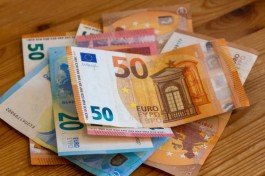









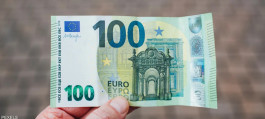
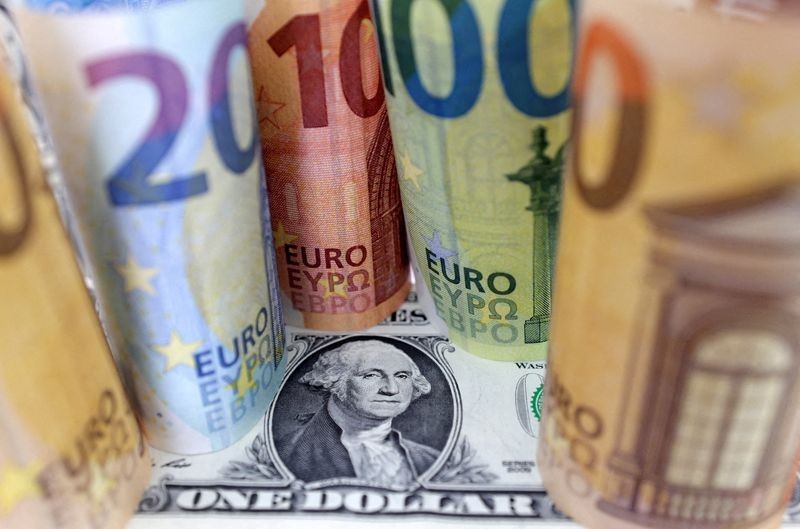


The euro rose in the European market on Thursday against a basket of global currencies, continuing to move in positive territory for the second day in a row against the US dollar, amid slowing purchases of the US currency as a safe haven, especially after the US Central Command announced the end of military strikes on Iran.
Following the recent surge in oil prices due to renewed tensions in the Strait of Hormuz, the likelihood has increased that the European Central Bank will raise interest rates by an additional 25 basis points before the end of this year.
Price overview
The euro rose against the dollar by more than 0.1% to $1.1430, from an opening price of $1.1416, while it recorded its lowest level at $1.1414.
The euro ended Wednesday's trading session up less than 0.1% against the dollar, marking its fourth daily gain in the last five sessions, supported by growing expectations regarding European interest rates.
US dollar
The dollar index fell 0.1% on Thursday, extending its losses for the second consecutive session, reflecting the decline in the value of the US currency against a basket of major currencies.
This decline comes amid a slowdown in demand for the dollar as a safe haven, especially after reports indicated that the current military confrontations between the United States and Iran will not lead to a new war in the Middle East region.
global oil prices
Oil prices fell by about 0.5% on Thursday, giving up their highest levels in two weeks, due to profit-taking and corrective actions, along with reports indicating continued shipping traffic in the Strait of Hormuz.
Developments in the Iranian war
The US Central Command (CENTCOM) announced the end of the current round of airstrikes on military targets inside Iran.
The US strikes focused on coastal cities and facilities adjacent to the Strait of Hormuz, and resulted in the destruction of two shipping control towers and two marine piers in the strategic port of Chabahar.
The US military also announced its success in destroying more than 60 warships belonging to the Iranian Revolutionary Guard Corps Navy, in addition to targeting air defense systems and coastal radars.
In response, the Iranian Revolutionary Guard Corps launched ballistic missiles and drones targeting 85 US military sites in both Bahrain and Kuwait.
The Speaker of the Iranian Parliament, Mohammad Baqer Qalibaf, affirmed that Tehran will not back down, and that the Strait of Hormuz will only be opened according to Iranian arrangements and procedures, and not under American threats.
For his part, US President Donald Trump said the US strikes were in response to Iranian attacks targeting some commercial ships in the Strait of Hormuz.
European interest rate
Financial markets are pricing in the likelihood of the European Central Bank raising interest rates by 25 basis points this July at around 10%.
In contrast, the pricing of the probability of implementing a similar increase next December has risen to over 90%.
To reprice those probabilities, investors are awaiting the release of more economic data in the Eurozone, particularly data on inflation, unemployment and wages.