




































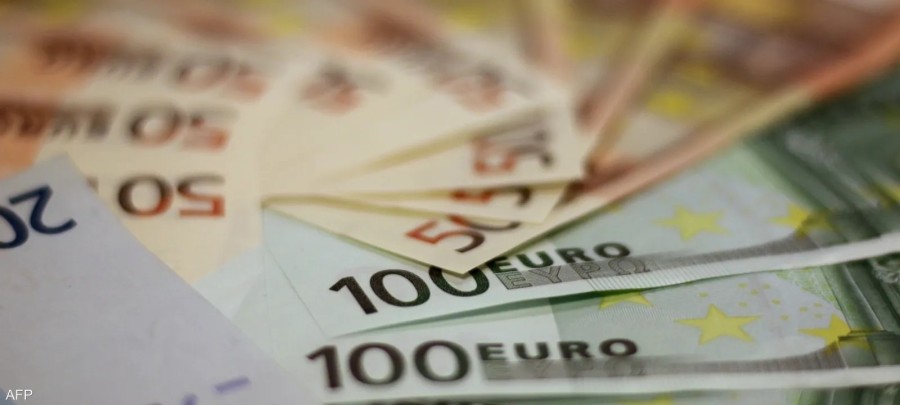


The US dollar begins to recover from low levels
Markets are awaiting new clues about the path of European interest rates.
The euro fell in the European market on Tuesday against a basket of global currencies, giving up its highest level in four months against the US dollar, heading towards its first loss in the last four days, due to profit-taking and corrective activity, coinciding with a recovery in the levels of the US currency before the Federal Reserve meeting.
With inflationary pressures easing on monetary policymakers at the European Central Bank, the prospect of at least one European interest rate cut this year has revived, and in order to reprice those prospects, markets are waiting for more economic data from the Eurozone.
Price overview
Euro exchange rate today: The euro fell against the dollar by 0.1% to ($1.1870), from today’s opening price of ($1.1881), and recorded a high of ($1.1899).
The euro ended Monday's trading session up 0.45% against the dollar, its third consecutive daily gain, and hit a four-month high of $1.1907, due to negative pressure on US assets.
US dollar
The dollar index rose more than 0.1% on Tuesday, beginning to recover from a four-month low of 96.81 points, on track for its first gain in the last four sessions, reflecting a rebound in the US currency against a basket of global currencies.
Aside from buying activity from low levels, the US dollar's recovery comes ahead of the Federal Reserve's first monetary policy meeting of the year.
The meeting is expected to result in interest rates remaining largely unchanged, with a reference to the need for more time to assess economic developments before any new monetary policy steps are taken.
Carol Kong, a currency strategist at Commonwealth Bank of Australia, said: “I think markets will likely focus on questions about the Fed’s independence rather than interest rate expectations.”
Kong added: If Powell chooses to resign from his position as governor after his term as chairman of the Federal Reserve ends in May, it could reinforce the impression that he is yielding to political pressure, which could increase concerns about compromising the independence of the Federal Reserve... and this poses a risk to the dollar.
European interest rate
Recent data released in Europe showed that key inflation levels slowed during December, indicating a decline in inflationary pressures on the European Central Bank.
The money market's pricing of the likelihood of the European Central Bank cutting European interest rates by about 25 basis points next February is currently stable around 25%.
Traders have revised their expectations from the European Central Bank keeping interest rates steady throughout this year to at least one cut of around 25 basis points.
In order to reprice the above probabilities, investors are awaiting further economic data from the Eurozone on inflation, unemployment and wage levels.