




















The letter K has been at the forefront of investors' attention in recent months, as markets try to gauge the state of the US economy.
Graphically, this letter could offer one of the best depictions of what has been a resilient—albeit deeply divided—business: consumer spending has been strong for wealthy households and businesses, but those with lower incomes appear to be struggling under the weight of high living costs.
The result is an increased focus on purchasing power ahead of the crucial U.S. midterm elections in November, and what policy solutions can be offered to support the bottom of a so-called K-shaped economy that is constantly expanding, Bank of America Securities analysts said in a note.
They added that attempts to reduce mortgage costs by lowering interest rates by the Federal Reserve are the most likely of the solutions that policymakers can offer.
Analysts said this could have a negative impact on the US dollar, all other factors being equal. They added that purchasing power concerns are directly linked to current market discussions about the Federal Reserve's policy outlook under Kevin Warsh, President Donald Trump's nominee to be the next Fed chair, as well as the development of new artificial intelligence models and the impact of this technology on the US labor market.
There was some doubt as to whether Warsh, a former Federal Reserve governor, would advocate for reducing the central bank's bond holdings. He argued that doing so would allow for lower interest rates—which would also align with Trump's longstanding preference for a rapid decline in borrowing costs to help boost the economy.
At the same time, there was uncertainty about how artificial intelligence would affect job growth. A January labor market report indicated a slowdown in hiring for professional and business services, which could suggest that companies are holding back on spending until there is more clarity about AI's capabilities—and its potential productivity gains.
Bank of America analysts stated: “We anticipate that the potential promise of AI-driven productivity/lower inflation will be used as justification for a more accommodative monetary policy (and thus lower mortgage rates) amid a more dynamic economy. However, until the risks of job displacement are definitively a thing of the past, negative sentiment toward the US dollar is unlikely to dissipate.”
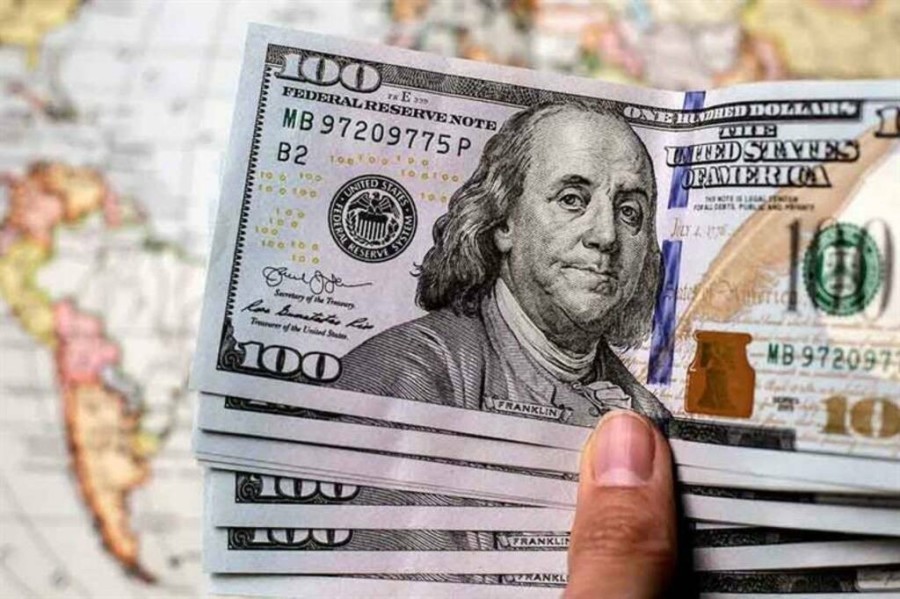
The dollar index, which measures the US currency against a basket of its currency counterparts, fell by more than 10% over the past year.
Meanwhile, Bank of America analysts said the Trump administration's campaign to revive American manufacturing puts foreign exchange at the center.
In theory, a weaker dollar could boost manufacturing activity by making U.S.-made goods cheaper for foreign buyers, potentially increasing exports and boosting overseas sales. However, imports of raw materials and other components would become more expensive, potentially leading to higher inflation.
Bank of America analysts wrote: “Hints of a ‘benign neglect’ policy have weighed more on US dollar sentiment than risk a negative feedback loop on inflation. This has also fueled concerns about capital outflows, although we still consider this a low (but emerging) risk.”
Against this backdrop, Bank of America's preferred indicators of foreign exchange flows and positions have yet to show any evidence of significant shifts or a decline in the dollar's value. Analysts said investors remain short on the US dollar, but not at the same levels as in the first half of 2025, when Trump first introduced sweeping tariffs on a range of countries.
They said: Similarly, the relative flows into equities and fixed income do not suggest that foreign investors are rushing to exit their US exposure. We see room for increased hedging against the US dollar, which is a factor in our thesis on a weaker dollar in 2026.