




























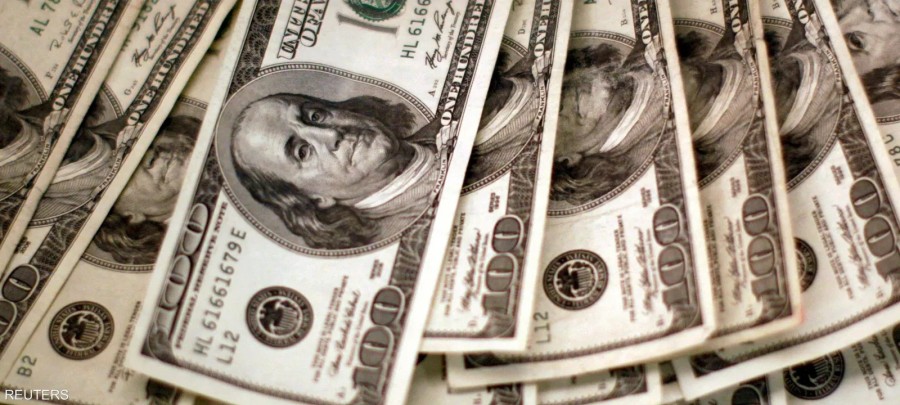


The US dollar dipped slightly on Thursday, remaining under pressure and heading for a weekly decline, even after a stronger-than-expected US jobs report.
At 11:30 a.m. Saudi time, the dollar index, which tracks the performance of the US currency against a basket of six other currencies, fell by 0.1% to 96.700, heading towards a weekly loss of about 1%.
Limited support for the dollar
The US dollar received limited support from the release of a set of strong jobs figures on Wednesday, as US job growth unexpectedly accelerated in January and the unemployment rate fell to 4.3%.
These figures provided further signs of American economic resilience and led traders to reduce their expectations regarding interest rate cuts by the Federal Reserve.
There's good news and bad news for the dollar after yesterday's payroll data. The good news is obvious: the jobs figures were strong, analysts at ING said in a note.
The bad news for the dollar is that it should have rebounded more strongly on the jobs data. Half of the initial dollar rally quickly gave way, and this wasn't due to a reassessment of the jobs figures: short-term dollar rallies had already risen and remained elevated. Instead, we interpret this as a sign that markets are still inclined to sell off dollar rallies based on longer-term considerations. This implies that the threshold for a dollar recovery is higher: more positive data is needed, to begin with.
All eyes are now on the upcoming US Consumer Price Index (CPI) data, due on Friday, for further clues about the world's largest economy. Prior to that, weekly jobless claims data are scheduled for release later in the session.
Weak growth in the UK
In Europe, the pound/dollar pair rose 0.2% to 1.3653, as sterling struggled to post gains after data showed the British economy achieved minimal growth in the final quarter of 2025.
Gross domestic product grew by 0.1% in the period from October to December, the same sluggish pace as in the third quarter, according to the Office for National Statistics.
The UK economy ended 2025 on a lackluster note. While not a huge surprise, the weakness in construction and business investment was particularly striking, ING said.
As long as the recent weakness in employment continues, coupled with the sharp slowdown in wage growth, we expect a cut in March from the Bank of England, followed by another move in June.
The euro/US dollar pair rose 0.1% to 1.1886, supported by the general selling of the dollar.
Support for the EUR/USD pair continues to come almost entirely from strategic selling of the US dollar, with little to no contribution from the euro, according to ING. The EUR/USD pair may hover around 1.1850-1.1900 today. We maintain a slight downside preference, but a flat near-term path appears the most likely scenario.
The yen rises amid talk of intervention
In Asia, the US dollar/Japanese yen pair fell 0.2% to 152.93, dropping to its lowest level in three weeks as the yen continued its rise following Japanese Prime Minister Sanae Takaichi's landslide victory in the weekend's elections, with support coming largely from speculation about government intervention in the currency markets.
Tokyo's top currency diplomat, Atsushi Mimura, declined on Thursday to comment on whether Tokyo had intervened in the yen in recent weeks, reiterating that the government would closely monitor the currency for any significant fluctuations.
Mimura also said that Tokyo is in close contact with US authorities regarding any joint intervention.
Elsewhere, the USD/CHF pair fell 0.2% to 6.9019, dropping to its lowest level since May 2023. The yuan remained bullish after a series of strong midpoint fixings by the People's Bank of China.
The Australian dollar/US dollar pair fell 0.1% to 0.7119, after reaching its strongest level since early January earlier in the week.
The currency was boosted mainly by increased bets that the Reserve Bank of Australia will raise interest rates further after last week's 25 basis point increase.
Reserve Bank of Australia Governor Michelle Bullock told lawmakers on Thursday that the bank would raise interest rates again if inflation became entrenched, although she noted that it was not clear at the moment whether reducing inflation would require further interest rate hikes.