

































Gold prices fell on Thursday as the US dollar rose following stronger-than-expected US jobs data for January, which weakened market bets on an imminent interest rate cut, as investors awaited inflation data on Friday for clearer signals on the direction of monetary policy.
The dollar and new interest rates are putting pressure on the precious metal.
Christopher Wong, a market analyst at OCBC Bank, said that the stronger-than-expected jobs report, and the accompanying slight reduction in the likelihood of an interest rate cut by the Federal Reserve, may have been among the reasons that limited gold's performance during the session.
The US dollar index rose after the release of the jobs report, which surprised markets with its strength and indicated the robustness of the underlying US economy, making dollar-denominated metals more expensive for holders of other currencies.
Wong added that gold's sensitivity to dollar movements, bond yield repricing, and the uncertainty surrounding Federal Reserve policy will continue to pose both upside and downside risks to gold prices in the near term.
Image of the US labor market and fiscal deficit
Data showed that job growth in the United States accelerated unexpectedly during January, and the unemployment rate fell to 4.3%. However, the largest increase in job numbers in 13 months may give an exaggerated picture of the strength of the labor market, as subsequent revisions revealed that the US economy added only 181,000 jobs in 2025, instead of previous estimates that indicated 584,000 jobs.
The Congressional Budget Office projected on Wednesday that the U.S. budget deficit would rise slightly in fiscal year 2026 to $1.853 trillion, indicating that President Donald Trump’s economic policies are contributing, overall, to the deterioration of the country’s financial picture, amid weak economic growth.
A Reuters poll showed the Federal Reserve would keep interest rates unchanged until the end of Chairman Jerome Powell's term in May, with a rate cut immediately thereafter in June, though economists warned that monetary policy under his likely successor Kevin Warsh could move toward greater easing.
Investors are currently awaiting the weekly jobless claims report on Thursday, along with inflation data due on Friday, for further clues about the expected path of US monetary policy. This data could deepen gold's losses if it follows the same trajectory as the US employment data and supports a delay in interest rate cuts.
Gold at settlement yesterday
Gold and silver prices rose at the close of trading on Wednesday, as investors focused on assessing the long-term outlook for US monetary policy.
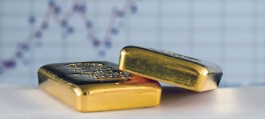
Gold futures for April delivery rose 1.34%, or $67.50, to $5,098.50 an ounce, recovering from the previous session's 0.95% loss.
Gold now
The price of gold in spot trading fell by 0.5% to $5,055.24 an ounce, after closing Wednesday's session with a gain of more than 1%.
U.S. gold futures for April delivery fell 0.4% to $5,077.30 an ounce.
Other minerals
The price of silver in spot trading fell by 0.6% to $83.49 an ounce, after having jumped by about 4% during Wednesday's session.
Platinum fell 1.1% to $2,109.45 an ounce in spot trading, while palladium rose 0.3% to $1,705.25 an ounce.