














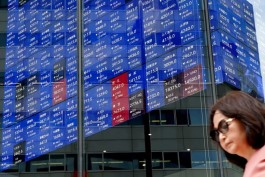










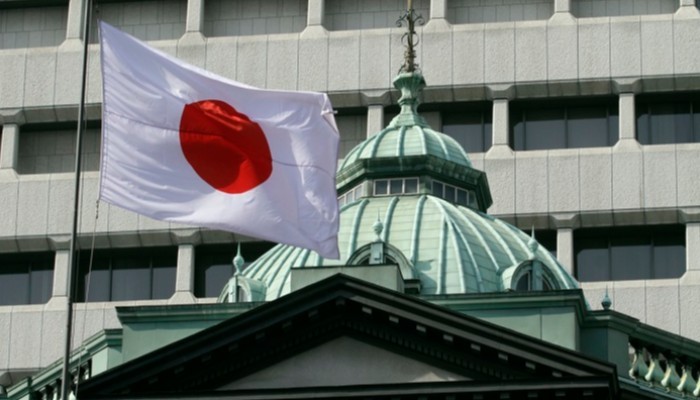


The Bank of Japan raised its benchmark interest rate to its highest level since 1995 and indicated that further normalization of monetary policy remains on the table, during a monetary policy meeting held in the absence of the governor.
The Bank of Japan raised its benchmark interest rate by a quarter of a percentage point to 1%, according to a statement released Tuesday. It also announced it would maintain its bond purchases at a steady monthly pace of around 2 trillion yen starting in April 2027, signaling a halt to the tapering of its bond-buying program.
These decisions were widely expected by economists and market participants. The vote to raise interest rates passed by a majority of 7 to 1, with central bank board member Toichiro Asanda voting against.
The Bank of Japan governor was absent from the meeting.
The meeting was held after Governor Kazuo Ueda was hospitalized last week for treatment of an infection in a liver cyst. This marked the first time since an emergency meeting in 2010 that the board had convened in the governor's absence. The Bank of Japan stated that Ueda intended to offer his views to the board without participating in the vote.
The yen edged down slightly to 160.24 against the dollar shortly after the interest rate hike announcement. The yen has been trading near the 160 level against the dollar since last week, a range close to the levels that prompted the Finance Ministry to intervene in the foreign exchange market in late April.
Deputy Governor Shinichi Uchida will replace Ueda at the press briefing scheduled for 3:30 p.m. in Tokyo.
Uchida is widely regarded as one of the chief architects of the Bank of Japan’s modern monetary policy framework, a policy that has completed a full cycle, moving from negative interest rates and yield curve control to the interest rate-hiking cycle that Uchida initiated in March 2024.
Investors are watching closely for a potential future interest rate hike.
With markets almost fully pricing in an interest rate hike, investors have turned their attention to any signs that might indicate another rate increase in the coming months.
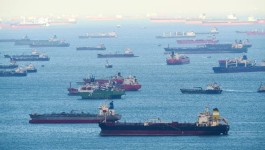
Despite the United States and Iran announcing a temporary agreement to halt the war and reopen the Strait of Hormuz, policymakers remain concerned about the risk of accelerating inflation, while hundreds of commercial vessels continue to wait for safe passage through the strait.
The continued weakness of the yen also represents an additional source of price pressures in resource-poor Japan.
It has become increasingly difficult for the Bank of Japan to use the uncertainty surrounding global developments as a pretext to keep its options open regarding the pace of monetary policy normalization, especially with rising inflation risks globally.
The European Central Bank raised interest rates last week, while the Federal Reserve is expected to keep its monetary policy unchanged this week, amid growing speculation that another increase could be approved before the end of the year.
In a Bloomberg survey, most experts who follow the Bank of Japan predict that interest rates will be raised approximately once every six months.
Potential interest rate hike date in Japan
However, former Bank of Japan chief economist Hideo Hayakawa is among those who believe the next move could come as early as October.
At the same time, the Bank of Japan must be careful not to adopt an overly hawkish tone, taking into account existing political sensitivities.
Prime Minister Sanae Takaichi has expressed a preference for continuing the accommodative monetary policy, and recently asked Ueda to determine the appropriate policy, taking into account government measures to support the economy, in what appeared to be a call not to rush into tightening monetary policy.