


























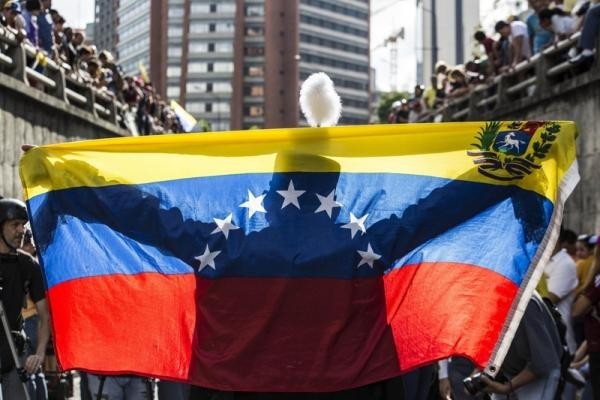


The US market may soon see the launch of an exchange-traded fund (ETF) that would allow investors to gain exposure to the Venezuelan market, which has seen a strong rise in its stock exchange since the ouster of former President Nicolas Maduro this week.
The proposed fund, called the Teucrium Venezuela Exposure ETF, was filed with the U.S. Securities and Exchange Commission just days after Maduro's extradition to the United States. It aims to track the total return of companies with significant exposure to the Venezuelan economy, which has about 30 million people.
The launch of this fund coincides with favorable timing, given the strong surge in Venezuelan stocks since the end of last week, following Maduro's arrest.
Historic leap in the Venezuelan stock market
Venezuela’s IBC index has more than doubled in value this week alone, reaching levels exceeding 4,400 points.
This level represents an increase of approximately 2,300 points, equivalent to a 110% increase compared to its closing at the end of last year at 2,082 points.
This sharp rise has brought Venezuela back into the spotlight of global markets, after years of marginalization and investment aversion.
A heavy legacy of crises and sanctions
Wall Street has steered clear of Venezuela for a long time, as a result of years of excessive spending, falling oil prices and the imposition of tough U.S. sanctions.
In 2017, Venezuela defaulted on its debt after failing to meet obligations on bonds issued by the government and the national oil company PDVSA.
Reports indicate that Fidelity Investments and T. Rowe Price are among the major holders of these troubled bonds.
renewed interest in supporting political transition
The apparent rapprochement between the new Venezuelan government and the United States has revived investors' appetite for the country.
Many are betting on the possibility of achieving added value through a potential restructuring of Venezuela's sovereign debt, or through investment in the country's huge oil reserves.
These hopes have been bolstered by recent political changes, which are seen as potentially opening the door to deeper reforms and broader economic liberalization.
Warnings of the risks of sanctions and volatility
Tuchrome, a Burlington, Vermont-based company commonly known for its agricultural commodity funds focused on wheat, soybeans, corn, and sugar, explained that tensions between the United States and Venezuela remain a significant risk factor for any investment in the country.
The company indicated that the United States might resort to imposing broader sanctions on Venezuela in the future.
She warned that these sanctions, or even the threat of them, could lead to a decline in the value and liquidity of Venezuelan securities, weaken the bolivar currency, or cause other negative repercussions for the Venezuelan economy.