


















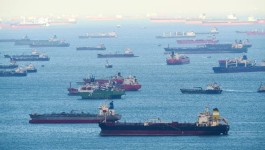
















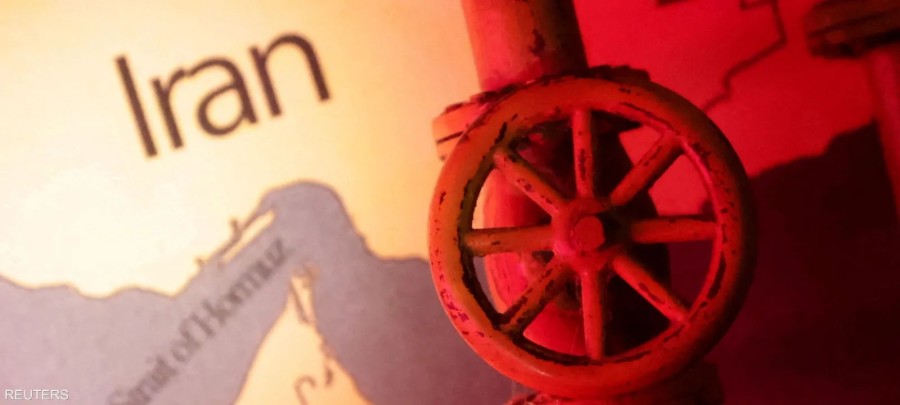


The cost of insuring ships passing through the Strait of Hormuz has jumped nearly 12 times, even after US President Donald Trump pledged to support trade through this vital oil shipping lane.
The Financial Times quoted insurance brokers as saying that ship owners are receiving offers costing millions of dollars for insurance coverage to cross the strait or sail in nearby waters classified as high risk, after insurance premiums jumped on Wednesday to about 3 percent of the ship's value, compared to about 0.25 percent before the outbreak of the war.
Trump had stated via Truth Social that the U.S. International Development Finance Corporation would provide insurance and guarantees at a very reasonable price… to ensure the financial security of all maritime trade, especially energy, passing through the Gulf.
In London, the insurance sector scrambled on Wednesday to understand how the proposal would be implemented and whether it could lead to lower prices. Several of the world's largest insurance brokers said they were surprised by Trump's announcement.
David Smith of specialist brokerage firm McGill & Partners said: “We haven’t heard any further details at all, apart from what was reported in the Truth Social post,” adding that insurers are still uncertain about the extent of the support, despite the pledge to insure all trade across the Gulf.
He added: Would that apply, for example, to a shipment of Chinese oil transported on a European tanker? We don't know, according to the Financial Times.
For their part, other experts in the shipping sector questioned the extent to which the American institution could provide actual support, given that its main role is to facilitate private investments in developing countries, while the biggest concern for ship owners in the region is shipping costs and the risk of attacks, not the availability of insurance itself.
Shipping investor and Contango Research founder Ed Finley Richardson said the corporation's announcement was likely an attempt to calm oil prices, adding: The aim may be to ease the pressure on oil prices, but I don't really see how it will change anything. Insurance is already available.
Brent crude prices fell slightly after Trump's announcement, but are still about 12 percent higher than at the start of the war, trading near $81 a barrel.
The cost of insuring ships sailing near the Middle East has risen sharply since insurance companies began notifying their clients over the weekend that they were canceling war risk insurance policies.
Brokers said some companies cancelled the documents with the aim of reissuing them at higher prices that reflect current risk levels, while others withdrew completely from the market, and many companies are refusing to provide coverage for ships passing through the strait, where shipping traffic has almost completely stopped in recent days.
Since Sunday, at least seven oil tankers have been attacked in the strait and surrounding waters, and ships have reported receiving radio messages believed to be from Iran’s Revolutionary Guard warning them against sailing in the waterway.
According to Marsh McLennan insurance broker Dylan Mortimer, typical rates in high-risk areas are currently between 1 percent and 1.5 percent of the ship's value, while ships linked to the United States, the United Kingdom, or Israel have been asked to pay premiums up to three times these rates.
Trump added via Truth Social that the US Navy could, if necessary, begin escorting oil tankers through the Strait of Hormuz as soon as possible.
Maritime security experts said that military escorts could help reduce risks to ships receiving protection, but providing protection for all tankers operating in areas currently threatened by Iran may be unrealistic, as it would require a very large number of warships and military assets.
A U.S. naval security adviser also warned that U.S. warships themselves could become vulnerable if they entered the strait before Iranian naval capabilities were significantly weakened.
He said: There is a fear that if a warship is deployed in that area, it could be targeted by all available Iranian missiles, potentially leading to its complete sinking.