




























Oil prices rose amid conflicting statements from the United States and Iran regarding efforts to end the war that led to the closure of the Strait of Hormuz and widespread oil production cuts, raising fears of a global energy crisis.
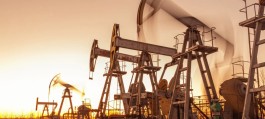
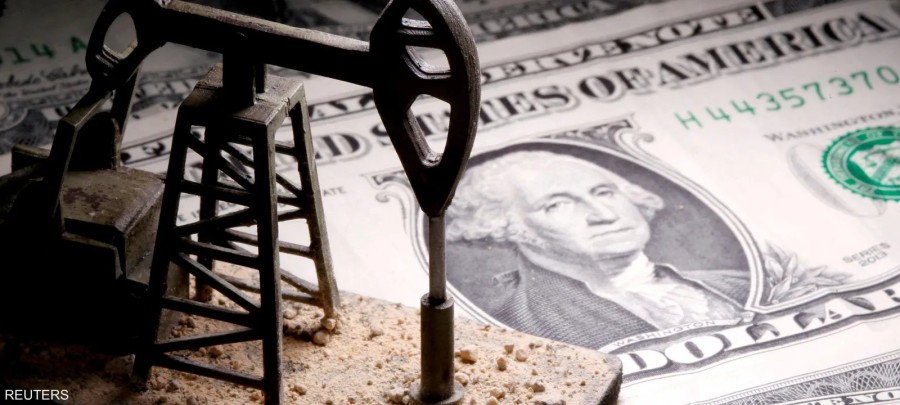
Brent crude futures climbed above $104 a barrel after losing more than 2% on Wednesday, while West Texas Intermediate crude traded near $92.
While the White House confirmed that peace talks were continuing, Tehran rejected the American initiatives and put forward its own conditions, including imposing sovereign control over the vital waterway.
In Iran, parliament is working on a bill to impose fees for providing security to ships transiting the strait, according to the semi-official Fars news agency. The agency said the plan is expected to be finalized next week, citing an unnamed lawmaker.
Supply shock drives prices higher
The global benchmark crude is on track for its biggest monthly gain since 1990, as the escalating conflict in the energy-rich Middle East sends shockwaves through the global economy, with Asia being particularly affected.
The near-total closure of the Strait of Hormuz has resulted in the loss of millions of barrels per day of production, along with a rise in the prices of petroleum products from diesel to jet fuel.
In another conflict zone, traders are closely monitoring the war between Russia and Ukraine and the risks to supplies. A Turkish oil tanker carrying Russian Urals crude was attacked by a drone in the Black Sea near Istanbul, according to NTV.
BlackRock President Rob Capito suggested that investors may have underestimated the risks of the conflict. He added that oil prices could rise to $150 a barrel, even if the war were declared over tomorrow, because restoring supply chains to full capacity will take time.
Late on Wednesday, US President Donald Trump reiterated that the United States is holding talks with Tehran, saying during a fundraising event in Washington: They desperately want to make a deal, but they are afraid to say so.
Separately, the Wall Street Journal reported that Trump told close associates in recent days that he hopes to end the conflict in the coming weeks.
The White House had combined diplomatic overtures with threats of a new wave of attacks in the war that Washington launched with Israel in late February. White House spokeswoman Caroline Leavitt said Trump was not joking and was prepared to unleash his anger.
Philip Jones Lux, senior market analyst at Sparta Commodities, said: “While the US is clearly looking for a way out, neither Iran nor Israel seems interested in a quick solution.” He added that with more troops being deployed, pricing de-escalation at this stage seems premature.
Military movements increase the ambiguity
Although Trump has not announced any clear plans, sources familiar with the matter said the U.S. Department of Defense has ordered the deployment of two Marine Corps units to the region, comprising approximately 5,000 troops, along with aircraft and landing craft. A source also stated on Tuesday that Trump is sending more than 1,000 troops from the 82nd Airborne Division.
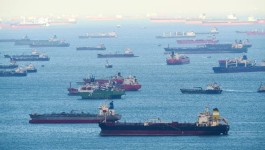
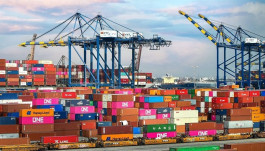
Traders remain focused on the Strait of Hormuz, where shipping traffic through this vital waterway linking the Persian Gulf to global markets is at a minimum. Vessels seeking safe passage are required to submit crew and cargo manifests, along with voyage details, to obtain approval from the Revolutionary Guard.
Aaron Stein, president of the Foreign Policy Research Institute, said: “Iran controls the Strait, and he (Trump) needs it to be open. He can achieve this through agreement or coercion, and he is trying to combine both.”
The CEO of Abu Dhabi National Oil Company (ADNOC), Sultan Al Jaber, said that Tehran's actions are destabilizing the global economy. Speaking at an event in Washington, he added: Weaponizing the Strait of Hormuz is not just an act of aggression against one country; it is economic terrorism against every country and every family.
Global repercussions and widening crisis
As the conflict continues and Israel carries out new strikes on targets in the Iranian city of Isfahan, governments across Asia are preparing for the worst-case scenario.
Thailand raised gasoline prices by up to 22% on Thursday, the Philippines halted its wholesale spot electricity market, while farmers in India and China face rising costs for agricultural inputs.
In the United States, where fuel prices have risen sharply, administration officials are studying the implications of oil prices potentially reaching $200 a barrel, according to people familiar with the matter, indicating that senior officials are assessing extreme scenarios.
Meanwhile, Washington announced the rescheduling of a summit between Trump and Chinese President Xi Jinping to be held in Beijing on May 14 and 15, in a highly anticipated meeting that came after a postponement that increased uncertainty in relations between the world's two largest economies.
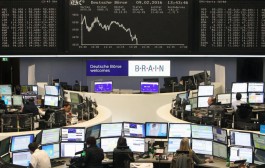
In the latest trading, Brent crude futures for May delivery rose 1.9% to $104.15 a barrel at 1:43 p.m. Singapore time, while the more actively traded June contract climbed 1.7% to $98.86. Meanwhile, West Texas Intermediate crude futures for May delivery gained 2.1% to trade at $92.21 a barrel.