






















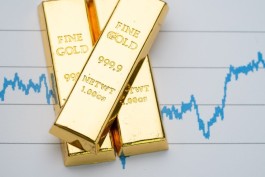













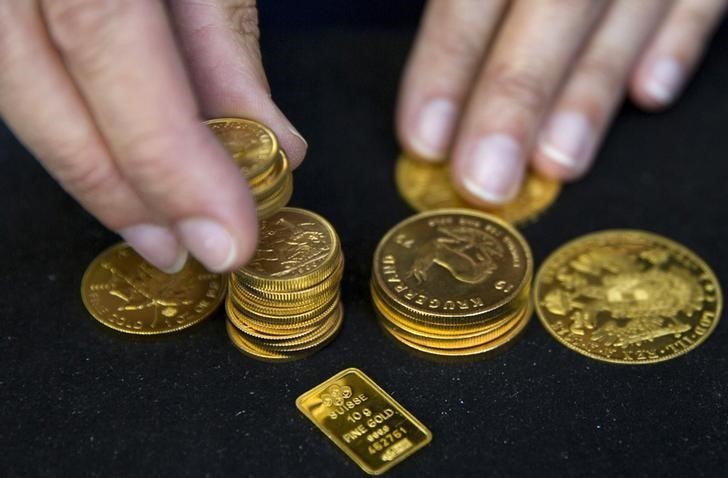


Gold prices fell on Monday as the US dollar strengthened, putting pressure on the precious metal priced in US currency, while a sharp jump in energy prices increased inflation fears and reduced the likelihood of near-term interest rate cuts.
Dollar strength and rising yields
The US dollar rose to its highest level in more than three months, making gold more expensive for investors using other currencies.
Meanwhile, yields on 10-year US Treasury bonds climbed to their highest level in a month, increasing the cost of holding gold, which does not yield.
Tim Waterer, chief market analyst at KCM Trade, explained that gold is currently under pressure despite the turmoil in the markets, noting that the rise in oil prices to triple digits has supported the dollar due to inflationary fears and at the same time reduced expectations of interest rate cuts.
Oil fuels inflation fears
Oil prices jumped by more than 15% to exceed $110 a barrel, amid the widening conflict between the United States and Israel on one side and Iran on the other.
This escalation has led some major oil producers in the Middle East to reduce supplies amid concerns that oil shipments through the Strait of Hormuz will remain disrupted for an extended period.
Waterer noted that much of the rise in gold over the past twelve months was based on expectations that the Federal Reserve would adopt an accommodative monetary policy with interest rate cuts.
Changes in monetary policy expectations
Analysts explained that rising oil prices to levels exceeding $100 a barrel reignites inflation risks, making interest rate cuts less likely in the near future.
This shift in monetary policy expectations has led to a repricing of gold in global markets in line with the new environment of rising energy prices.
Data from the US Interest Rate Monitor available on Investing Saudi Arabia’s website indicates that investors expect the Federal Reserve to keep interest rates unchanged at the conclusion of its two-day meeting ending on March 18.
The likelihood of an interest rate cut has decreased.
The probability of interest rates remaining unchanged by June has risen to over 51%, up from less than 43% last week, the week the current military conflict erupted.
Gold typically benefits from a low interest rate environment because it is a non-yielding asset, so higher yields and lower probability of interest rate cuts are a direct pressure on its price.
In this context, the trajectory of energy prices and geopolitical developments in the Middle East have become key factors that will determine the direction of markets in the coming period.
Escalating geopolitical tensions
Political developments in Iran took a further escalation on Monday after Tehran announced the appointment of Mojtaba Khamenei as the successor to his father, Ali Khamenei, as Supreme Leader.
This move indicates the continued control of the hardline faction over power in Iran, which exacerbates political and military tensions in the region.
Gold at settlement yesterday
Gold prices rose at the close of trading on Friday, but still recorded a weekly loss amid turmoil in investment strategies and economic prospects due to the ongoing war in the Middle East.
Gold futures for April delivery rose 1.57%, or $80, to $5,158.70 an ounce, but fell 1.70% over the week.
Gold now
Spot gold fell 1.4% to $5,097.70 an ounce, after having dropped more than 2% earlier in the session.
Gold futures in the United States for April delivery also fell by 1% to around $5,106 an ounce, indicating continued pressure on the precious metal amid changing expectations for US monetary policy.
Other minerals
This escalation was reflected in other metals markets as well, with spot silver falling 1.3% to $84.42 an ounce after having dropped more than 5% earlier in the session.
Platinum fell 1.3% to $2,108.05 an ounce, while palladium dropped 2.4% to $1,586.75 an ounce, amid widespread volatility in global metals markets.