

















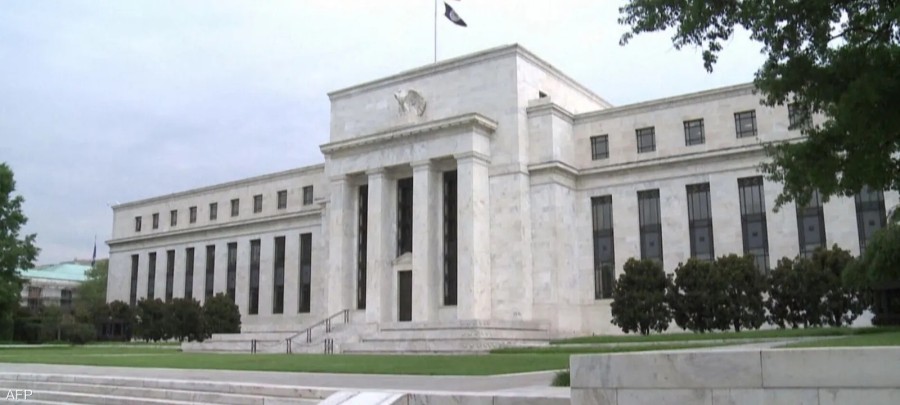


The Federal Reserve will announce its decision tonight at 9:00 PM Saudi time, followed by a press conference with its chairman, Kevin Warsh, half an hour later. Markets are pricing in a roughly 90% probability of interest rates remaining unchanged at 3.75%-4.00% and a potential hike of only about 10%. However, all eyes are on December: the probability of a second rate hike ranges between 73% and 87%, depending on the specific instrument and date. All 100 economists surveyed by Reuters expect a hike in December, with 94 of them predicting a rate hold tonight. The dollar remains near its highest level in two weeks (the dollar index is around 102.2, +0.4%). This article summarizes the expectations of investment banks, the potential pitfalls, and Warsh's remarks that could potentially shift the markets.
What do investment banks expect?
Most major brokers agree on one scenario: overnight hold and December rise to 4.00%-4.25%. Here are each bank's forecasts and their sources:
Goldman Sachs: Tonight's rate hike and a second, final one in December, at a target rate of 4.00%-4.25%, before a shift towards a cut from the end of 2027. They believe the committee settled on a hit at one meeting and skip the next, that the overshoot of core inflation (tariffs, energy, and AI) is temporary, that the press conference will not add much, and that the question is whether the statement will soften its tone regarding the September hike, similar to Jefferson's speech. They say that contract pricing (around 2.7 hikes in 12 months with a peak above 4.5%) is more hawkish than they anticipated.
JPMorgan: Hold in October and raise one in December to 4.00%-4.25%, according to a survey of 14 major brokers conducted by Capital.com on October 1 (13 of whom expect to hold).
Morgan Stanley: One rate hike in December, and its chief US economist Michael Gabin believes the risks are that the Fed will eventually need to raise more than expected.
Barclays: One increase in December to 4.00%-4.25%.
Deutsche Bank: One increase in December to 4.00%-4.25%.
UBS: One raised in December to 4.00%-4.25%; Simon Bean (late September) had predicted December, not October.
HSBC and Nomura: One raised in December to 4.00%-4.25%.
ING: A 25 basis point rate hike in December (interest rate 4.00%-4.25%) followed by a long pause until December 2027, where it expects a reversal of the December 2026 hike; it expects Warsh to avoid saying that widening credit spreads and weak stocks reduce the need for further hikes, and notes that the Fed meetings under his leadership charted the direction of the dollar four to six weeks (June hawkish, July dovish, September hawkish).
Bank of America: The dissenting voice: sees a possible surprise rate hike tonight because inflation data is worse than in September and further tightening is needed. It says that the statements by officials (Williams and Jefferson) are inconsistent with Warsh's rejection of advance guidance, and that a hike tonight would signal the Fed's departure from coordinated messaging while holding steady would confirm the market's reaction was correct.
Santander US (Stephen Stanley): Holds steady with December's hike still on the table; says the difficulty tonight is that Warsh has to explain why not hike now and convince the market that the December window is open.
Nordea: Holding and increasing in December, then resuming reductions from the end of 2027 to the first half of 2028.
Nationwide: Firming, warning that the lack of tightening could leave energy price effects unraveling the stability of long-term returns.
Pimco: Describes inflation as high but not accelerating and predicts a stabilization with a clear tendency towards tightening.
Evercore ISI: The Williams-Jefferson joint letter is considered credible in the absence of guidance from Warsh, giving considerable weight to the October confirmation.
Capital Economics: Warsh's speech at Jackson Hole was described as clearer and more hawkish than his previous conference.
Reuters poll (October 16-20, 100 economists): 94 expect no change tonight, 100 out of 100 expect a rate hike in December.
Capital.com survey (October 1, 2014 brokers): 13 expect to be fixed.
What the market is pricing in: a fix of around 89%-91% and a rise in December of 73%-87% according to the instrument, which means that banks' expectations are consistent with the pricing in October and more moderate than in the longer term.
RSM Group (not a bank): Joseph Brusuelas sees no signs of inflation slowing and expects more of a subsequent rise.
The picture boils down to this: the consensus is to hold rates steady and then lift them in December, and the real disagreement is about the tone tonight and what comes after December: the major banks see December as the last lifting, while Morgan Stanley, Bank of America and RSM warn of the possibility of further tightening.
Federal votes: Williams, Jefferson, and others
Senior officials paved the way for a rate hike before the period of silence. New York Federal Reserve President John Williams, in a speech in New York around October 12, said that one more rate hike this year might be appropriate, with no need for another in 2027, and that there was no need to rush; they could wait until after the election—a less hawkish stance than the market's pricing at the time. Vice Chairman Philip Jefferson reiterated the message on October 1, stating that he saw inflation as high in the near term before it would decline as energy shocks faded, but that he viewed inflation risks as tilted to the upside due to geopolitical developments and strong demand. Evercore ISI described the joint message from Jefferson and Williams as credible in an environment where Warsh was not providing guidance, while Fed Governors Christopher Waller and Michelle Bowman indicated that rate hikes should not be in rapid succession. On the other side, Beth Hammack, Laurie Logan, and Neel Kashkari called for immediate tightening of the rules, having opposed the July decision to uphold the decision (9-3) and calling for an increase. It is estimated that Hammack and Logan may also oppose the decision tonight. Daly will speak after the meeting on Friday (12:00 PM New York time), and his vote will be the first after the decision.
Inflation: What do September's data and Truflation say?
Inflation came in higher than expected in September: The Consumer Price Index (CPI) rose to 3.7% year-on-year from 3.4%, and core inflation jumped to 2.6% from 2.4% (exceeding the expected 2.5%), with core inflation rising 0.3% month-on-month compared to the expected 0.2%, driven by fuel prices. Truflation, which tracks prices daily, had predicted a lower reading (3.6% year-on-year and 2.4% core), meaning the official figure came in above both its forecast and the consensus of analysts. Truflation expects the September PCE, due Thursday after the Fed's decision, to accelerate to 3.6% year-on-year from 3.4% in August, and to 3.1% core from 3.0%. It says the acceleration is driven by supply-side pressures rather than broad demand, but the transmission of higher input costs to producer and service prices raises the risk of sustained inflation. This aligns with the Cleveland Fed's model, which estimates September PCE at around 3.60% and core at 3.05%. The Truflation Live Index currently estimates US inflation at around 3.3% (core 2.2%), lower than the official rate. Oliver Rust, head of data at the Fed, attributes the difference to the fact that housing is a deflationary factor not fully captured by the official methodology, and that the CPI and PCE are lagging indicators. This means that for the Fed, a core PCE reading of 3.1% or higher on Thursday would solidify its position on a December rate hike, while a reading of 3.0% or lower would soften it.
What could go wrong?
First, a surprise rate hike (around 10%): This would be a shock to the bond, stock, and gold markets because pricing tends to favor holding rates steady, a scenario Bank of America does not rule out. Second, a hold with dissenting votes: The dissenting votes of Hamak, Logan, and Kashkari (three votes, as in July) would be interpreted as a combative tone within the committee and increase the likelihood of a December rate hike. Third, the no guidance trap: Warsh rejects prior guidance, so the market might interpret the absence of the word December as an easing or tightening stance, depending on the prevailing mood, and volatility would increase even if the rate remains unchanged. Fourth, the language of the statement: If the committee omits or retains the language of the September hike without softening it, the interpretation of the difference between a hawkish and a lenient hold could shift. Fifth, the political clash: President Donald Trump, who appointed Warsh, is demanding a rate cut, and the September hike—the first since 2023—could provoke a reaction from the White House. Any harsh tone could trigger a confrontation. Sixth, the simultaneous timing of events: Microsoft and Alphabet are reporting their earnings on the same night, followed by the European Central Bank's decision on Thursday and the Bank of Japan's on Friday, thus amplifying volatility. Seventh, thin liquidity: The dollar and yields are near their recent highs after two sessions of gains, and any surprise move could amplify the price action.
Words that could turn the market upside down
Warsh explicitly rejects forward guidance and offers no clear path forward. At Jackson Hole, he stated that the Fed shouldn't foster a system where traders look to the bank for their next transaction and that he favors tighter rules. However, his hawkish language on inflation did move markets: after his August 28th speech, the probability of a September rate hike jumped from around a third, or 40%, to 57%-60%, the 10-year yield rose 4 basis points, and the stock market remained calm. Following the September hike, he said, Inflation is too high, and it has been for too long. Based on our analysis, the markets could move tonight in five different ways.
In the direction of a sharp downward move (tightening): repeating that inflation is too high and has been too high for too long without easing; saying that price stability “does not happen automatically” and that inflation is not necessarily returning to the average; declaring that confidence that inflation is progressing toward the target “with sufficient clarity and speed” has not yet been achieved; emphasizing that the primary focus is now on prices; that the Fed will prevent inflation expectations from unraveling; and any indication that current policy is not sufficiently restraining inflation or that tightening may continue in successive meetings, or of opposition within the committee and confirmation that December is indeed on the table.
In a strong upward trend (relative easing): His indication that the impact of the September rate hike has not yet materialized and that patience is warranted (in the Williams tradition); his statement that the energy impact will fade or that the Fed is looking beyond supply shocks; his warning about the weakness of the labor market (September jobs added only 29,000); his acknowledgment that policy is constrained or nearing its peak; his confirmation that there is no pre-commitment to December and that the decision is data-dependent; and that inflation expectations are stable. Since the market is pricing in a 75%-87% probability of a December rate hike, simply keeping these probabilities unchanged would elicit a limited reaction, while a drop below 60% would trigger a strong rally in stocks and gold and a fall in the dollar and yields, and a rise above 90% would result in a sharp decline.
The dollar is higher today: what does it mean?
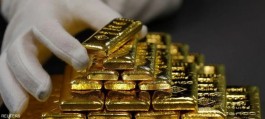
The dollar is rising today ahead of the decision, with the dollar index trading around 102.2 (+0.2% Tuesday and +0.4% on our screen Wednesday morning), near its highest level in two weeks after rising about 0.6% in three sessions. Meanwhile, the euro fell 0.25% to around $1.114 and is heading for the worst performance among developed-sector currencies in October (-1.65%). The dollar rose against the yen to around 157.7. The dollar is supported by expectations of tightening, a rebound in Treasury yields (10-year yield near 4.98%), and demand for safe-haven assets, in addition to concerns about France's financial situation, which are putting pressure on the euro. Three major central banks are also meeting (the Fed on Wednesday, the ECB on Thursday, and Japan on Friday). According to tonight's scenario: a hawkish decision would push the index towards the October 14th high (around 102.6-102.7, about 0.5% above the current level), a less hawkish decision would bring it back to around 101.6-101.4, and a surprise increase would open the door to breaking through the high. The strength of the dollar means additional pressure on gold, which is trading near $4,060, and on emerging market currencies.
Gold and stocks, what are we waiting for?
Gold is trading near $4,058-$4,071 ahead of the Fed decision, having tested a low of $3,975.64. WarrenAI's analysis warns that the most likely scenario (90%) is continued decline unless it closes above $4,100, as detailed in our related article. Wall Street stocks are near their highs (the S&P 500 is around 7,722 and 1.2% below its record high) after two sessions of gains led by the chip sector. They are vulnerable to a correction if the Fed surprises with a hawkish stance. Following the decision, the week's key events include Microsoft and Alphabet earnings tonight, then core PCE and GDP data on Thursday (3:30 PM), the European Central Bank meeting on Thursday, the Bank of Japan meeting on Friday, and the D-Day meeting on Friday, culminating in the December meeting. The October meeting does not include an update to the Fed's projections; the updated projections are released in December.