




































Oil prices fell for the second consecutive day on Wednesday, amid growing expectations that supplies held in the Middle East could return to global markets after US President Donald Trump indicated the possibility of reaching a peace agreement to end the war with Iran.
Brent crude futures fell by $1.69, or 1.5%, to $108.18 a barrel, after a 4% loss in the previous session.
West Texas Intermediate crude futures also fell by $1.67, or 1.6%, to $100.60 a barrel, after closing down 3.9% in Tuesday's session.
Trump temporarily halts ship escort operation
US President Donald Trump surprised markets on Tuesday by announcing a temporary suspension of the military operation to escort ships through the Strait of Hormuz, citing progress toward a comprehensive agreement with Iran, without disclosing details of this potential agreement.
There was no immediate official reaction from the Iranian side, but markets viewed the move as an indication of the potential for easing geopolitical tensions in the region.
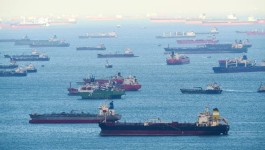
In this context, Anne Pham, senior oil research specialist at the London Stock Exchange Group, explained that these developments point to the possibility of de-escalation and also boost hopes for the release of ships stranded inside the Gulf, which could gradually allow supplies to return to global markets.
Pham added that oil prices remain relatively high due to continued uncertainty about reaching a final peace agreement, and that restoring full trade flows will take time even if an agreement is signed between the two sides.
The US blockade continues despite signs of de-escalation.
Despite the positive signs, Trump confirmed that the US Navy would continue to impose a blockade on Iranian ports, which means continued restrictions on Iranian oil exports.
Global supply losses pushed oil prices last week to their highest levels since March 2022, amid concerns about disruption to energy traffic through the Strait of Hormuz.
Trump said via social media: “We have mutually agreed that the blockade will remain in place in full force, while the Freedom Facility will be suspended for a short period to see if the agreement can be completed and signed.”
Trump's announcement came just hours after a press briefing by US Secretary of State Marco Rubio, during which he discussed the operation announced by Washington on Sunday to escort oil tankers stranded through the strait.
Declining global inventories increase market sensitivity
The US military announced on Monday that it had destroyed a number of small Iranian boats, as well as cruise missiles and drones, while securing the exit of two ships from the Gulf through the Strait of Hormuz.
Meanwhile, the closure of the strait caused a decline in global oil inventories, as refineries tried to compensate for the supply shortages resulting from the disruption to shipping and power.
According to market sources citing data from the American Petroleum Institute, U.S. crude oil inventories fell for the third consecutive week, along with a decline in gasoline and distillate stocks.
The data showed that crude oil inventories fell by 8.1 million barrels during the week ending May 1, while gasoline inventories declined by about 6.1 million barrels, and distillate inventories fell by 4.6 million barrels compared to the previous week.
These figures reflect continued pressure on the global energy market, despite a relative improvement in sentiment, as markets remain on the lookout for any decisive developments regarding the future of the war between the United States and Iran, and the possibility of fully reopening the Strait of Hormuz to global trade and energy traffic.