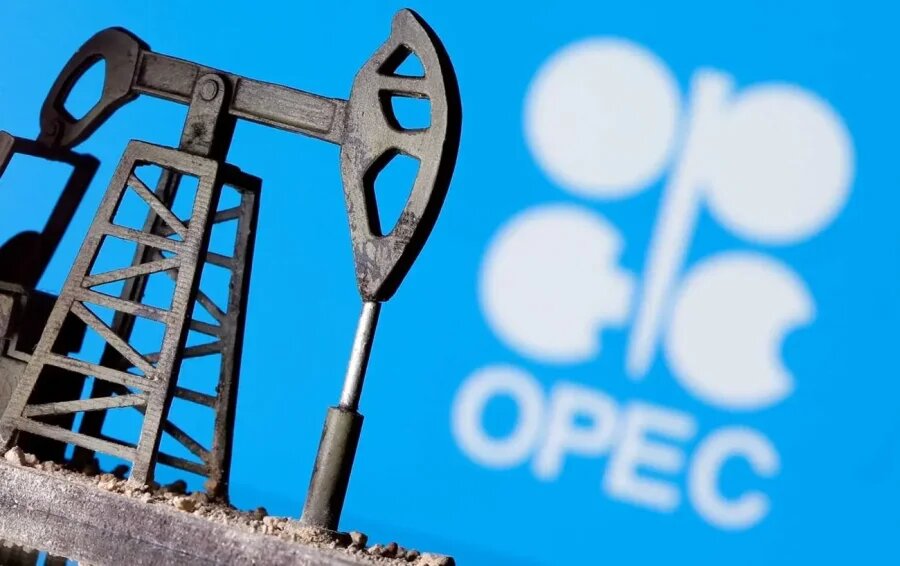

The OPEC+ alliance postponed its main decisions on future production quotas and members' production capacity during its online meeting on Sunday, resulting in an almost complete lack of clarity on supply policy, as the US-Iranian war continues to disrupt Gulf crude flows.
The producer alliance - which includes the Organization of the Petroleum Exporting Countries (OPEC) and its allies including Russia - will conclude its first-ever comprehensive review of members' production capacity in March, with the results to be assessed three months later. The alliance announced it will make "a decision on required production levels" in June or earlier, according to market conditions and the review's results.
Sunday's statement did not clarify whether current production targets will remain in effect until June. A number of delegates had indicated ahead of the virtual talks that current production ceilings would be extended through the first quarter of 2027. In practice, this ambiguity may have a limited near-term impact, as most member states are already operating near their maximum capacity amid continued war-related disruptions.
Jorge Leon, head of geopolitical analysis at Rystad Energy and a former OPEC secretariat official, said: "What was supposed to be one of the most important OPEC+ meetings in years ended with a decision not to decide. The alliance bought time instead of solving its problems."
Production capacity disputes and the specter of oversupply
Ahead of the meeting, Saudi Arabia and its partners were seeking to set new production baselines for 2027 based on the production capacity audit. However, these efforts stalled after Iraq and Kazakhstan objected to their allocated quotas as too low, with Iraq insisting it can pump larger volumes.
Internal disputes over production quotas, along with the ongoing conflict, threaten to make another turbulent year for OPEC+, giving the United States as a rival producer a wider margin to capture additional market share.
While war-related disruptions pushed crude prices above $100.00 a barrel earlier this year, prices have fallen in recent weeks amid rising Gulf exports and growing expectations of a supply surplus. Rystad Energy expects the global oil surplus to reach 5,000,000 barrels per day in 2027 - equivalent to about 5% of global demand - even if Gulf supplies recover only partially.
Rifts within the alliance
The postponed decisions come against the backdrop of deepening rifts within the alliance. The United Arab Emirates withdrew from OPEC and OPEC+ several months ago to raise its crude output after years of dispute over its quota. Angola had also left the organization in early 2024, while Iraq - which briefly threatened to withdraw earlier this year - warned it might follow the same path if its production quota is not raised.
Reuters had reported that OPEC+ intended to keep oil production targets unchanged for the first quarter of 2027, citing people familiar with the discussions, amid disrupted Gulf exports due to the US-Iranian war and continued internal disputes over production capacity.
NamaaZone " The Power of Knowledge"