








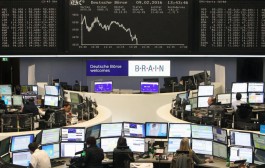












European stocks rose slightly on Tuesday, as investors kept an eye on geopolitical developments, key inflation data, and the start of the new quarterly earnings season.
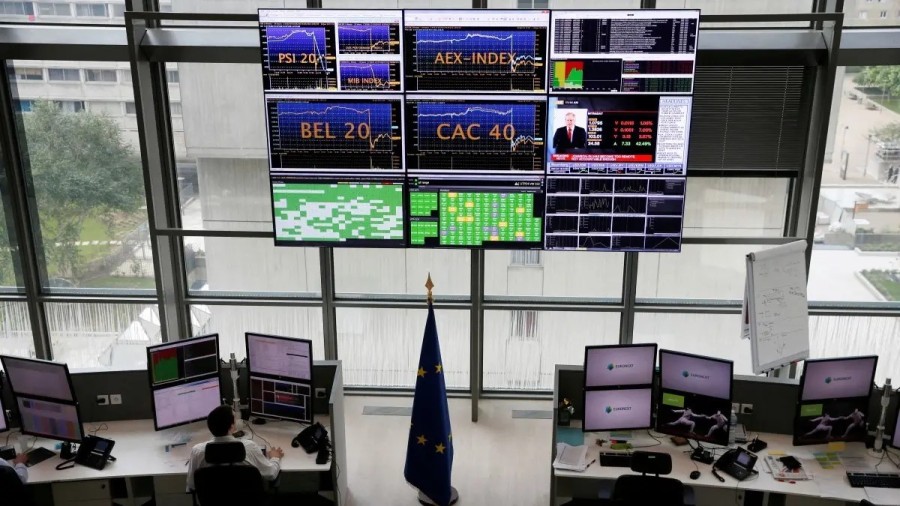
At 11:05 AM Saudi time, the DAX index in Germany rose by 0.1% and the FTSE 100 index in the United Kingdom by 0.1%, while the CAC 40 index in France fell by 0.1%.
Positive leadership from Wall Street
European markets received a positive lead from Wall Street, with the benchmark S&P 500 index reaching a record high, aided by the strength of the technology sector.
Sentiment was also boosted by news that Japan’s Nikkei 225 index reached a record high, aided by reports that Japanese Prime Minister Sanae Takaichi may call for an early election to strengthen her parliamentary majority – a scenario that could lead to more stimulus spending.
However, gains are likely to be limited as investors this week focus on events in Iran, where widespread protests against the ruling religious authorities have been met with violence and reports of heavy casualties as security forces attempt to regain control.
US President Donald Trump stated on Monday that any country doing business with Iran would be subject to a 25% tariff rate on any trade with the United States.
Iran’s main trading partners include China and other East Asian countries, Iraq, the United Arab Emirates, Turkey and Germany.
He is also expected to meet with his top advisers later in the session to discuss his options regarding Iran.
US consumer inflation data is coming
The European data calendar is largely empty on Tuesday, so the focus will be on the latest US consumer inflation data, the last major data point for the Federal Reserve to study before its meeting at the end of the month.
Economists expect the consumer price index to reach 2.7% for the twelve months ending in December, matching November's pace. On a monthly basis, the measure is also expected to equal the previous month's rate of 0.3%.
The so-called core measure, which excludes more volatile items such as food and fuel, is expected to accelerate marginally to 2.7% from 2.6% year-on-year and to 0.3% from 0.2% month-on-month.
Higher cocoa prices help Lindt
Turning to the European corporate sector, Lindt & Sprüngli (SIX:LISN) said its sales grew by more than 12.4% organically in 2025, slightly exceeding market expectations, as the Swiss chocolate company benefited from higher cocoa prices.
Sika (SIX:SIKA) reported a 4.8% decline in 2025 sales, as weak construction markets and currency effects offset local currency growth for the Swiss chemical company.
Whitbread (LON:WTB) announced a 2% increase in group sales for the third quarter, with the British hospitality group's results supported by higher accommodation revenues in both the UK and Germany.
However, much of the attention will be focused on events across the ocean, with earnings announcements expected later in the session from JPMorgan Chase & Co. (NYSE:JPM) and Bank of New York Mellon (NYSE:BK), marking the start of Wall Street’s quarterly results season.
Expectations are generally high for the banking sector as a whole, but President Trump's announcement that credit card rates will be capped at 10% starting January 20 could add complications.
Crude oil prices rise due to concerns over Iranian supply.
Oil prices rose on Tuesday, posting gains for a fourth straight session as anti-government protests intensified in Iran, raising concerns about supply disruptions from the major OPEC producer.
Brent crude futures rose 0.5% to $64.16 a barrel, and U.S. West Texas Intermediate crude futures rose 0.8% to $59.82 a barrel.
Brent crude futures hit a seven-week high in the previous session, while West Texas Intermediate crude rose to a one-month high.
Iran, one of the largest producers in the Organization of the Petroleum Exporting Countries (OPEC), is facing its biggest anti-government protests in years.