



































The dollar continues to rise against a basket of currencies.
Kevin Warsh nominated to head the Federal Reserve
The likelihood of a Japanese interest rate hike next March is slim.
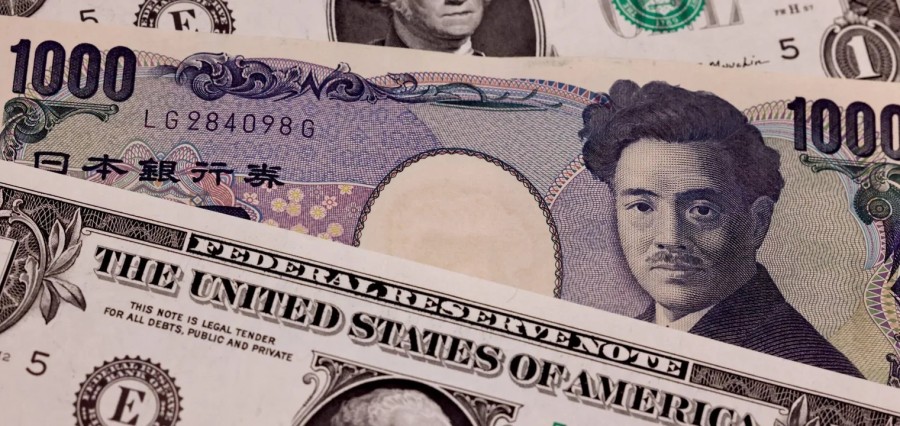
The Japanese yen fell in Asian trading on Monday against a basket of major and minor currencies, deepening its losses for the second consecutive day against the US dollar and hitting a two-week low, following comments by Japanese Prime Minister Sanae Takaichi about the benefits of a weaker local currency.
The US dollar continues to rise in the foreign exchange market, driven by widespread investor approval of Donald Trump's nomination of Kevin Warsh to head the Federal Reserve.
Furthermore, the yen's exchange rate is under additional negative pressure due to the diminishing likelihood of a Japanese interest rate hike in March, especially given the easing of inflationary pressures on monetary policymakers at the Bank of Japan.
Price overview
Today's Japanese Yen exchange rate: The dollar rose against the yen by 0.5% to (155.51¥), the highest level since January 23, from Friday's closing price of (154.75¥), and recorded the lowest level during today's trading at (154.75¥).
The yen ended Friday's trading down 1.1% against the dollar, its second daily loss in the last three days, as profit-taking and corrections continued from a three-month high of 152.09 yen, following weaker-than-expected core inflation data in Tokyo.
During trading in January, the Japanese yen rose by 1.35% against the US dollar, its first monthly gain since last August, thanks to increasing speculation about intervention by US and Japanese monetary authorities in the foreign exchange market.
US dollar
The dollar index rose 0.15% on Monday, extending its gains for the second consecutive session and hitting a one-week high, reflecting the continued rise of the US currency against a basket of global currencies.
This rise comes as the market welcomed US President Donald Trump's nomination of Kevin Wroch to head the Federal Reserve, a move that boosted confidence in the direction of future monetary policy.
Expectations have increased that the US Federal Reserve will adopt a more stringent approach to combating inflation, prompting traders to increase their buying positions on the US dollar against a basket of major and minor currencies.
John Higgins, chief economist at Capital Economics, said: “The market reaction to Donald Trump’s nomination of Kevin Warsh as chairman of the Federal Reserve is broadly in line with our view that the president has made a relatively safe choice.”
Higgins added: The prevailing impression seems to be that Warsh is not someone who is completely under the president's influence, that he will not contribute to undermining the independence of the Federal Reserve, and that he will not alleviate concerns about the devaluation of the currency.
Sanai Takaichi
Japanese Prime Minister Sanae Takaichi asserted on Saturday that the yen's weakness has positive aspects, in a stance that appeared to contradict repeated warnings from the Finance Ministry about intervening to support the struggling currency.
During a campaign speech in preparation for next week's elections, Takaichi stated: Despite criticism of the current weakness of the yen, it represents a valuable opportunity for export sectors, from food industries to automobiles; the currency's decline has formed a protective buffer that has mitigated the impact of US tariffs and provided tangible support to the economy.
A poll conducted by the Asahi Shimbun newspaper showed that Takaichi's ruling party is likely to achieve a landslide victory in the upcoming House of Representatives elections.
Japanese interest rate
The pricing in the probability of the Bank of Japan raising interest rates by a quarter of a percentage point at its March meeting is currently stable below 10%.
In order to reprice those probabilities, investors are awaiting further data on inflation, unemployment and wage levels in Japan.
Outlook on the Japanese Yen: Tony Sycamore, market analyst at IG, said: The snap election on February 8 is likely to be the next major domestic catalyst for the yen.
Sycamore added: A Liberal Democratic Party majority would likely push the USD/JPY exchange rate towards 160, while a coalition victory might keep the pair near 155.00, depending on the coalition partners.