









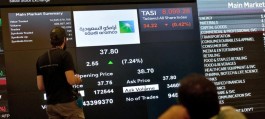



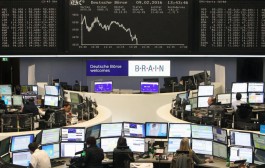





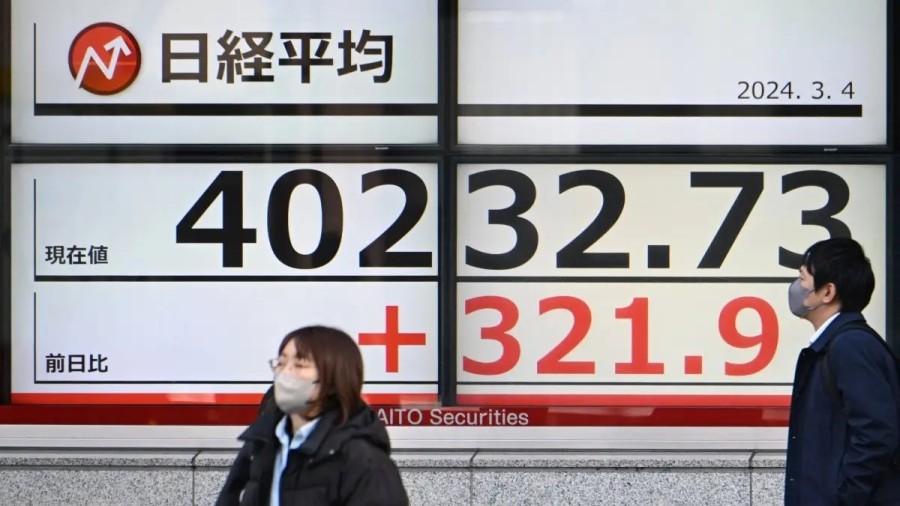


Global stocks declined, led by technology companies, while precious metals had a volatile start, with sentiment weakening amid uncertainty surrounding the path of interest rates.
The MSCI World Index fell 0.3%, extending its losses for the third consecutive day, while the Asian index plunged 1.5%.
South Korea's Kospi index, a gauge of AI investments, fell 3.3%, while Nasdaq 100 futures dropped 1%. The yield on the benchmark 10-year US Treasury note rose one basis point to 4.25%.
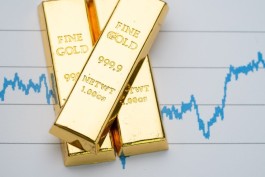
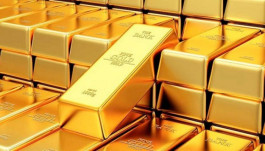
Gold fell 3.4%, while silver declined 3.5%, as prices continued the sharp losses recorded on Friday after a strong upward trend since last year.
Friday's losses deepened as the dollar strengthened following US President Donald Trump's nomination of Kevin Warsh to head the Federal Reserve, with the dollar rising against most G10 currencies.
Nick Twidall, senior market analyst at AT Global Markets, said that market sentiment was extremely tense this morning, following the volatility seen on Friday.
He added that the significant movements in metals are the real catalyst. When we witness historic movements of this magnitude, investor confidence plummets, not only in gold but in the market as a whole.
Reassessing risks and monetary policy
Price movements indicate rising instability following a prolonged rally in precious metals and consecutive record highs for stocks, fueled by billions of dollars in investments in artificial intelligence.
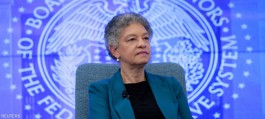
Meanwhile, investors are reassessing price levels and adjusting their expectations for monetary policy in light of the possibility that Warsh will take over as head of the Federal Reserve, amid repeated calls from Trump to cut interest rates.
With the selection of Warsh, an economist known for his sharp criticism of the central bank as much as for his views on monetary policy, the debate suddenly shifted from short-term interest rates to the Federal Reserve’s $6.6 trillion balance sheet and its pivotal role in the markets.
Krishna Guha of Evercore said that this choice would support the stability of the dollar and reduce, if not eliminate, the risk of a deep and prolonged weakness in the US currency.
For his part, Tarek Harashani, head of primary brokerage trading at Maybank Securities Singapore, said that markets were volatile this morning as investors unwound crowded positions, following the sharp shift in expectations triggered by President Trump's nomination of Kevin Warsh to head the Federal Reserve.
If the Senate approves the appointment, Warsh will succeed current Federal Reserve Chairman Jerome Powell when his term ends in May.
Warsh, 55, had aligned himself with Trump in 2025 by publicly calling for lower interest rates, a stance that contradicted his long-standing reputation as an inflation hawk. The US president said on Friday that he had not asked Warsh to commit to lowering interest rates.
Technology and artificial intelligence
In technology news, Nvidia CEO Jensen Huang said the proposed $100 billion investment in OpenAI was not a commitment, indicating that the company would handle any funding rounds one at a time.
Mark Cranfield, a strategist at Bloomberg Markets Live, said Nasdaq futures are headed for further declines as Nvidia begins to undermine the enthusiasm surrounding artificial intelligence.
He added that investors' focus this week will be on the results of Alphabet and Amazon, particularly future guidance and capital spending plans.
US policy and energy markets
On the political front, the US government entered a partial shutdown on Saturday, pending House approval of a funding agreement reached by Trump with the Democrats, following widespread national outrage over the killing of an American citizen by border patrol agents in Minneapolis.
In commodity markets, oil prices plummeted as traders awaited Trump's next steps regarding Iran and progress in peace talks on Ukraine. Brent crude traded near $67 a barrel after rising 16% over the past month, while West Texas Intermediate crude settled near $63.
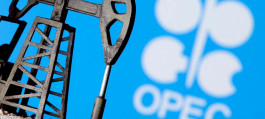
OPEC+ also maintained plans to keep production levels unchanged in March, the final month of a three-month supply freeze, even after prices hit four-month highs amid the prospect of a US strike on Iran.
Precious metals and the transformation of morale
Attention was largely focused on the precious metals markets. Gold fell after recording its biggest drop in more than a decade, while silver experienced sharp fluctuations following a steep decline from record highs.
Over the past year, precious metals have surged to unprecedented levels, shocking even seasoned traders. This rally accelerated sharply in January, as investors flocked to gold and silver amid renewed concerns about geopolitical instability, currency devaluation, and the independence of the Federal Reserve. A buying spree by Chinese speculators also contributed to the upward momentum.
Billy Leong, investment strategist at GlobalX Management, said sentiment had turned defensive, but closer to risk aversion than panic. He added: Overall sentiment is weak.