



















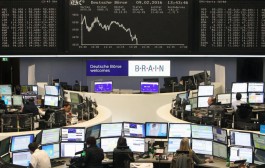














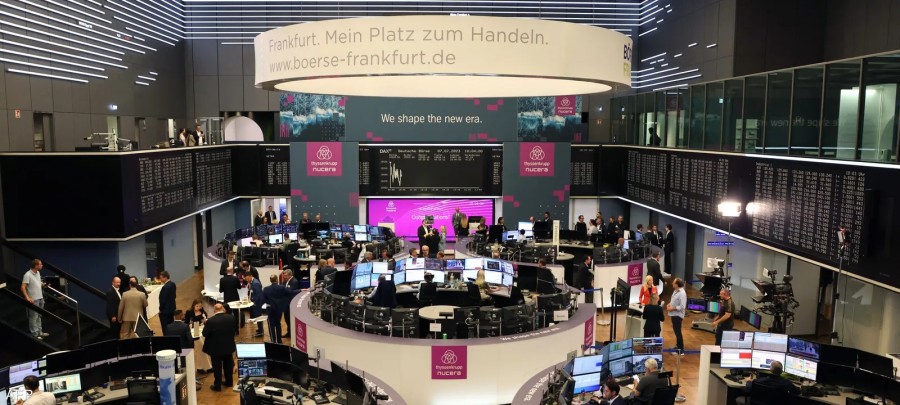


European stocks traded in narrow ranges on Thursday, as investors digested the latest interest rate cut by the U.S. Federal Reserve and related comments amid concerns about the highly important trading of artificial intelligence.
At 11:05 Saudi time, the DAX index in Germany fell by 0.3%, the FTSE 100 index in the United Kingdom declined by 0.1%, while the CAC 40 index in France rose by 0.1%.
The Fed cuts, but signals a high level of further easing.
The U.S. Federal Reserve cut interest rates by a quarter of a percentage point to a range of 3.5% to 3.75% on Wednesday, as widely expected, but also indicated it was likely to pause further cuts in borrowing costs as officials look for clearer signals about the direction of the labor market as well as inflation.
At the press conference following the interest rate decision, Federal Reserve Chairman Jerome Powell said that the three cuts implemented this year have now pushed interest rates into a range of reasonable estimates of the neutral rate and left him well-positioned to determine the extent of further rate changes based on incoming economic data.
Indicating growing divisions, there were three objections to the decision, two in favor of a temporary halt, and one favoring a 50 basis point reduction.
Two of the biggest market drivers in 2025 (global monetary policy easing and AI-driven unified trading) will not be present in 2026, creating a more uncertain landscape for equities, analysts at Vital Knowledge said in a note.
Oracle's results are impacting sentiment.
A sign of the uncertainty surrounding AI trading came with the results from US cloud computing company Oracle (NYSE:ORCL) after the close of Wall Street.
Oracle provided lower-than-expected profit and revenue forecasts, and, more importantly, said spending would increase by $15 billion compared to previous estimates - a sign that the large capital expenditures to chase AI cloud computing customers are not turning into profits as quickly as anticipated.
Despite the administration's commitment to investment-grade (IG) debt, concerns about AI debt financing have not been resolved, analysts at Jefferies wrote in a note.
In Europe, profits for major companies were low, but Munich Re (ETR:MUVGn) forecast €64 billion in insurance revenue for 2026, exceeding the consensus forecast of €62 billion and indicating a stronger revenue outlook than expected.
The guidance was issued alongside a new five-year plan extending to 2030, representing a shift from the three-year cycle previously used by the reinsurance company.
Also, power generation company Drax Group (LON:DRX) said it expects full-year fiscal 2025 earnings to be at the upper end of consensus estimates, reflecting strong performance across its operations.
The Swiss National Bank is likely to keep interest rates at zero.
There is little significance in Europe's economic data calendar on Thursday, but many eyes will be on the Swiss National Bank's policy-setting meeting later in the session.
The Swiss National Bank is widely expected to keep interest rates at 0.0% despite recent inflation and GDP readings coming in weaker than expected.
The negative interest rate floor is high, according to analysts at Nomura, suggesting that the central bank may keep interest rates unchanged for some time.
Oil prices fall after tanker seizure
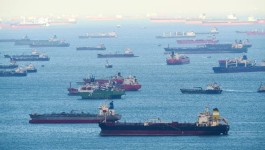
Oil prices fell on Thursday, giving up some of the previous session's gains after the United States seized a sanctioned oil tanker off the coast of Venezuela, raising concerns about further supply disruptions.
Brent crude futures fell 0.7% to $61.78 a barrel, and U.S. West Texas Intermediate crude futures fell 0.7% to $58.05 a barrel.
Oil prices had risen on Wednesday following the seizure of the tanker, a move that underscored the likelihood of further disruption to Venezuelan oil exports and added a supply risk premium to the market.
Investors are also still focused on developments in the Ukrainian peace talks and the Federal Reserve's interest rate decision, as lower interest rates could reduce consumer borrowing costs and boost economic growth and oil demand.