









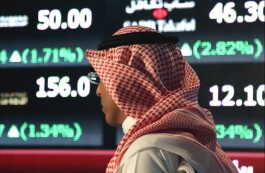

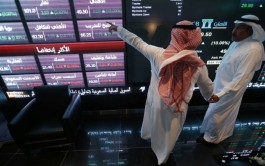
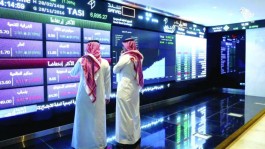
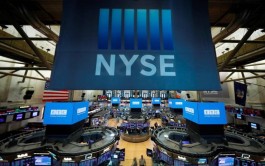




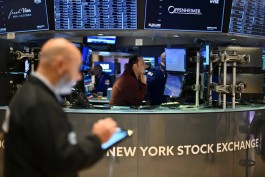










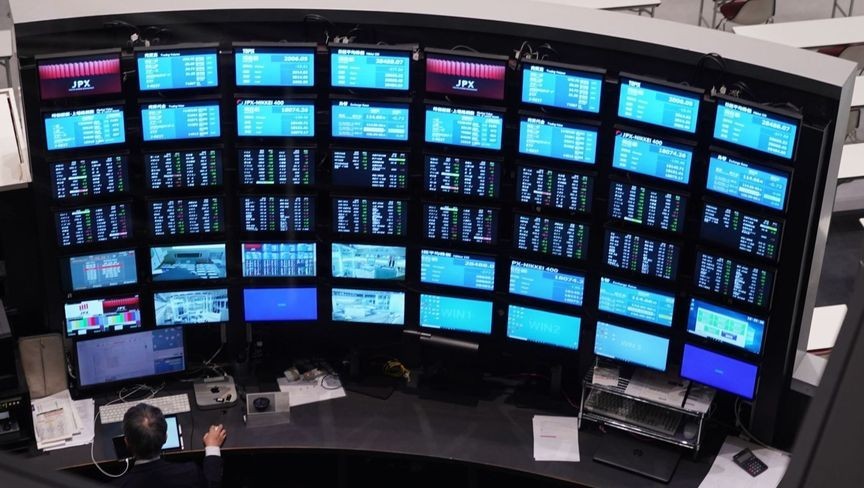


Global stocks fell after major artificial intelligence firms suggested slowing the pace of technology development, and a surge in oil prices weighed on risk appetite.
Technology stocks led the decline as traders worried that efforts to curb the development of advanced technology could negatively impact the boom that has driven hundreds of billions of dollars in capital spending.
Futures for the tech-heavy Nasdaq 100 index fell 1.4%, and S&P 500 futures declined 0.6%.
Shares of SoftBank Group, which backs OpenAI, recorded their biggest drop in three months in Japan, and South Korea’s Kospi index, a gauge of AI investment, fell 3.3%, while the MSCI Asia Pacific index declined 0.8%.
In contrast, the European Stoxx 600 index saw little change.
Brent crude price surpasses $107 per barrel
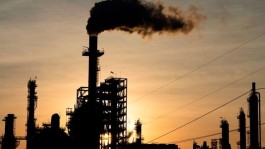
Another disruption to oil supplies from the Middle East added to the pessimism in the markets; Brent crude jumped 2.5% to above $107 a barrel after Saudi Arabia shut down a major oil pipeline as a precaution following drone attacks, and a planned meeting between Iran and Gulf states was postponed.
U.S. Treasury yields were little changed, with financial markets already pricing in an 87% probability of the Federal Reserve raising interest rates on Wednesday. The 10-year Treasury yield held steady at 4.96%.
The US dollar rose 0.3%, while spot gold fell 0.6% to $4,322 an ounce. Bitcoin, however, climbed 0.5% to $77,691.
Investors are reassessing their AI bets.
Investors are reassessing their bets on artificial intelligence to gauge whether weekend warnings might curb corporate spending and challenge earnings forecasts across the supply chain.
This shift comes at the start of a pivotal week for markets, with the Federal Reserve meeting approaching, at a time when rising oil prices are fueling inflation fears and keeping borrowing costs high.
Bloomberg quoted Chris Armstrong of Berenberg as saying: The wave of irrational enthusiasm subsided in the middle of the summer. I see it as another wave leading to a decline in expectations.
Tim Waterer, chief market analyst at KCM Trade, told Bloomberg: “Two unwelcome opposing forces are colliding.” He added: “Warnings that AI development needs to slow, coupled with another surge in oil prices following the shutdown of the Saudi East-West pipeline, are creating a challenging mix for riskier assets.” He continued: “Seeing the 10-year Treasury yield approaching 5% is another worrying sign for equities.”
For his part, Mark Cranfield, Markets Life strategist at Bloomberg, noted that the directional correlation of the Kospi index with US stocks has declined since the Korean stock market crash in July.
He added: But a new period of weakness will be difficult for Nasdaq companies to ignore, especially since the AI officials calling for slowing down technology development are on the American side.
Anthropic CEO Dario Amode said on Saturday that the company would implement additional safeguards, including independent third-party assessments, and urged the wider industry to slow the development of its most advanced models. OpenAI's Altman endorsed the proposal, while XAI's Elon Musk said, Dario is right.
US President Donald Trump downplayed growing concerns about the risks of artificial intelligence, at a time when questions are being raised about whether industry leaders are actually committed to slowing down the development of their most advanced, and most profitable, models, amid fierce competition from Chinese rivals.
Concerns about slowing spending and valuations of technology companies
The controversy adds further scrutiny to the billions of dollars being poured into artificial intelligence, and whether the profits can justify the escalating infrastructure costs.
High-value stocks remain vulnerable to signs of weak returns or slowing spending, although some investors expect any downturn to be short-lived, given the continued strong demand for computing infrastructure.
Yugo Tsuboi, chief strategist at Daiwa Securities, told Bloomberg: “Investors are being cautious at the moment, as it remains unclear how far the development of artificial intelligence might slow.”
He added: I don't really see investment in AI development itself declining. Rather, as industry leaders have pointed out, it's more about slowing down the pace.
Three decisions, starting with the Federal Reserve and followed in the next two days by decisions from policymakers in the United Kingdom and Japan, could reshape the outlook for global monetary policy for the remainder of 2026 and beyond.
Oil and interest rates add pressure on high-risk assets
With oil firmly established above $100 a barrel again, and the Middle East war seemingly reigniting, any hope policymakers have of a respite from global price pressures appears slim at the moment.
Frederic Neumann, chief Asia economist at HSBC, told Bloomberg that the sharp rise in oil prices, especially for derivatives such as diesel, is fueling concerns about inflation and growth.
He added: Meanwhile, all eyes are on central banks this week, with both the Federal Reserve and the Bank of Japan expected to tighten monetary policy, thus creating further headwinds for any global rally in risk assets. None of these concerns are necessarily game-changers, but they are significant enough to give investors pause.